


The clutch pressure plate is bolted to the flywheel, which in turn is connected to the engine crankshaft. Between the clutch pressure plate and the flywheel is the clutch disc, which is pressed against the flywheel by the pressure plate. The driven disk is centered and put on the splines of the primary (input) gearbox shaft.
When you press the clutch pedal through a hydraulic drive, the release bearing presses on the pressure plate spring. In this case, the force of the pressure plate is reduced, and the driven plate is no longer pressed against the flywheel. The transmission of power from the engine to the gearbox is stopped.
All clutch models have a hydraulic drive. The hydraulic drive uses brake fluid coming from a reservoir common with the hydraulic brake drive.
Each time the clutch is engaged and disengaged, a little of the working material is erased from the clutch disc linings due to friction. The driven disk is a wearing part, but its service life on average exceeds 100 thousand km. Disc wear is highly dependent on load (trailer towing) and driving style. The clutch is maintenance free and self-adjusting.
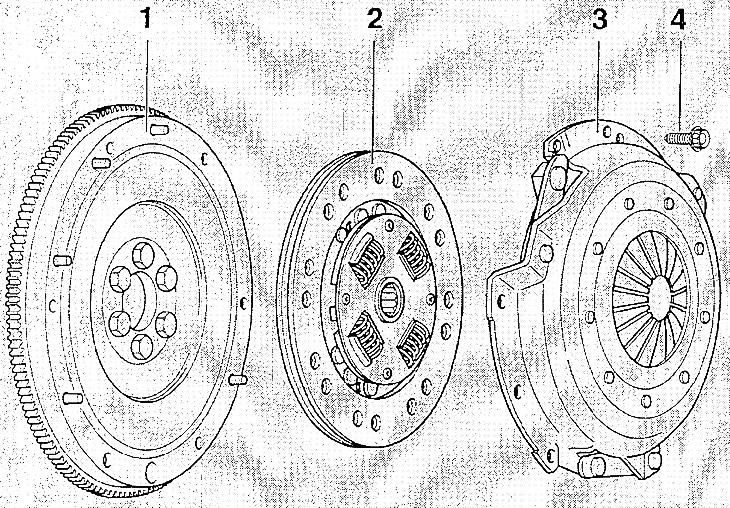
1. Engine flywheel; 2. Driven clutch disc; 3. Clutch pressure plate; 4. Bolt (6 pcs.), tightening torque 30 Nm.