


SOHC 16 valve engine
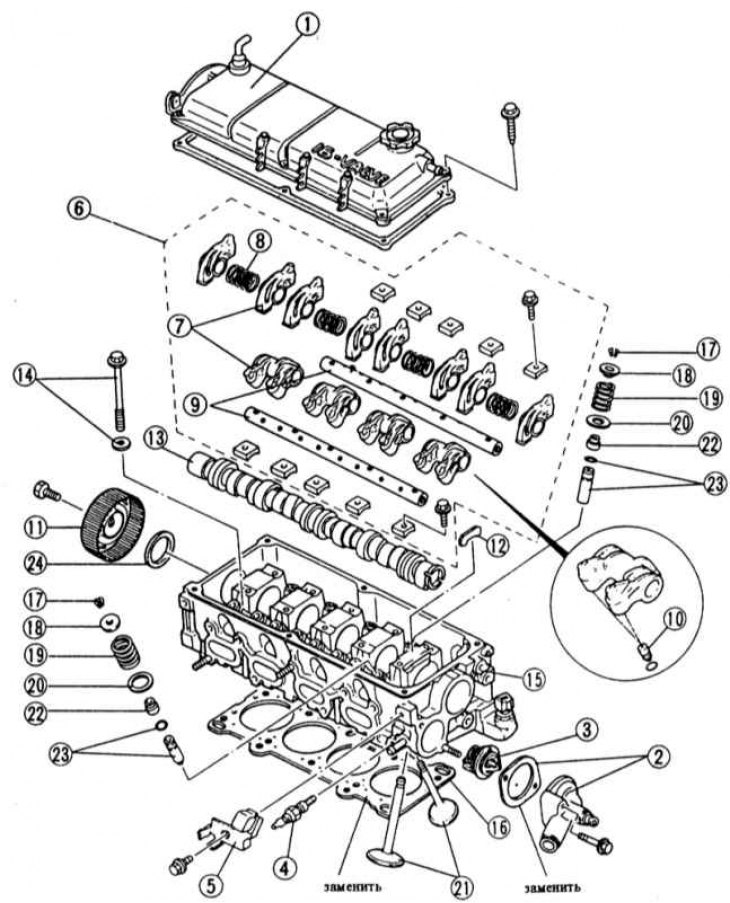
1 - cylinder head cover with gasket; 2 - thermostat housing with gasket; 3 - thermostat; 4 - temperature sensor; 5 - fastening; 6 - rocker shafts with rocker arms; 7 - rocker arms; 8 - rocker springs; 9 - rocker shafts; 10 - hydraulic valve lifters (Only on engines with hydraulic valve clearance compensation.); 11 - camshaft gear; 12 - pressure plate; 13 - camshaft; 14 - cylinder head bolt; 15 - cylinder head; 16 - cylinder head gasket; 17 - valve crackers; 18 - upper cup of valve spring; 19 - valve spring; 20 - lower valve spring plate; 21 - valve; 22 - oil deflector cap; 23 - valve guide; 24 - oil seal
1. Check the axial clearance of the camshaft. Required value:
- B3, B6 engines (SOHC): 0.04-0.13 mm
- BP engines (SOHC): 0.06-0.20 mm
- Engines B3E, B5, B6E: 0.05—0.18 mm
2. If the values are not within specifications, the thrust plate and possibly also the camshaft should be replaced.
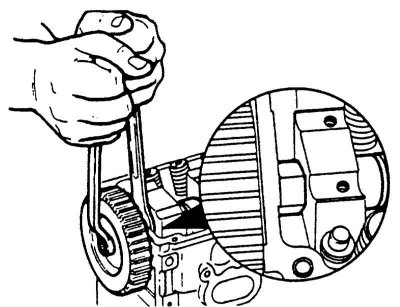
3. Hold the camshaft with a wrench and unscrew the camshaft gear mounting bolt. Remove the gear and, if necessary, knock it off with light blows of a rubber hammer.
Caution: Remove the camshaft gear carefully to avoid losing the guide pin.
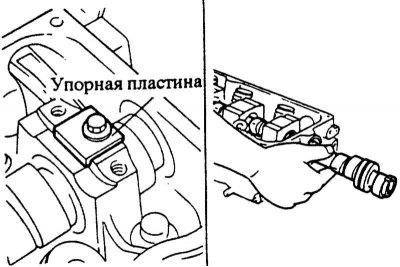
4. Unscrew the thrust plate and remove the camshaft through the distributor hole.
5. Knock out the old camshaft seal using a punch.
Attention! The place where the seal is installed must not be damaged.
Installation
1. Lubricate the seat and the camshaft seal with a small amount of engine oil. Carefully hammer the seal into place using a pipe of the same diameter. Hammer the seal so that it is flush with the cylinder head.
Attention! Do not skew the seal during installation.
2. Lubricate all camshaft bearing areas with a small amount of engine oil.
3. Carefully insert the camshaft into the cylinder head through the distributor hole.
Attention! When pushing in, the shaft must not be skewed. Push in carefully through the seal so as not to damage the working edge.
4. Install the camshaft so that the pressure plate can enter the groove of the camshaft. Screw the thrust plate with force 10 Nm.
5. Insert the guide pin into the camshaft. Install the camshaft gear so that the guide pin engages with the groove.
6. Hold the camshaft with a wrench and screw on the camshaft gear with force 60 Nm.
Caution: When holding the shaft, do not damage the cylinder head with a wrench.
7. Check whether the crankshaft and camshaft are on the ignition marks of the 1st cylinder, adjust if necessary, see Section Removal and installation camshafts.
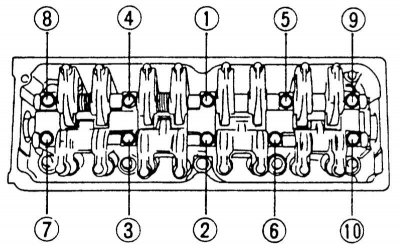
8. Tighten the bearing cap mounting bolts with a torque wrench in the sequence shown. Tightening the bolts should be done in two passes.
- 1st pass: 15 Nm
- 2nd pass: 25 Nm
9. Clean the camshaft wheel from water and oil.
10. Install and tension the timing belt, see Section Removal and installation of the timing belt of engines B3, B5, B6 (SOHC), BP (SOHC).
11. If equipped, install a mechanical fuel pump on the cylinder head, see Chapter Power supply system, carburetor, fuel injection system, Chapter Removal and installation/checking the fuel pump.
12. If the engine is not equipped with hydraulic tappets, check the valve clearance, see Section Checking/adjusting valve clearance.
13. Install the cylinder head cover with gasket, see Section Removal and installation the cylinder head/replacing the cylinder head gasket.
14. Install the air filter, see Chapter Power supply system, carburetor, fuel injection system, Chapter Removal and installation the air filter.
15. Screw the battery holder on firmly 20 Nm.
16. Install the battery, see Section Removal and installation the battery.
Removal for 1.7L diesel engine
Caution! When the timing belt is removed, the camshaft wheel should not turn, otherwise the valves will hit the pistons.
1. Remove the timing belt, see Chapter Diesel engine.
2. Unscrew the rear timing belt cover.
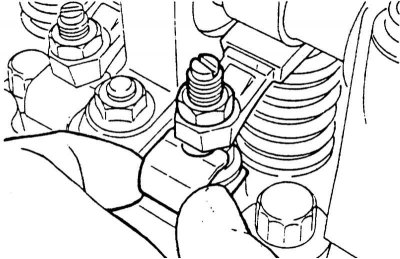
3. Remove the rocker arm springs.
4. Mark the rocker arms so that they can be installed in their original locations during installation.
5. Remove the rocker arms from their places.
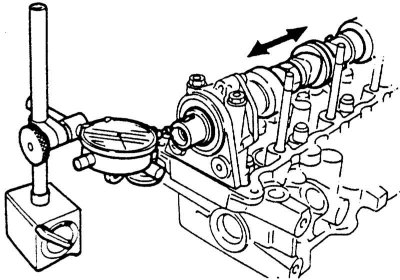
6. Check the axial clearance of the camshaft. Required value: 0.02-0.18 mm. Maximum permissible axial clearance: 0.20 mm. If this value is exceeded, the camshaft and possibly the cylinder head should be replaced.
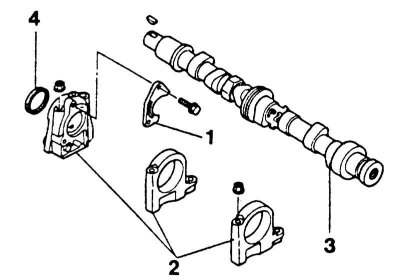
7. Unscrew the pressure plate "1".
8. Unscrew the 3 support brackets "2" of the camshaft and remove together with the camshaft "3".
9. Remove the front support bracket from the camshaft and remove the seal "4" using a screwdriver.
Installation
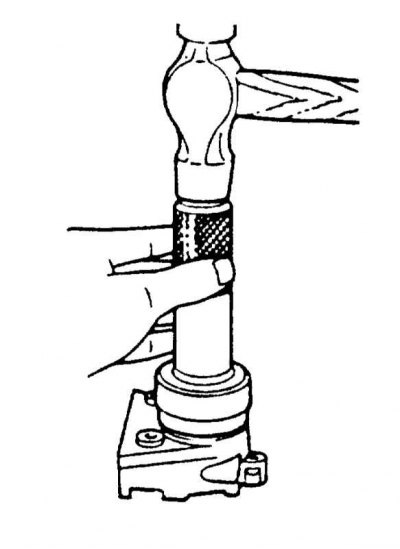
1. Lubricate the seat and the camshaft seal with a small amount of engine oil. Carefully hammer the seal into place using a pipe of the same diameter. Hammer the seal so that it is flush with the cylinder head.
Attention! Do not skew the seal during installation.
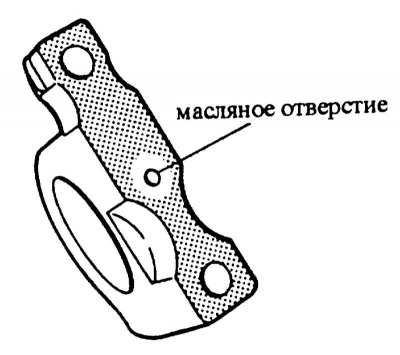
2. Clean the mating surfaces of the support brackets from dirt and oil.
3. Apply a sealant, such as Hylomar, to the mounting surfaces.
Attention! Sealant should not be applied to the oil hole.
4. Install the camshaft together with the support brackets.
5. Tighten the support bracket mounting bolts with a torque wrench from the inside out. Tighten the bolts in two passes.
- 1st pass: 15 Nm
- 2nd pass: 25 Nm
6. Install the thrust plate and screw it on with force 10 Nm.
7. Install the rocker arms. Make sure that the arms are seated correctly in their places.
8. Insert the rocker arm springs.
9. Install the rear timing belt cover and tighten it down firmly 10 Nm.
10. Install the key and camshaft gear. To tighten the mounting bolt, hold the camshaft with a wrench. Tightening torque: 50 Nm.
11. Adjust the valve clearance, see Section Checking/adjusting valve clearance.