


Contents: Disassembly and inspection ⇓ Assembly ⇓
It is assumed that the carburetor is removed from the vehicle for maintenance. However, many operations can be performed without removing the carburetor. In this case, remove the carburetor cover and remove fuel from the float chamber using clean napkins or a soft cloth.
Nikki Carburetor Components - Automatic Choke Model
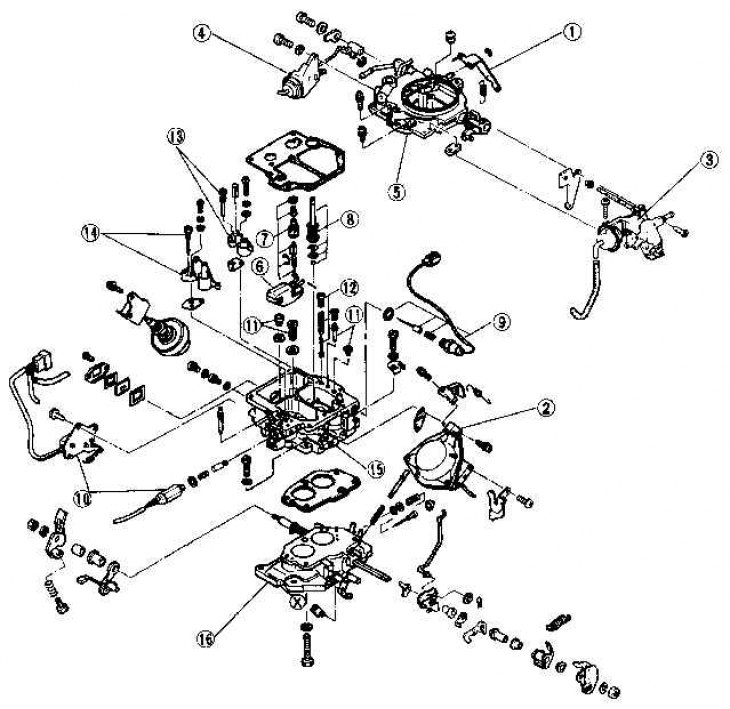
1. Accelerator pump lever; 2. Throttle valve diaphragm - secondary chamber; 3. Wax capsule and air damper opening mechanism; 4. Fast idle system relief device diaphragm; 5. Carburetor cover; 6. Float; 7. Needle valve; 8. Accelerator pump; 9. Shut-off valve; 10. Solenoid valve of the crankshaft speed increase system and idle speed system switch; 11. Air and fuel jets; 12. Accelerator pump nozzle weight; 13. Diffuser and emulsion tube – primary chamber; 14. Diffuser and emulsion tube – secondary chamber; 15. Carburetor body; 16. Throttle body
Location of jets
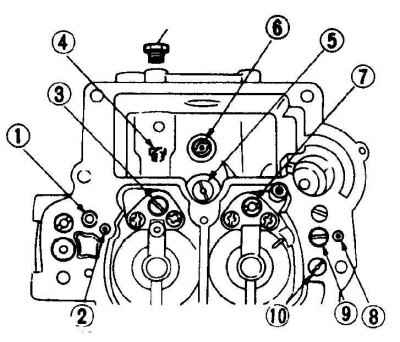
1. Transition mode jet – secondary chamber; 2. Air jet of the transition mode - secondary chamber; 3. Main air jet - secondary chamber; 4. Main fuel jet - secondary chamber; 5. Fuel jet of the enrichment device; 6. Main fuel jet - primary chamber; 7. Main air jet - primary chamber; 8. Air jet of the idle system - primary chamber; 9. Fuel jet of the idle system - primary chamber; 10. Idle air jet - primary chamber
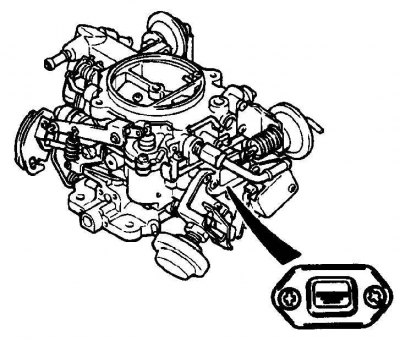
Float chamber window
Disassembly and inspection
1. Remove the carburetor from the engine.
2. Inspect the carburetor for damage or wear.
3. Disconnect the throttle return spring.
4. Inspect the accelerator pump lever for signs of wear. Remove the accelerator pump lever mounting spring, snap ring and clip, and disconnect the lever together with the spring.
5. Remove the clamp and disconnect the choke rod.
6. Loosen the mounting screws and remove the carburetor cover. If the lid does not come off, tap it with a rubber mallet. Do not attempt to pry the carburetor cover open with a screwdriver, as this may damage the mating surfaces.
7. Inspect the float chamber for corrosion and signs of calcium deposits.
8. Remove the accelerator pump release valve spring, retaining ring and ball. Turn the carburetor over and shake these elements out into the palm of your hand.
9. Unscrew the copper plug and remove the weight and spring of the accelerator pump inlet valve. Turn the carburetor over and shake these elements out into the palm of your hand.
10. Remove the accelerator pump piston together with the seals from the carburetor cover. Check the pump piston for signs of wear or damage.
11. Knock out the float pin and remove the float, needle valve and float chamber gasket.
Please note: On some models, the needle valve seat cannot be removed.
12. Using a ruler, check that the flanges of the carburetor cover, carburetor body and throttle body are not deformed.
13. Check the tip of the needle valve for wear or nicks.
14. Check the float for damage and gasoline getting inside it; the presence of fuel inside the float can be checked by shaking the float. Or, lower the float into the water and see if any air bubbles come out of it. Replace the float if it is faulty.
15. Check the float arm bracket for deformation and also check the float shaft mounting holes for signs of wear or damage.
16. Replace the float shaft if it is worn.
17. Unscrew the fuel shut-off valve (see subsection 5.1.5) and clean it with carburetor cleaner.
18. If you have a new seal and gasket, remove the two screws and the float chamber window. Do not remove the window unless you have a new seal.
19. Unscrew the mixture adjustment screw. Inspect the screw tip for damage or nicks.
Caution! A special tool is required to remove the adjustment screw.
20. Mark the diameters of all fuel and air jets and their installation positions to ensure proper installation of these components when assembling the carburetor. When installing, the jets can easily be confused.
21. If necessary, remove all fuel and air jets from the primary and secondary chambers of the carburetor.
Caution! Use a short screwdriver to avoid damaging the jets.
22. Unscrew the two screws and remove the diffusers. Remove the primary and secondary air jets and emulsion tubes from the diffusers.
23. Unscrew the main fuel jet from the primary chamber and remove it from the bottom of the float chamber.
24. Remove the float chamber plug and unscrew the secondary chamber main fuel jet from its socket on the float chamber wall.
25. Check the calibration of the jets by comparing their diameters with the values specified in the technical specifications section. It is possible that the jets were installed incorrectly during the last overhaul (or jets of the wrong diameters are installed).
26. Check that all jet holes are not worn, clogged or out of round shape. Check that the channels connecting the float chamber to the emulsion tube wells are clean.
27. Unscrew and remove the enrichment valve from the float chamber and check its operation.
28. Check the operation of the enrichment valve plunger installed in the carburetor cover.
29. Disconnect the secondary throttle body by removing the mounting clip. Loosen the mounting screws and remove the diaphragm from the carburetor body.
30. Press down on the secondary throttle diaphragm rod, close the vacuum passage with your finger and release the rod. Replace the diaphragm if the vacuum is not maintained for at least 30 seconds
31. Loosen the mounting bolts (one lower and two upper) and remove the carburetor body from the throttle body. Remember the installation position of the insulating block. Using a ruler, check for deformation on the contact surfaces.
32. Check the throttle opening diaphragm (see subsection 5.1.5), as well as the throttle damper (see subsection 5.1.5).
33. Check all vacuum hoses for cracks and signs of wear.
34. Check the choke mechanism for signs of wear and ease of operation; treat the jammed parts of the mechanism with an appropriate aerosol. If the mechanism components continue to stick, replace them.
35. Clean the jets, carburetor cover and throttle body, float chamber and internal passages. Carefully inspect and clean all air holes and passages in the carburetor cover. Check the internal passages of the carburetor by pouring carburetor cleaning fluid into the intake ports and making sure it flows out of the outlet ports. Flush all carburetor passages with carburetor cleaning fluid - this will help clean them of dirt and sediment. Compressed air can be used to clean the internal passages of the carburetor, but only when the carburetor is completely disassembled.
Caution: Wear safety glasses when working with compressed air and when using carburetor cleaning fluid (if the carburetor channel is clogged, the cleaning solution may splash in your face).
Assembly
When assembling the carburetor, it is necessary to replace all gaskets. Also, replace the needle valve and the accelerator pump piston. Inspect and (if necessary) replace the float pin, mixture adjustment screw and main fuel jets. Replace worn out elements of connecting mechanisms, screws, springs and other worn out elements.
Check that all jets are securely screwed into their sockets (but don't tighten them too much). A loosely screwed jet can cause the fuel to become too rich (or even poor) fuel mixture. Clean any traces of old gasket from the mating surfaces and flanges of the carburetor cover and throttle body and install the cover in place, placing a new gasket. Do not use sealant on flanges or mating surfaces of carburetor components, or when installing the carburetor to the engine. If sealant gets into the passages that run through the carburetor, the carburetor may fail.
Check that the fuel and air passages of the carburetor halves are properly aligned.
1. Assemble the carburetor body and throttle body, installing a new gasket between them. Secure the units using the mounting bolts.
2. Install the secondary throttle body diaphragm and secure it with the mounting screws. Install the retaining clip onto the diaphragm rod.
3. Screw the enrichment valve into the float chamber.
4. Screw the main fuel jets into their sockets (don't mix up the jets) and install the drain plug with a new sealing washer.
5. Install the emulsion tubes and air jets into the diffusers and put them in place (don't mix up the diffusers).
6. Install the primary chamber idle air system jet, plug and air jet into their sockets (do not confuse the elements).
7. Install the idle mixture adjustment screw and spring. Carefully tighten the screw until it stops (using a special tool if necessary), then back it out three full turns - this will provide the initial adjustment for starting the engine.
Caution! The threads in the carburetor hole are very fine, so be very careful not to tighten the screw crookedly. If you damage the threads, the throttle body will need to be replaced.
8. Install the float chamber window (if it was filmed) with new seal and gasket.
9. Install the shut-off valve with a new sealing washer.
10. Install the hex banjo bolt with new sealing washers and tighten it lightly.
11. Install the new float chamber gasket onto the carburetor body. Note: Since there are many variations of Keihin carburetors, it is important to carefully compare the old and new gaskets. A slight difference between the gaskets can cause one of the fuel or air passages to become blocked, resulting in poor engine performance.
12. Replace the needle valve pin; install the float and secure it with a pin.
13. Adjust the float installation height (see subsection 5.1.4).
14. Install the accelerator pump release valve weight and spring and secure them with the plug.
15. Install the accelerator pump inlet valve ball, snap ring and spring.
16. Install the accelerator pump piston with seals into the carburetor cover; replace seals if necessary.
17. Install the carburetor cover onto the carburetor body and secure it with the mounting screws. Tighten the screws gradually and one at a time to avoid deforming the surface of the carburetor body or cover.
18. Connect the choke rod and secure it with a clamp.
19. Install the accelerator pump lever and secure it with a clamp. Connect the accelerator pump return spring and the throttle return spring.
20. Check the smoothness and consistency of movement of the air damper and connecting mechanism. Check that the connecting mechanism moves freely and is not worn.
21. Adjust the choke opening when the engine is running at fast idle, when starting and warming up the engine (see subsection 5.1.4).
22. Install the carburetor on the engine.
23. Always check the adjustment of the crankshaft speed when the engine is idling and the amount of fuel mixture idling-preferably using a CO sensor-after performing any work on the carburetor. The adjustment operations are described in subsection 5.1.4. If the carburetor was completely disassembled, check all adjustments.