


The brake fluid reservoir is located in the engine compartment above the master brake cylinder and supplies brake fluid to the entire brake system.
The brake booster on models with gasoline engines takes some of the vacuum created by the engine. Through the valves, it enhances the pedal action when braking due to the action of the vacuum (rarefaction). Since there is practically no vacuum from suction in a diesel engine, the vacuum for the operation of the brake booster is created by a vacuum pump. The vacuum pump is driven by the engine.
Disc brakes are equipped with so-called floating calipers. These calipers have only one piston, which is used to press both brake pads against the brake disc.
The parking brake acts on the rear wheels through the drive cables.
The brake pads of the front disc and rear drum brakes are installed automatically, so that the adjustment of the rear wheel brakes is only necessary after a repair in which the brake system was disassembled.
Precautions: When cleaning the brakes, the dust from their work is cleaned. It is very harmful to health and should never be inhaled.
Brake pads are very important to the safety of your vehicle and only pads recommended by the manufacturer for that specific model should be used.
Precautions: work on the brake system requires absolute cleanliness and strict adherence to instructions. If there is no experience with brakes, then it is better to make repairs in the workshop.
Note: When driving on wet roads, use the brakes from time to time to free the brake discs from deposits. Under the action of centrifugal force during movement, water is removed from the brake discs, but a thin film of silicone, tar, grease and dirt remains, which impairs the effectiveness of the brakes.
After installing new brake pads, you need to run them in. When running the first 200 km after installing the pads, sudden braking should be avoided unless absolutely necessary.
Corroded disc brakes have a sticking effect when braking, which is not eliminated even with prolonged braking. In this case, you need to replace the brake discs and repair the calipers.
Burnt dirt on the brake pads and recesses in them lead to the formation of grooves on the brake discs. Because of this, the effectiveness of the brakes may deteriorate.
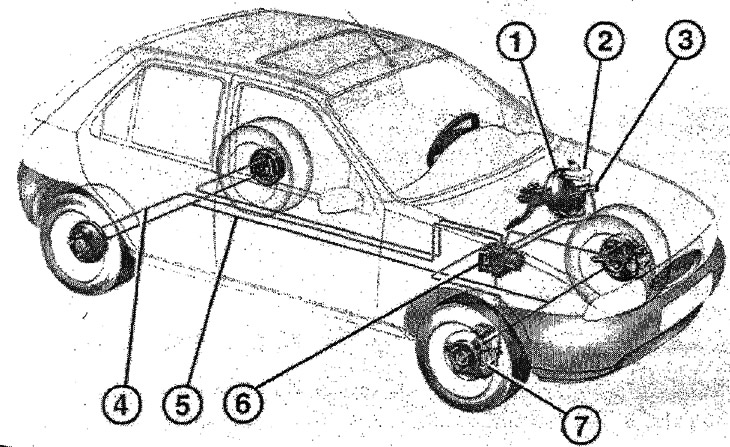
1. Brake booster; 2. Tank for brake fluid; 3. Double master cylinder; 4. Brake pipelines to wheel brake cylinders; 5. Pro-water control (from the wheel speed sensors to the control unit); 6. Electro-hydraulic control unit for ABS/EBV/ASR systems; 7. Brake caliper of the right front wheel.
Disc brakes
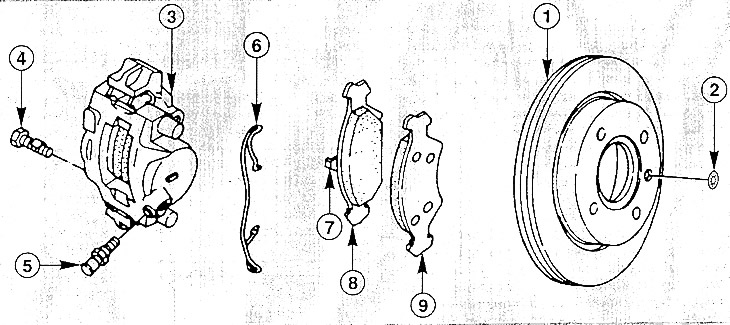
1. Brake disc; 2. Clamp fastening; 3. Brake caliper; 4. Hex bolt; 5. Bolt (valve) to remove air; 6. Mounting bracket; 7. Fastening tongue; 8. Internal brake pad; 9. External brake pad.