


The cooling circuit is controlled by a thermostat. When the engine is cold, the coolant circulates only in the cylinder block and in the heater core. When the coolant warms up, the thermostat opens and the coolant is pumped by a water pump, which in a gasoline engine is driven by a V-ribbed belt, and in a diesel engine by a camshaft timing belt. The coolant passes through an aluminum radiator and is cooled there by oncoming air flow.
At high coolant temperatures, additional cooling is provided by an electric fan. When the coolant temperature slightly exceeds +100°C, the engine control unit turns on the fan through the relay. When the coolant temperature drops, the fan turns off.
The expansion tank serves as a reservoir for the coolant - it receives coolant that expands when heated and returns it back to the cooling circuit when it cools. Coolant is topped up through the expansion tank.
Precautions: before working in the engine compartment, turn off the ignition. When the engine cools down, the fan may turn on spontaneously, which is dangerous! In this regard, care must be taken when working with the radiator and fan.
Cooling System Diagram
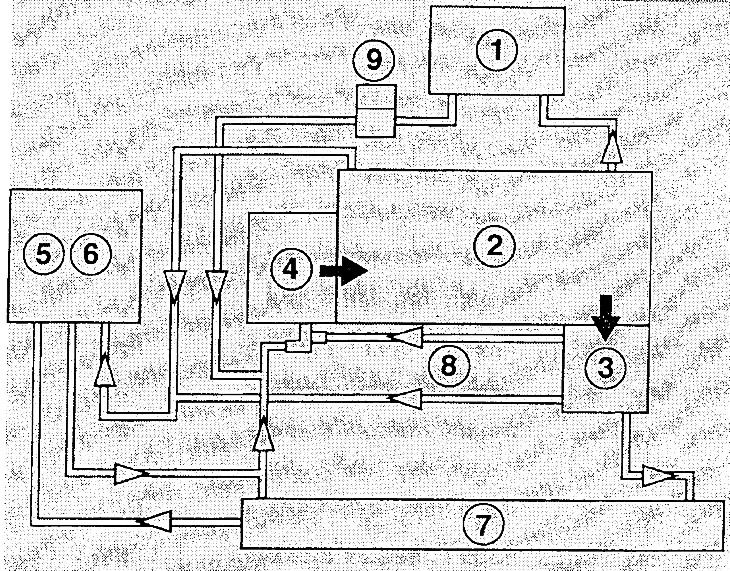
1. Heater radiator; 2. Engine; 3. Thermostat housing; 4. Water pump; 5. Expansion tank for coolant; 6. Cover dilator - tank; 7. Radiator; 8. Bypass hose; 9. Oil cooler.