


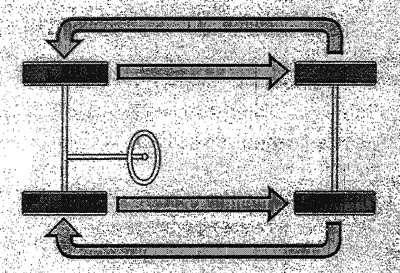
If the front tires are heavily worn, it is recommended to swap the front and rear tires. This swap will ensure that all four tires have approximately the same service life.
Precautions: Do not replace tires one at a time, replace at least two at a time (on one axis). Install tires with increased tread depth at the front. Only install tires of the same design and size, if possible from the same manufacturer and with the same tread pattern on the front and rear axles.
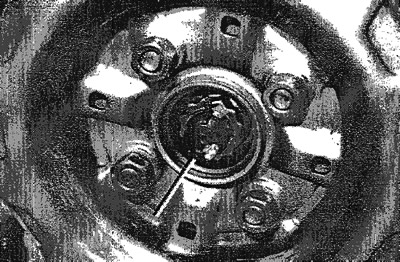
Before removing the wheel, mark its position relative to the hub so that it can be installed in its original position later.
Loosen the wheel nuts when the car is on the ground. At the same time, apply the parking brake or engage first gear so that the car does not roll.
Note: Light alloy wheels are coated with a transparent protective varnish against corrosion. When replacing wheels, make sure not to damage the protective layer, and if this happens, restore the varnish layer.
To protect the disc from rusting, before installing it, lubricate the central hole (socket) of the disc, which contacts the hub in front and behind, with consistent grease.
Clean dirty wheel nuts and threads. Do not lubricate wheel nut threads.
Do not use alloy wheel nuts on steel wheels and vice versa.
Tighten the wheel nuts crosswise in several passes. It is recommended to use a torque wrench to tighten the wheel nuts so that the nuts are tightened evenly. The tightening torque for all wheel nuts is 90 Nm.
Caution: If the wheel nuts are tightened unevenly or one-sidedly, the wheel and/or rim may be deformed.
Wheel balancing
The wheels are initially balanced at the factory. Balancing is necessary to compensate for uneven weight distribution and material inhomogeneities.
In motion, the imbalance manifests itself as angular oscillation and vibration. At high speeds, the steering wheel begins to shake.
Typically, this shaking occurs only within a certain speed range and disappears again as the speed decreases or increases.
This imbalance can lead to damage to suspension joints, steering and shock absorbers over time.
Wheels should be balanced after every tire repair because wear and repairs change the weight distribution.
[Original version of the article on the website www.MazBook.ru]