
MazBook.ru
English Русский
Български
Беларускі
Український
Српски
Hrvatski
Română
Polski
Slovenský
Magyar
• Bookmark • Sitemap • Contacts •   
Cars Opel Cars Ford Cars Volkswagen Cars Audi Cars Kia Cars Renault Cars Peugeot


Familia Capella Mazda3 Mazda6 CX-? Others Articles
Mazda 121 (3) (1996-2003) Mazda BT-50 (1) (2006-2011)

The way the ignition system works (Mazda 121 (3))

  • Home
  • Mazda
  • 121 JASM (1996-2003)
  • Power unit
  • Ignition system
  • The way the ignition system works
0
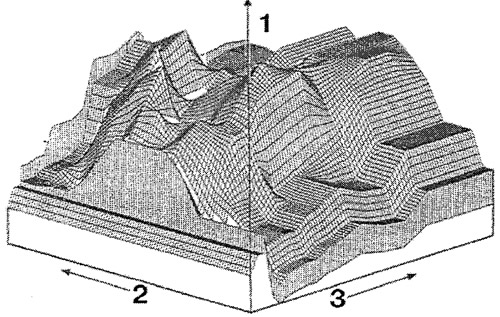
1. Ignition timing angle; 2. Load; 3. Number of revolutions.

1. Ignition timing angle; 2. Load; 3. Number of revolutions.


The optimum ignition timing of the engine depends primarily on the instantaneous values of the engine speed and its load. The control unit determines the engine load condition from the relationship between the engine speed and the throttle position.

The ignition control unit in the "main" control unit uses this data to determine the optimum ignition timing based on the ignition timing database. Other sensors take into account the incoming air temperature and the coolant temperature.

Distribution of high voltage to individual cylinders is achieved by statically operating, electronically controlled components, which replace conventional mechanically operating ignition distributors with rotors.

[Data provided by the website: www.MazBook.ru]

The ignition system consists of two ignition coils located in one housing, which is fixed on the cylinder head. The ignition system is synchronized by signals that are issued by the pulse generator in the control unit. The engine pulse generator I,ol is located on the side of the cylinder block and measures the number of revolutions of the camshaft, and in other engines the number of revolutions is taken from the engine flywheel.
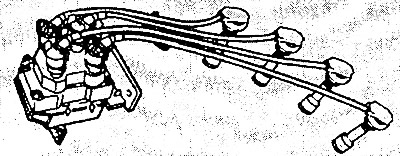


When the ignition control unit fails, the car's performance will be affected, namely, power will…


When the ignition control unit fails, the car's performance will be affected, namely, power will decrease. Fuel consumption may also increase. There is no need to worry about long-term damage to the engine if the defect is corrected immediately.

The ignition and fuel injection systems have a common electronic control unit, which is equipped with a fault code memory unit. If faults occur in the engine electronics while driving, the codes of which are recorded in the control unit, before repairing the ignition system, you must first interrogate the memory unit in the control unit. The memory unit is interrogated using a diagnostic device connected to the diagnostic plug, which is located under the cover on the left in the driver's footwell next to the engine control unit.

Since a car owner is unlikely to have a diagnostic device at his disposal, it is recommended that the diagnostic operation be carried out in a workshop.
This article is available at: russian, bulgarian, belarusian, ukrainian, serbian, croatian, romanian, polish, slovak, hungarian
This text was checked by: Evgeny Mereshnikov
Share with friends on social networks:

Previous
Mazda 121 (3) » Ignition system
Next

Ignition system — general information
Precautions when working with an electronic ignition system
Checking high voltage wires
Checking and replacing the ignition coil
Removal and installation the engine control unit
Spark Plugs — General Information and Specifications
More articles on repairing other Mazda models
Technical characteristics of the ignition system Mazda Familia 5 (1985-1989)
Ignition system — general description and precautions Mazda Capella 3 (1982-1992, petrol)
Variable Ignition System (VIS) Mazda3 BK (2003-2009)
Variable Ignition System (VIS) Mazda6 GG (2002-2008)
Ignition system (petrol engines) Mazda CX-5KE (2012-2017)
Link in different formats to this article
Comments and feedback from visitors
No comments yet


How much will 25 + 39 ?


Mazda BT-50 (1) (2006-2011) 
  • General information
  • Introduction to guide
  • User manual
  • Maintenance
  • Power unit
  • Engine repair (diesel)
  • Cooling and lubrication system
  • Fuel injection system
  • Intake and exhaust system
  • Engine electrical equipment
  • Transmission
  • Clutch
  • Mechanical gearbox
  • All-wheel drive system
  • Transfer case and gearboxes
  • Chassis
  • Front suspension
  • Rear suspension
  • Steering
  • Brake system
  • Body
  • Exterior (external elements)
  • Interior (internal elements)
  • Heating and air conditioning
  • Security system SRS
  • Electrical equipment
  • Equipment and devices
  • Electrical circuits
Mazda 121 (3) (1996-2003) 
  • General information
  • User manual
  • Maintenance
  • Power unit
  • Petrol engine 1.3 l
  • Petrol engine 1.25/1.4 l
  • Diesel engine
  • Lubrication system
  • Cooling system
  • Ignition system
  • Supply system
  • Fuel injection (gasoline)
  • Fuel injection (diesel)
  • Exhaust system
  • Transmission
  • Clutch
  • Car gearbox
  • Chassis
  • Front suspension
  • Rear suspension
  • Steering
  • Brake system
  • Wheels and tires
  • Body
  • Exterior (external elements)
  • Interior (internal elements)
  • Doors, windows and locks
  • Heating system
  • Electrical equipment
  • Troubleshooting
  • Equipment and devices
  • Lighting system
  • Power devices
  • Electrical circuits
MazBook.ru © 2018–2026 · Mobile version · Articles and news · Sitemap: EN BG BY UA RS HR RO PL SK HU · Feedback · Site search · Add to bookmarks Familia 5 (BF) · Familia 6 (BG) · Capella 3 (GC) · Capella 3 and 4 (GC) · Capella 4 (GD) · Capella 5 (GE) · Capella 6 (GF) · Mazda3 BK · Mazda6 GG · CX-5KE · Mazda 121 (3) · Mazda BT-50 (1) ·
By continuing to use the site, you agree to the use of cookies 🔐