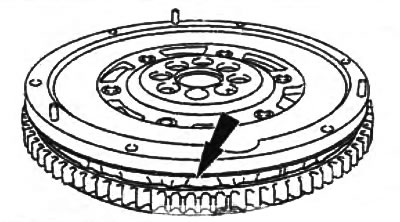


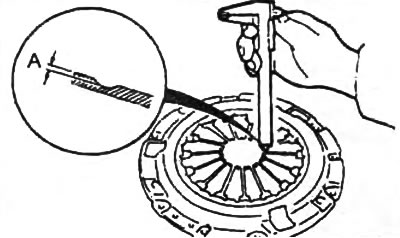
a) Using a caliper, measure the depth of the diaphragm spring wear groove.
- Maximum permissible wear by depth "A" - 0.6 mm
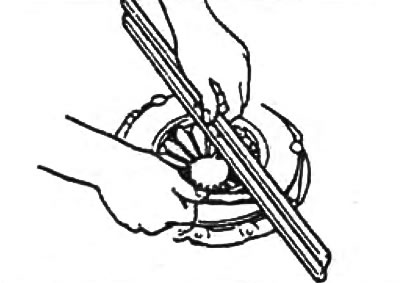
b) Using a ruler and feeler gauge, measure the clearance between the pressure plate and the ruler as shown in the figure.
- Maximum gap - 0.3 mm
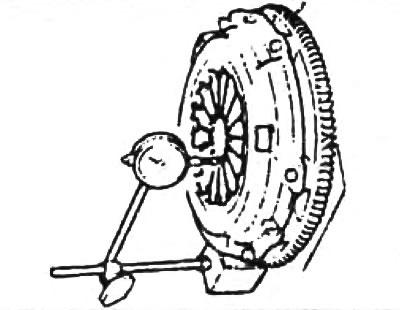
c) Install a dial indicator on the cylinder block. Rotate the flywheel to measure the runout of the diaphragm spring petals.
Note: If the measured runout value exceeds the maximum, replace the flywheel.
- Maximum runout - 1.0 mm
2. Check the clutch driven disc.
a) Check the surface of the driven disk linings for signs of severe overheating or oil contamination.
Note:
- If the disc shows signs of severe overheating or oil contamination, replace the disc.
- If there is minor damage on the driven disk, use sandpaper.
b) Check the tightness of the rivets. If the tightness of the rivets is loose, replace the driven disk.
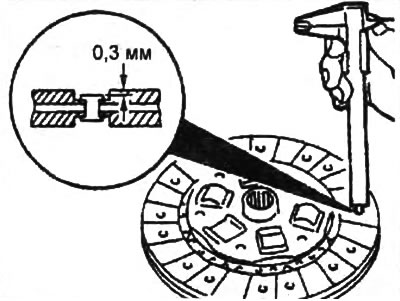
c) Using a caliper, check the thickness of the linings on both sides of the disc in relation to the rivet heads. If the lining thickness is less than the minimum, replace the disc.
- Minimum thickness of the overlay is 0.3 mm
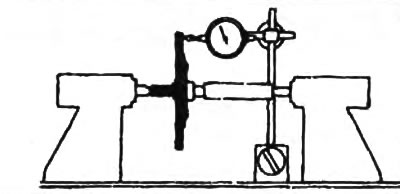
d) Using a dial indicator, check the axial runout of the disc. If the axial runout exceeds the established norms, replace the disc.
- Maximum axial runout - 0.7 mm
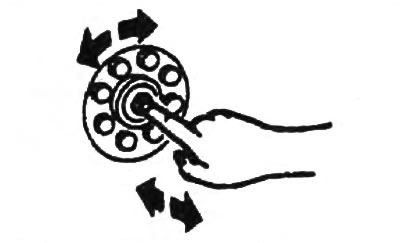
3. Check the clutch release bearing. Apply axial pressure to the release bearing and turn it.
Note:
- Do not wash the release bearing in any liquids. The sealed bearing does not require washing or lubrication.
- If the bearing is binding or there is significant resistance to rotation, replace the bearing.
4. Check the primary shaft support bearing of the gearbox. Apply axial pressure to the support bearing and turn it.
Note: If the bearing is seizing or there is significant resistance to rotation, replace the bearing.
5. Check the flywheel.
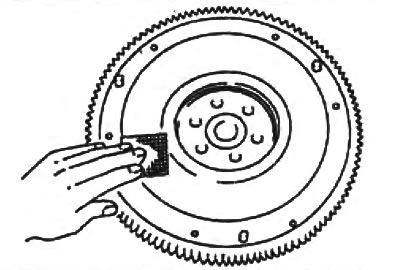
a) Check the flywheel contact surfaces for scratches, cracks or signs of overheating. If necessary, repair or replace the disc.
Note: Small scratches on the flywheel or traces of overheating must be hit with sandpaper.
b) Check the flywheel ring gear for wear or broken teeth. If the teeth are damaged, replace the flywheel.
c) Using a dial indicator, check the axial runout of the flywheel. If the axial runout exceeds the established norms, replace the flywheel.
- Maximum axial runout - 1.5 mm