


High mileage is not a sufficient indicator of the need for major repairs, on the other hand, low mileage does not exclude major repairs. The most important indicator is probably the timeliness of routine engine maintenance. With timely oil and air filter changes, and all other necessary maintenance, the engine will serve reliably for many thousands of kilometers. On the contrary, insufficient maintenance can cause a sharp reduction in service life. Increased oil consumption indicates wear of piston rings or valve guides. It is necessary to ensure that leaks are not the cause of increased oil consumption, and only then draw a conclusion about the unsuitability of piston rings and guide bushings. To determine the scope of work to be done, measure the compression in the cylinders or check the tightness of the combustion chamber. For this purpose, it is recommended to contact an experienced specialist.
If increased noise or knocking is heard while the engine is running, the probable cause may be wear of the connecting rod or main bearings.
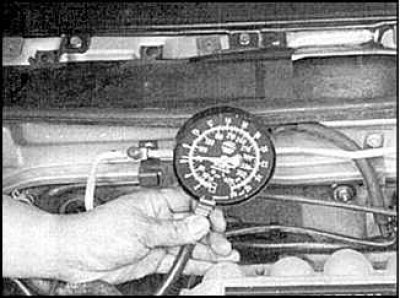
To check the oil pressure, you need to unscrew the pressure sensor and screw the pressure gauge in its place.
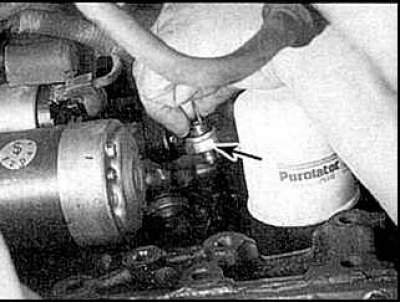
Oil pressure sensor (indicated by the arrow) located next to the oil filter.
Loss of power, engine "dips", increased noise from the valve timing mechanism, and increased fuel consumption indicate the need for a major overhaul, especially if all of these factors occur simultaneously. If performing all adjustments does not lead to improvement, then the most appropriate remedy is repair.
A major overhaul involves restoring engine parts to the condition specified in the technical data for a new engine. During a major overhaul, the piston rings are replaced and the cylinder walls are bored to the repair size (or honed).
After repairing the cylinders, new pistons will need to be installed. The connecting rod and main bearings must also be replaced; if necessary, the crankshaft should be ground to restore the clearances with the connecting rod and main bearings. As a rule, the valve mechanism is not changed, since its condition at the time of repair is usually quite satisfactory. During a major engine overhaul, repairs are also performed on components such as the carburetor, ignition distributor, starter, and generator. As a result, the engine should have the qualities of a nearly new unit and serve reliably for a long time.
Before beginning an engine overhaul, review the relevant procedures to get a feel for the scope of work and the requirements involved. Major repairs are not difficult, but they require a lot of time. It will take approximately two weeks, especially if it is for repair and restoration of parts (grinding, boring) you will have to contact a specialized workshop. Check the availability of spare parts and take care of purchasing the necessary special tools and equipment in advance.
Almost all work can be done using a standard set of tools, although precise measuring instruments will be needed to check and determine the suitability of certain parts. Often, the condition of parts is checked in specialized workshops, where recommendations for replacement or restoration of parts are received.
Important! You should only contact a car service center after completely disassembling the engine and inspecting all components, especially the cylinder block, to determine what maintenance and repair work will be performed. Since the condition of the cylinder block is a determining factor in deciding whether to repair it further or to purchase a new cylinder block, spare parts should be purchased or machining operations performed on the parts should only be carried out after a thorough inspection of its technical condition. Make it a rule that the true cost of repair is time, then you won't have to pay for the installation of worn out or repair parts.
In conclusion, we note that the assembly of any units should be carried out with the utmost care in a clean room to avoid further failures of the repaired engine.