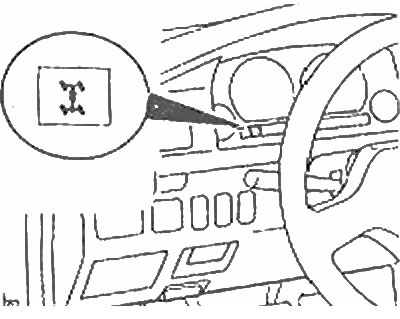
- Parking is easier.
- The stability of the car when driving straight at high speed is significantly increased.
- Provides reliable control during row changes.
- Greater balance is maintained when cornering.
Caution! Even if the vehicle is equipped with 4-wheel drive (4WS), the driver must exercise extreme caution when changing lanes and in adverse weather conditions, as the 4WS system cannot compensate for steering errors.
The original text can be found on [mazbook.ru]
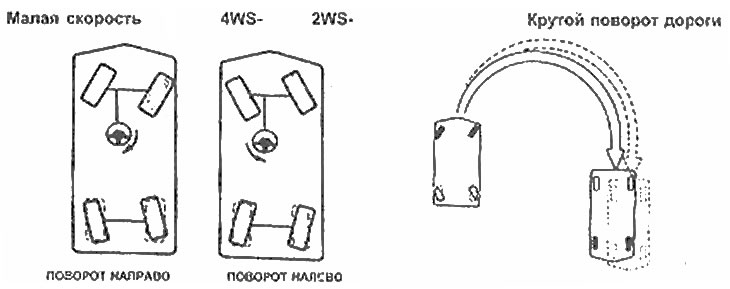
Low speed
(Approximately 35 km/h or less)
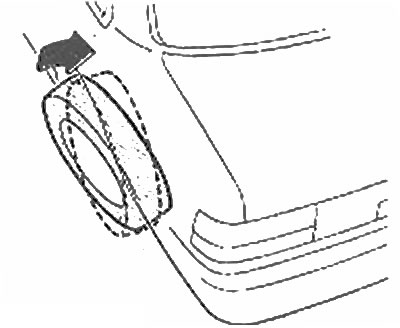
The rear wheels are mounted in the opposite direction to the front wheels, making it easier to turn at low speed on sharp bends in the road or to stop the car.
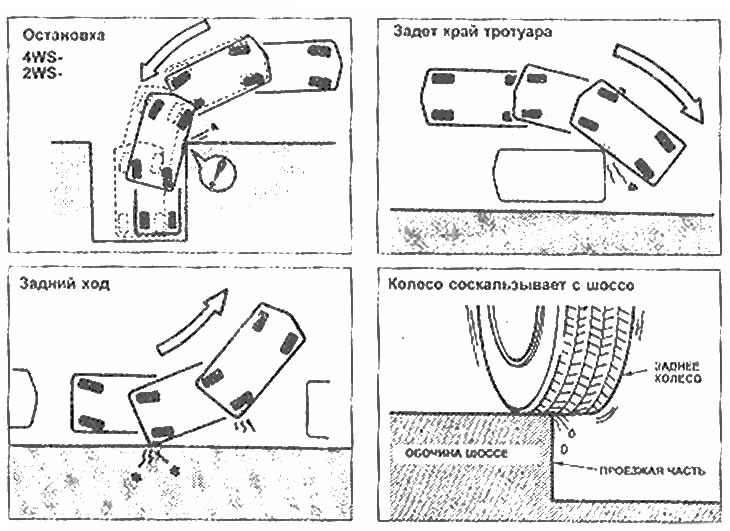
Attention!
The driver must take into account a slight difference in steering distance when driving a 4-wheel drive (4WS) vehicle, since the turning center point is different from that of a 2-wheel drive (2WS) vehicle, especially at low speed.
When parking a car, it is recommended to keep a distance of approximately 10 cm (rearview mirror distance for example) between any nearby object or the side of the highway. This distance will prevent impacts that could damage the vehicle and will also prevent the vehicle's wheels from slipping off the road.
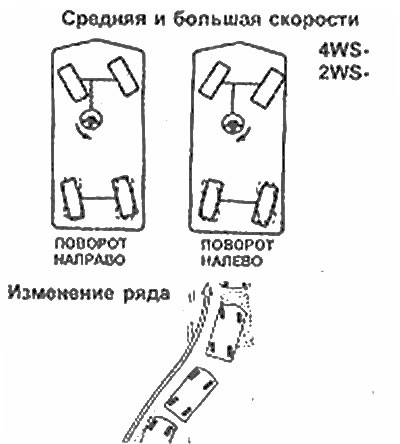
Medium and high speeds
(Approximately 35 km/h and more)
Due to the fact that the rear wheels turn in the same direction as the front ones, the likelihood of the car skidding when changing lanes and when turning is significantly reduced. This makes it easier to control the car.
Stop
Note: If the steering wheel is turned to the right or left when the engine is turned off, the rear wheels will automatically straighten out. When the engine is turned on, the rear wheels will change position depending on the steering wheel angle.
4-wheel drive (4WS) vehicle steering control indicator light.