


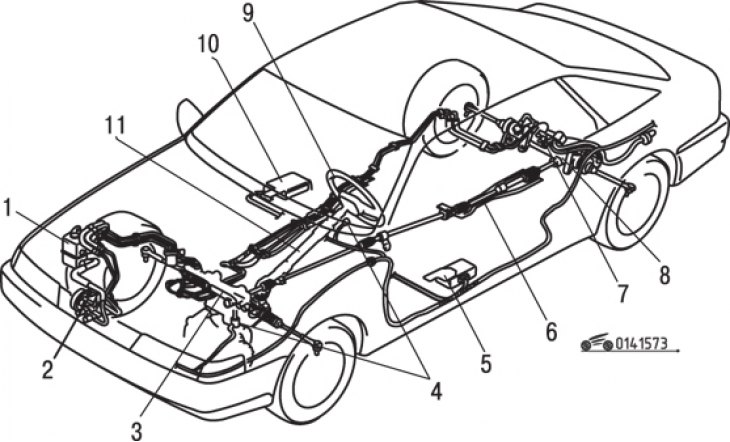
Figure 15.72. All-wheel steering system: 1 – reserve tank; 2 – oil pump; 3 – front wheel steering mechanism; 4 – speed sensors; 5 – control unit; 6 – intermediate shaft of the steering drive; 7 – traction relay; 8 – rear wheel steering mechanism; 9 – steering wheel; 10 – relay with timer; 11 – steering shaft
Some vehicles are equipped with an all-wheel steering system (4WS system) (figure 15.72). This system connects the front wheel steering gear to the rear wheel steering gear, which is activated by a traction relay via the steering shaft, allowing the rear wheels to turn under certain conditions. Any maintenance work on the system (checking and adjustment) should be performed at an auto service center.
Replacing the rear wheel bearing
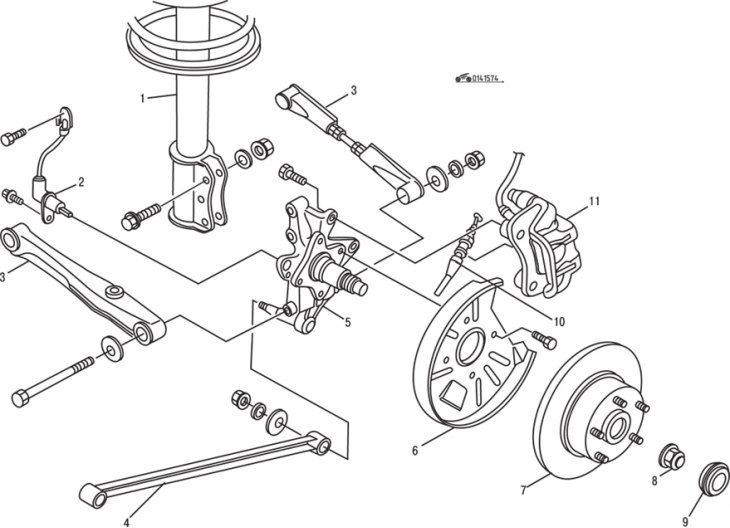
Figure 15.74. Rear wheel suspension of cars produced in 1988–1991: 1 – shock absorber; 2 – ABS wheel speed sensor; 3 – transverse lever; 4 – longitudinal lever; 5 – trunnion; 6 – rear brake protective cover; 7 – brake disc; 8 – nut (replace); 9 – hub cap (replace); 10 – parking brake cable; 11 – support
Cars produced since 1988 are equipped with non-separable rear wheel bearings that do not require adjustment (figure 15.74). To replace, lift the vehicle and support it on stands.
On vehicles equipped with rear disc brakes, remove the rear caliper with the brake cylinder.
Remove the hub cap and unscrew the nut.
Remove the brake drum or disc.
If the bearing is damaged, press it out and press in a new one, which requires taking the hub to a car repair shop.
Install the hub onto the axle, screw on a new nut and tighten it to the specified torque.
Caution: On vehicles equipped with ABS, be careful not to damage the wheel speed sensors.