


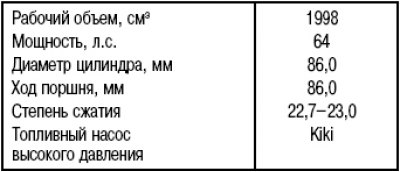
Technical specifications
How a diesel engine works
In a diesel engine, air is sucked into the cylinders where it is subjected to a very high degree of compression. Due to this, the temperature in the cylinders becomes higher than the ignition temperature of diesel fuel – diesel fuel ignites, so spark plugs are not required here. In a cold engine, it is impossible to achieve the ignition temperature of the fuel solely through a high compression ratio. In this case, the engine is warmed up (engine preheating). For this purpose, a glow plug is used in each swirl chamber of a diesel engine, heating the combustion chamber. Fuel is sucked directly from the fuel tank by the high-pressure fuel pump (HPFP). The pump creates the required high pressure (about 130 bar), and the fuel is distributed among the cylinders in accordance with the ignition sequence. At the same time, the fuel injection pump regulator doses the fuel supply depending on the degree of pressure on the accelerator pedal. At a certain point in time, diesel fuel is injected through injectors into the pre-combustion chamber of the corresponding cylinder. Depending on the shape of the pre-chamber or swirl chamber, the intake air is forced into a swirl motion by compression, which ensures optimal mixing of air and injected fuel.
Before reaching the high-pressure fuel pump, the fuel passes through a fuel filter and is cleaned of contaminants and water. Therefore, it is especially important to drain the water from the filter or replace it in accordance with the maintenance schedule.
The high pressure fuel pump does not require maintenance. All moving parts of the pump are lubricated with diesel fuel. The pump is driven by a toothed belt.
Since self-ignition of fuel occurs in a diesel engine, it cannot be stopped by turning off the ignition, so the engine is equipped with an electromagnetic valve. When the ignition is turned off, the power supply to the valve is disconnected and it closes the fuel supply channel. This ensures that the fuel supply is cut off before the steering wheel is locked when the key is removed from the ignition switch (lock). When the engine starts, voltage is supplied through the ignition switch to the electromagnetic valve and it opens the fuel supply channel.
Caution: Maintain cleanliness when working with the diesel engine injection system.
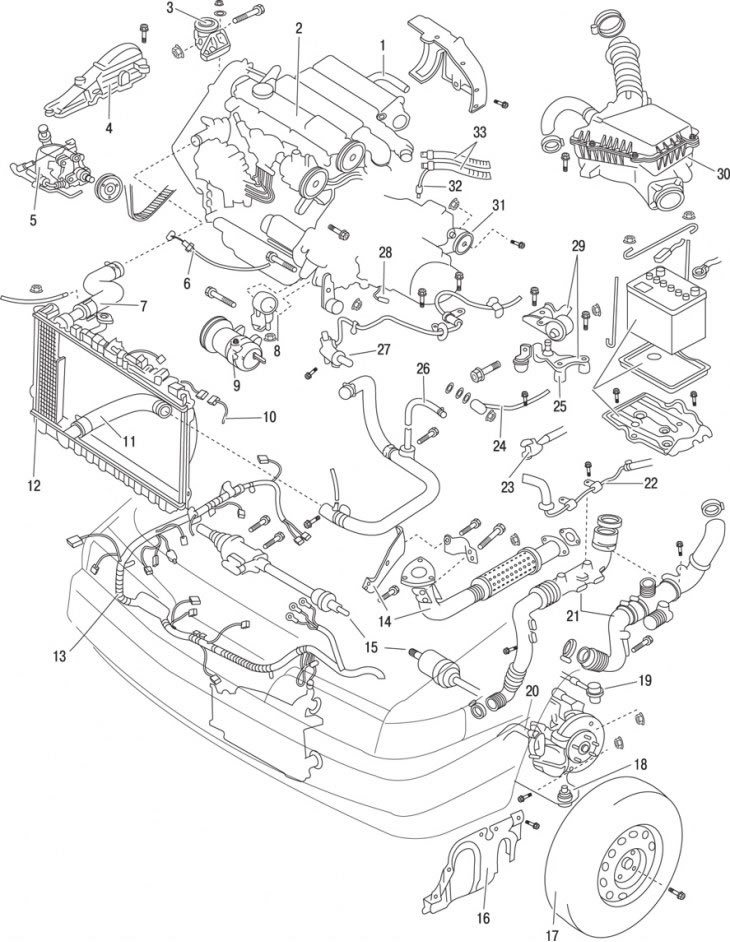
Figure 4.1. Location of the main components of the diesel engine and vehicle components in the engine compartment: 1 – heater hoses; 2 – diesel engine; 3 – engine support bracket; 4 – V-belt cover; 5 – power steering pump; 6 – accelerator cable; 7 – radiator hose; 8 – engine support bracket; 9 – air conditioning compressor; 10 – radiator fan wire; 11 – radiator hose; 12 – fan and radiator; 13 – engine wiring harness; 14 – elements of the exhaust system; 15 – drive shaft; 16 – side engine cover; 17 – wheel; 18 – lower wishbone; 19 – steering rod end; 20 – stabilizer bar; 21 – air ducts; 22 – brake system hose; 23 – gear shift rod; 24 – gear selection rod; 25 – battery with stand; 26 – heater hoses; 27 – clutch slave cylinder; 28 – gearbox wiring harness; 29 – engine mounts; 30 – air filter; 31 – engine support bracket; 32 – speed sensor; 33 – fuel lines
The location of the main components of the diesel engine and the elements in the engine compartment are shown in the figure 4.1.
Article is available on the website: www.MazBook.ru