


The combination of these or other systems is determined by the year of manufacture of the vehicle, the place of its initial delivery to the consumer and the type of gearbox. This manual covers the following main systems installed on vehicles:
- electronic ignition system;
- air injection system;
- system for leaning the air-fuel mixture when the vehicle is moving in neutral gear;
- throttle release control system;
- automatic air temperature control system at the carburetor inlet;
- forced crankcase ventilation system.
This section also describes the economy mode indication system, which is part of the control unit of the vehicle's depletion system when driving in neutral gear, although it does not directly relate to the exhaust gas toxicity reduction system. For each of the above systems, the device and performance check are described (subject to the possibility of its implementation), replacement of components and assemblies (for systems in which it is permissible).
Before concluding that the exhaust gas toxicity reduction system is not working properly, carefully check the ignition and fuel systems. In some cases, only specially trained personnel using special tools and equipment can accurately determine the reasons for poor engine performance or difficult starting. If inspection and maintenance become difficult or the work cannot be performed at a local workshop, please contact your local dealer for advice. However, this does not mean that emission control systems are very difficult to maintain and repair. You can easily carry out many checks yourself and perform most of the routine maintenance work using common tools and equipment (and perhaps even fulfill them completely).
Attention! The most common cause of malfunctions in exhaust gas reduction systems is often only a loosening of the vacuum hose seal or damage to the vacuum hose or electrical connections. Therefore, always check the hoses and wires first.
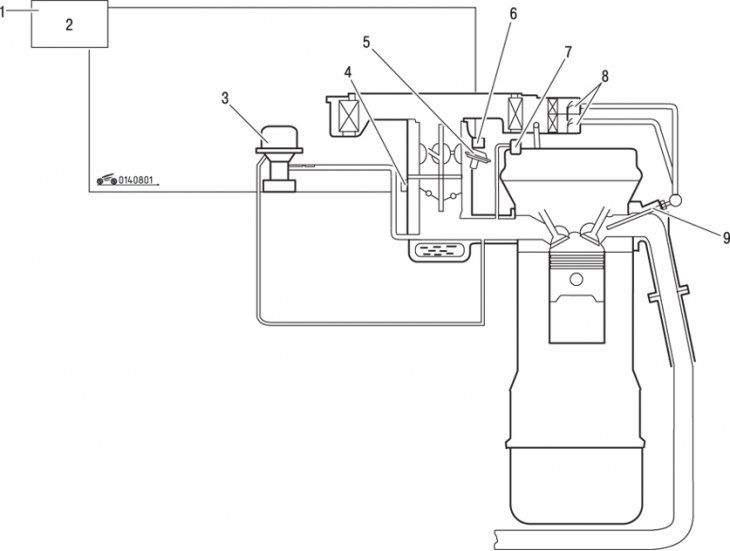
Figure 8.1. Main elements of the exhaust gas toxicity reduction system: 1 – to the ignition system; 2 – control unit; 3 – flame arrester; 4 – forced idle economizer switch; 5 – pneumatic shock absorber for closing the throttle valve; 6 – fuel-air mixture depleter when driving in neutral gear; 7 – spool valve of the forced crankcase ventilation system; 8 – reed valves; 9 – air jet
Please read the warnings in this section very carefully. It should be noted that the diagram in the figure 8.1 may not be completely identical to the system installed on your vehicle due to changes made annually by the manufacturer.