


Contents: Technical condition check ⇓ Replacement ⇓
The air injection system helps reduce the content of hydrocarbons and carbon monoxide in the exhaust gases by injecting air into the exhaust pipes of each cylinder.
In the air injection system, air is sucked in during a pulsed increase in pressure in the line when exhaust gases are released. For this purpose, clean air passed through an air filter is used.
The system consists of reed valves located on the air filter housing and supply lines and hoses.
Technical condition check
A sign of a faulty air injection system is the backflow of exhaust gases through the air filter. Always check all hoses thoroughly. Make sure all connections are free from damage, contamination and tight.
A simple check of the system's functionality can be performed with the engine running.
Remove the top cover and air filter element.
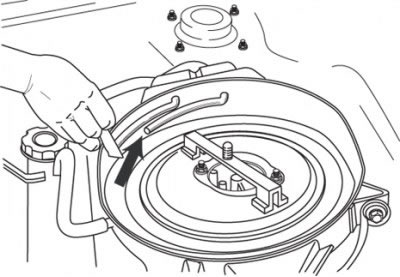
Figure 8.2. Checking the functionality of the air injection system reed valve using a sheet of paper
Place a sheet of paper on the reed valve inlet while the engine is warmed up to operating temperature and idling (figure 8.2).
When the engine is idling, a steady stream of air should be sucked into the valve. Ask an assistant to press the accelerator pedal.
As the engine speed increases, observe the vacuum, which should increase.
If the vacuum does not increase, this indicates a leak in the hose, or that the hose is pinched, or that the reed valves are faulty.
Increase the engine speed to 1500 min⁻¹ and check for exhaust gas leaks at the air supply hose connection.
If the result of both tests is unsatisfactory, replace the reed valve.
Replacement
Remove the air filter.
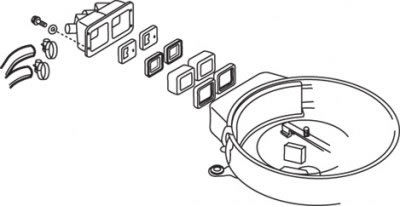
Figure 8.3. Reed plate valve parts
[The article is based on website data: mazbook.ru]
Loosen and remove the screws securing the plate valve housing cover, lift and remove the valves and filters from the housing (figure 8.3).
Installation is carried out in the reverse order of removal.