


Timing belt and related parts (1.8L DOHC)
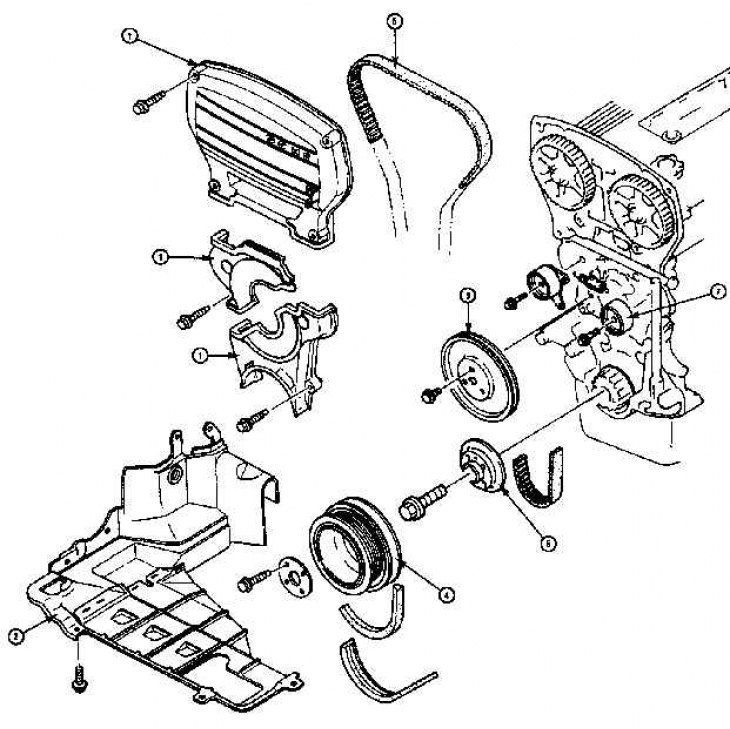
1. Belt covers; 2. Engine protective plate; 3. Water pump pulley; 4. Crankshaft pulley 5. Belt thrust flange; 6. Timing belt; 7. Belt tensioner pulleys
Removal
1. Disconnect the negative battery cable.
2. Put the car on the handbrake.
1.6L models
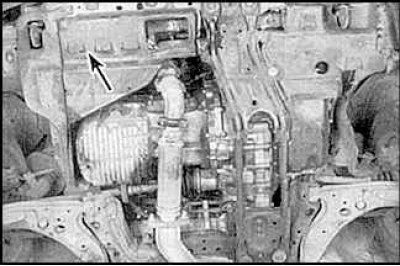
3. Remove the engine protection plate.
4. Remove the power steering and air conditioning drive belt.
5. Remove the alternator drive belt and unscrew the spark plugs.
6. Remove the bolts and water pump pulley.
7. Remove the four crankshaft pulley bolts and remove the pulley.
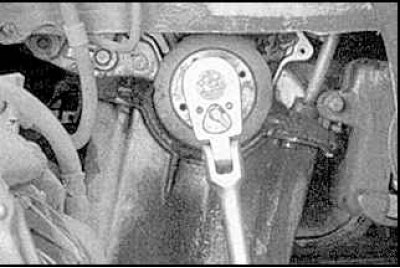
8. Remove the crankshaft sprocket center bolt.
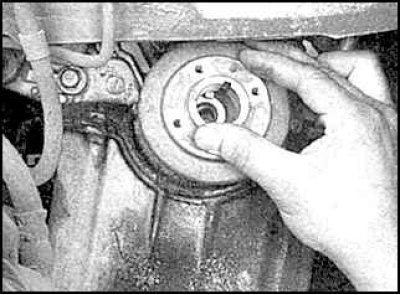
9. Remove the timing belt thrust flange.
10. Remove the upper and lower belt covers.
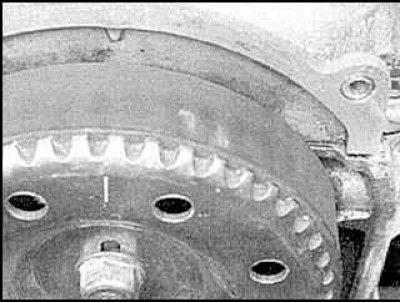
11. Turn the crankshaft.
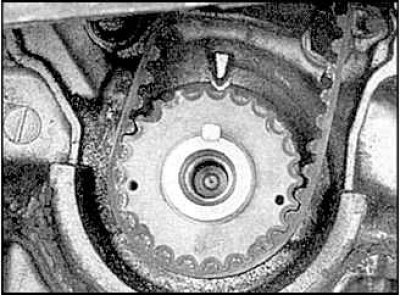
12. Align the timing marks on the camshaft sprocket (SOHC) and the timing marks on the crankshaft sprocket (SOHC).
13. Mark the direction of belt rotation.
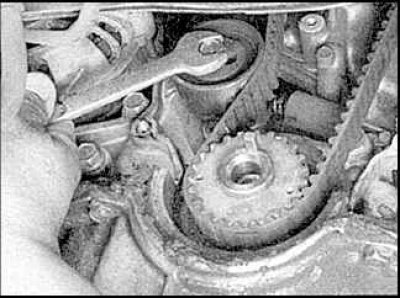
14. Loosen the belt tensioner and remove the belt.
1.8L models
15. Remove the engine protection plate.
16. Remove the power steering, air conditioning and alternator drive belts.
17. Remove the bolts and water pump pulley.
18. Remove the spark plugs and take out the dipstick.
19. Remove the four crankshaft pulley bolts and remove the pulley.
20. Remove the timing belt covers.
21. Remove the crankshaft sprocket bolt.
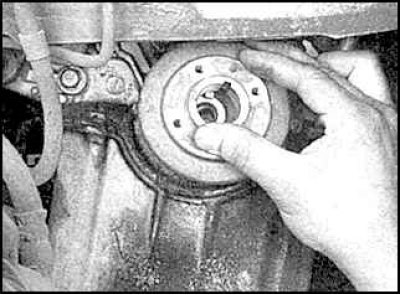
22. Remove the belt thrust flange.
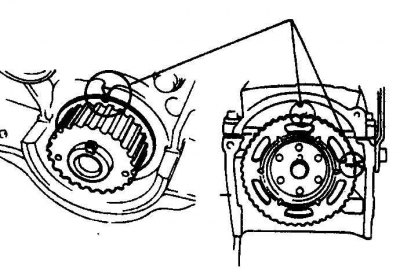
23. Rotate the crankshaft to align the timing marks of the crankshaft and camshaft sprockets (SOHC).
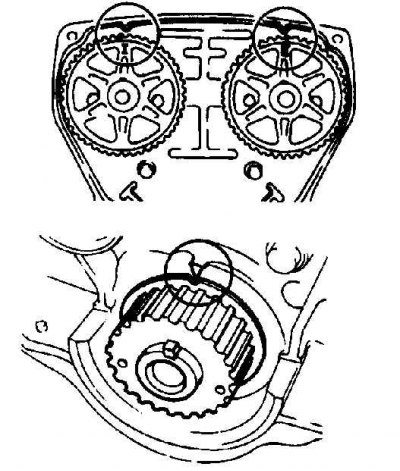
24. Turn the crankshaft so that the timing marks of the crankshaft and camshaft sprockets are aligned (1.8L DOHC).
25. Mark the direction of belt rotation.
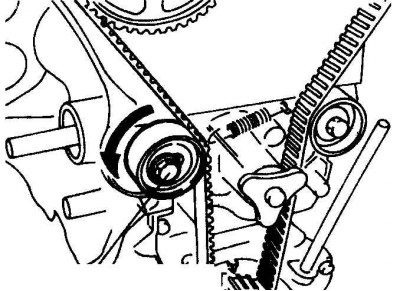
26. Loosen the belt tensioner and remove the belt.
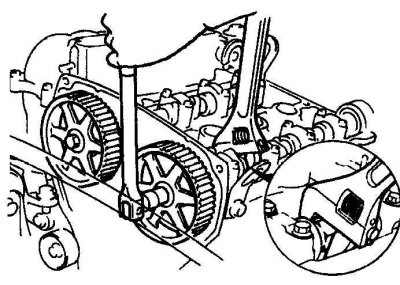
27. If you need to remove the camshaft sprockets to replace the seals, remove the valve cover, unscrew the sprocket bolts and remove the sprockets.
Examination
1. Remove the idler pulleys and inspect their bearings.
2. If the belt is badly damaged, clean the sprockets from any belt residue stuck in them.
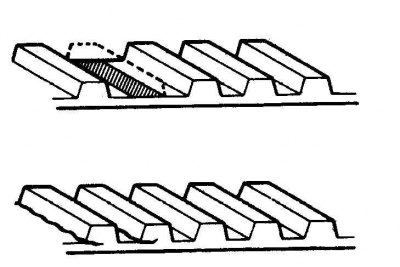
3. Inspect the belt for cracked or missing teeth. If the belt teeth are torn or cracked, then the camshafts or the oil or water pump shafts are probably seizing.
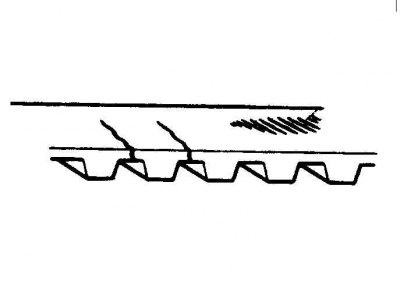
4. If the belt is badly worn or has cracks, the shaft sprockets must be checked.
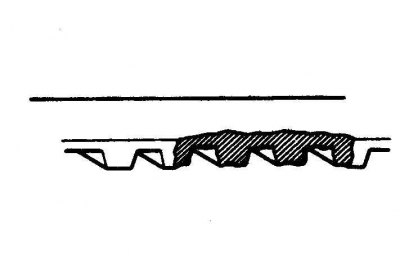
5. If the side surface of the belt is damaged, it is necessary to check the thrust flange and the installation of the sprockets.
6. If necessary, replace the belt and correct the problem.
Installation
1. Clean the belt area.
2. Install the idler pulleys and tensioner pulley.
3. Install the shaft sprockets and tighten the bolts.
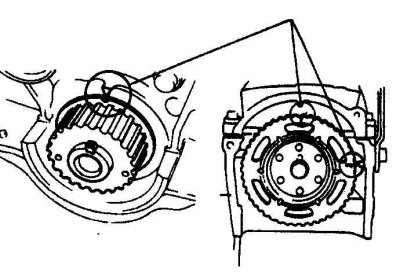
4. Align the timing marks of the crankshaft and camshaft sprockets (SOHC).
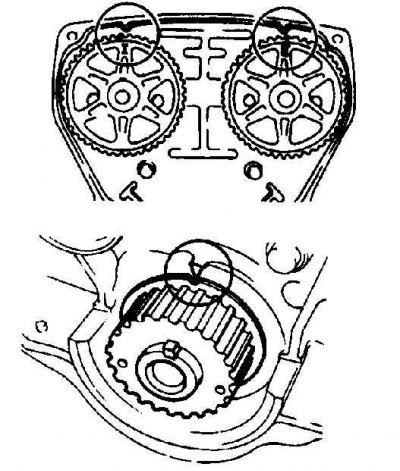
5. Align the timing marks of the crankshaft and camshaft sprockets (1.8L DOHC).
6. Place the belt over the sprockets.
1.6L models
7. Install the belt thrust flange and crankshaft sprocket bolt.
8. Turn the crankshaft two full revolutions and align the timing marks.
9. Check that the camshaft sprocket marks are correctly aligned with the marks on the cylinder head.
10. Loosen the tensioner pulley bolt to tighten the belt.
11. Tighten the tensioner pulley bolt.
12. Turn the crankshaft two full revolutions and align the timing marks.
13. Check the belt tension by pressing on the belt with your hand between the crankshaft and camshaft sprockets. The belt should deflect approximately 13 mm, but not less than 11 mm.
14. Readjust the belt tension if necessary.
15. Tighten the crankshaft sprocket bolt.
16. Install the remaining parts. Check the engine operation.
1.8L models
17. Install the belt thrust flange and crankshaft sprocket.
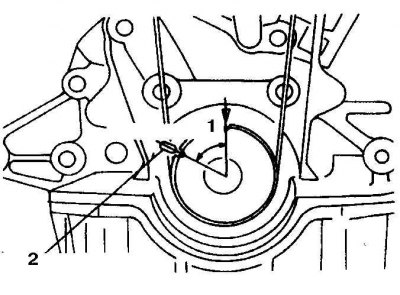
18. Turn the crankshaft clockwise 1 and 5/6 turns and align the timing mark on the crankshaft sprocket with the tension setting mark located on the cylinder block.
1. Approximately 60°
2. Tension setting mark
19. Loosen the tensioner pulley bolt to tighten the belt.
20. Tighten the bolt.
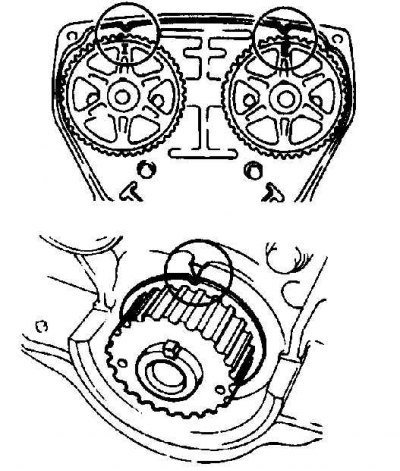
21. Turn the crankshaft 2 and 1/6 turns and align the timing marks of the camshaft and crankshaft sprockets.
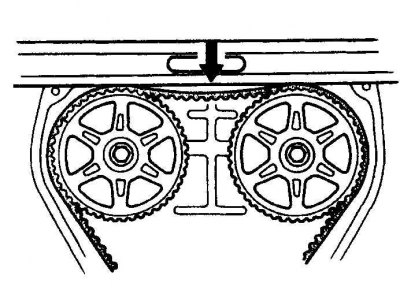
22. Check the belt tension (1.8L DOHC). For 1.8 l 9.5–11.1 mm.
23. Readjust the belt tension if necessary.
24. Tighten the crankshaft sprocket bolt.
25. Install the remaining parts. Check the engine operation.