


2. Inspect the battery terminal connections for cracks, poor contact, and corrosion. White powder deposits under the insulation indicate that the wire is corroded and needs to be replaced.
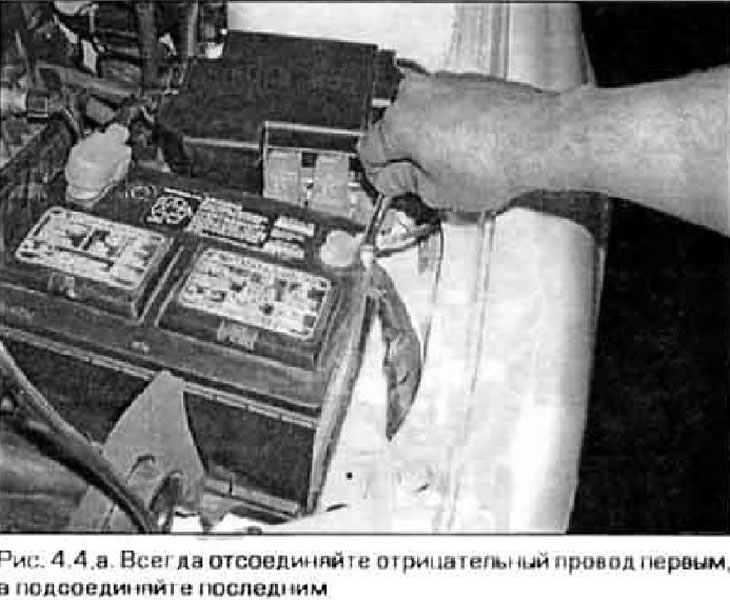
3. When disconnecting the battery, start with the negative cable, and when reconnecting, connect the negative cable last. Otherwise, when loosening the positive terminal, the key may accidentally touch the housing part and cause a short circuit. Even if you only need to disconnect the positive cable, still disconnect the negative cable first.
Warning. If your vehicle's audio system is equipped with anti-theft protection, make sure you have the unlock code before disconnecting the battery.
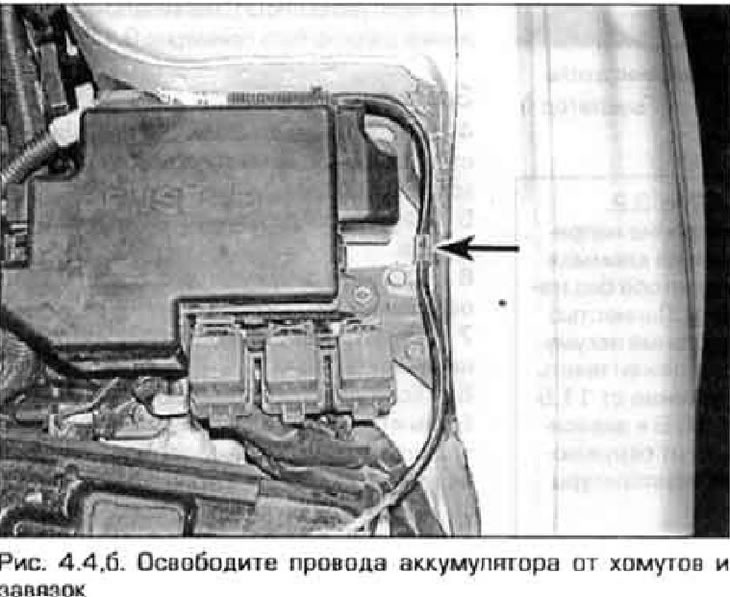
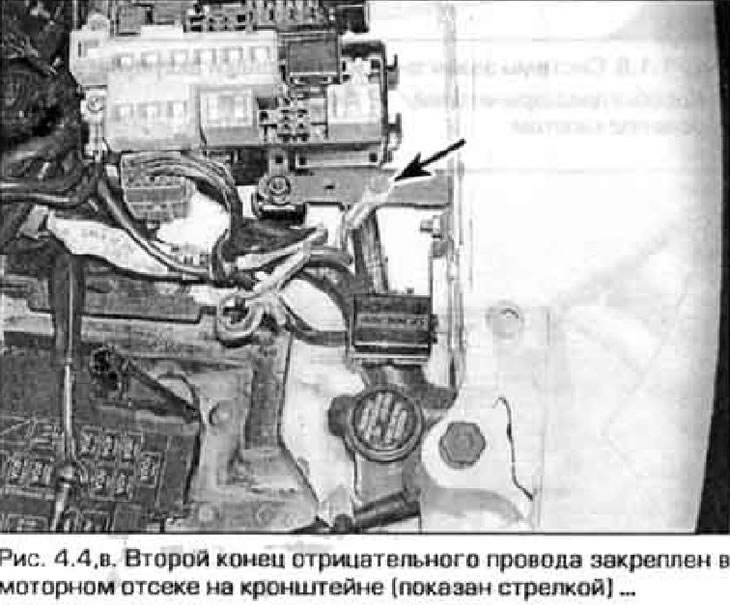
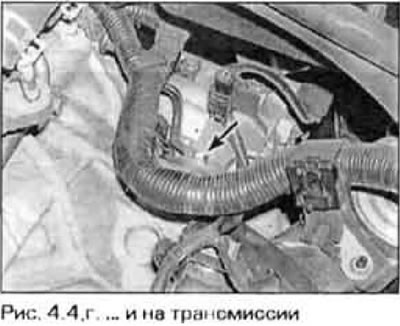
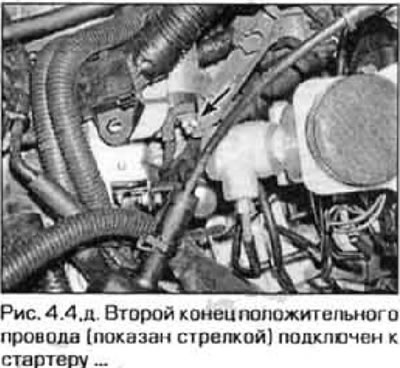
4. Disconnect the wires from the battery, then trace them to the opposite ends and disconnect them from the starter terminal and from the ground. Remember how the wires are laid so that you can lay them the same way after replacement (figure 4.4, a-e).
 |
 |
(Content based on information from: mazbook.ru)
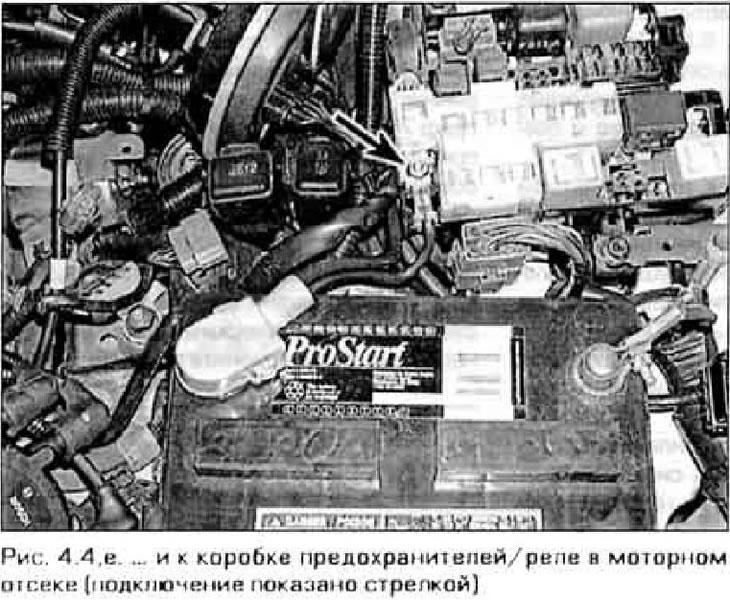
5. If you replace one or both battery cables, take them with you when you go to buy new ones. It is important that the new wires are identical to the old ones. The wires vary: the positive wire usually has red insulation and a large cross-section. The negative wire has black insulation and a smaller cross-section.
6. Clean rust from the threaded connections on the ground and on the starter using a wire brush. Lubricate the connections with petroleum jelly.
7. Connect the wire ends to the ground and to the starter and tighten the fasteners securely.
B. Before connecting the wire to the battery terminal, make sure that the wire is long enough to reach the terminal without additional tension.
9. Connect the positive wire first, then the negative wire.