


2. It is recommended to replace tires in pairs on the same axle and not to mix the type, pattern and size of the tread.
3. Since tire pressure has a standard value during handling and wear, the pressure in all tires should be checked at least once a month or before each long trip. Tire pressure should be checked and adjusted when the tire is cold.
4. Correct pressure reduces wear, see Section 1.
5. Tires should be replaced when the tread depth is worn to a minimum of 1.5 mm. Tires have wear indicators that appear as a stripe across the tread when the tire is worn beyond the limit. Correct tire pressure affects tire mileage. Rapid cornering, excessive acceleration or braking will increase tire wear. Extremely worn tires are very susceptible to punctures and are especially dangerous in wet weather conditions.
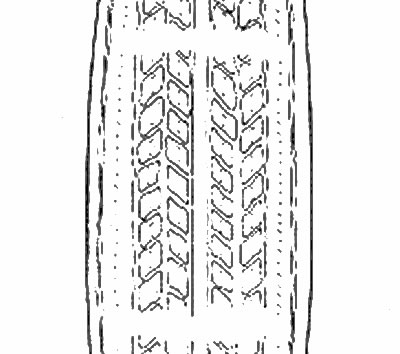
Tread wear indicators appear as stripes across the tread
6. The tire tread pattern clearly identifies problems with maintenance or adjustment of tires and suspension components. The accompanying illustration shows some common examples of tire wear patterns and the causes that lead to such wear.
7. Wheels should be replaced if they are bent, rusted or oxidized. Damaged wheels should be replaced with new ones, not reconditioned ones. Aluminum wheels are particularly prone to corrosion and chipping. When washing aluminum wheels, use a soft cloth.
8. Unbalanced wheels adversely affect the vehicle's movement and impact the mileage of the tires. Whenever a tire is mounted on a wheel, the wheel must be balanced in a workshop equipped with the appropriate specialized equipment.
9. The pressure in the spare tyre must be checked at least once a month and maintained at 415 kPa.
10. The compact spare tire and wheel are designed for use only with each other and not with other types or sizes of wheels and tires.
11. Continuous use of the compact spare tire at speeds exceeding 80 km/h is not recommended. In addition, the compact spare tire has a tread life of approximately 4,800 kilometers.
[The article is reprinted from the portal: Mazbook]
12. The spare tire is designed for Mazda vehicles only and should not be used on any other vehicle. Also, the spare tire diameter is smaller than that of the permanent tire and the ground clearance is reduced by approximately 25 mm.
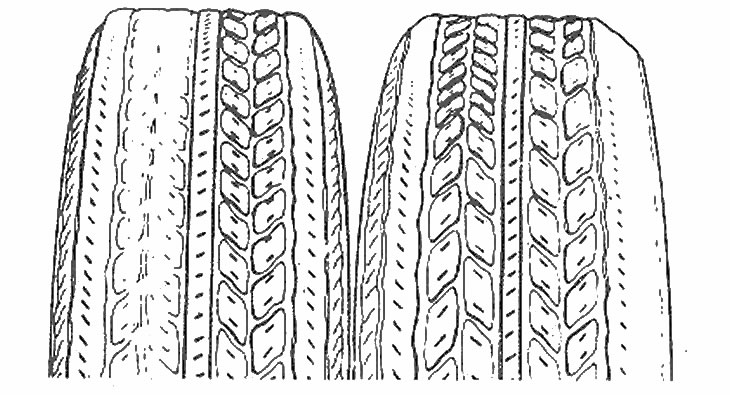
Typical abnormal tire wear
- Incorrect wheel installation
- Non-uniformity of tire design
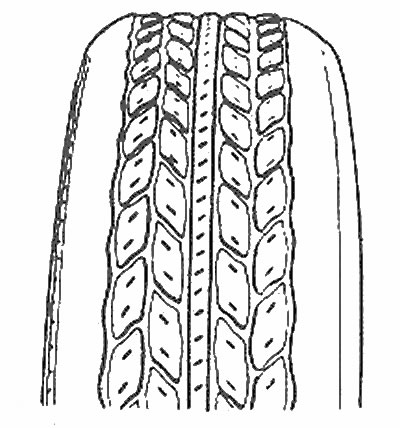
Typical abnormal tire wear
- Steep cornering
- Excessive pressure
- Disadvantage of wheel rotation