


Note: It is better to replace rigid metal brake pipes in a workshop, as experience is required for high-quality installation.
Thick, pressure-resistant brake hoses are used as flexible connections between fixed and moving vehicle parts, such as brake calipers. If visible damage is detected, the hoses must be replaced.
Caution: Brake hoses must not come into contact with oil or petrol, and hoses must not be painted or coated with protective compounds.
Removal
Caution: Observe the rules for handling brake fluid.
Raise and support the vehicle.
Remove the brake caliper.
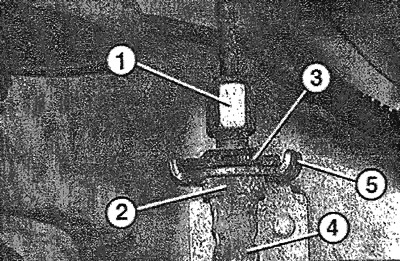
Loosen the union nut (1), holding the brake hose by the hexagon (2). Pull out the fastening clamp (3) and remove the brake hose (4) from the holder (5).
Caution: Collect leaking brake fluid with a rag. If necessary, plug the open brake pipe connection.
Installation
(Based on website data www.MAZbook.ru)
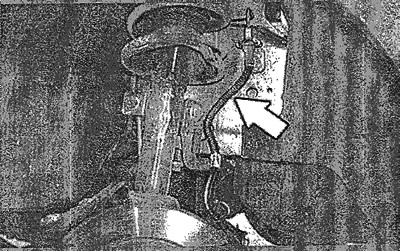
Use only genuine brake hoses. Install the new brake hose (arrow) in the same position as before removal and tighten its fasteners to a torque of 15 Nm.
Install the brake caliper.
Remove air from the brake system.
After installing the hose, with the front wheels raised, turn the wheels left and right until they stop and make sure that the hose follows all wheel movements and does not rub against other parts or wheels.
Lower the car.
With the vehicle parked on the ground, check whether the brake hose follows the wheels and does not rub against other parts.
Conduct a security check.
Security check
Are the brake hoses tight?
Is the brake hose in the bracket?
Are the air bleed valves tightened?
Is there enough brake fluid?
Conduct a tightness check with the engine running. To do this, press the brake pedal with a force of 200-300 N (20-30 kg) for about 10 seconds. The brake pedal should not drop. Check all connections for tightness.
Finally, brake the car several times on a road with light traffic.