


Removal and installation
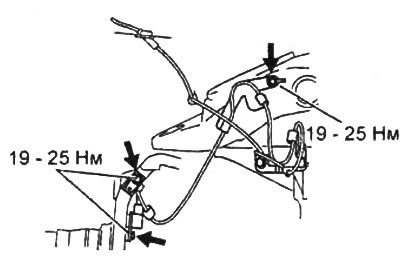
Note: Carrying out repairs without first removing the ABS wheel speed sensor may damage the sensor wiring. To prevent damage to the sensor or its wiring, remove the wheel speed sensor and secure it to the side before performing major repairs.
1. Remove the wheel speed sensor and sensor brackets.
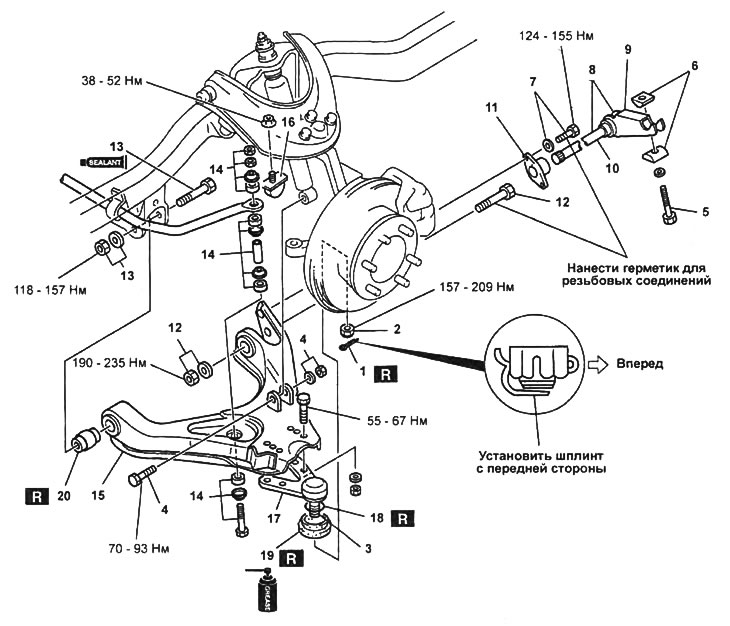
2. Remove the parts in the order of their numbering in the assembly drawing "Removing and installing the torsion and lower arm of the front suspension".
Note:
- Installation is carried out in the reverse order of removal.
- After installation:
- check and, if necessary, adjust the height of the front suspension;
- check and, if necessary, adjust the front suspension installation angles.
Removal and installation the torsion bar and lower arm of the front suspension.
1 - cotter pin,
2 - nut,
3 - ball joint of the lower arm of the front suspension,
4 - bolt and nut for fastening the lower part of the shock absorber,
5 - adjusting bolt,
6 - hinge nuts,
7 - bolt and washer,
8 - torsion bar assembly,
9 - anchor lever,
10 - torchon,
11 - support bracket,
12 - bolt, nut and washer of the rear arm mount,
13 - bolt, nut and washer of the front arm mount,
14 - bolt, bushing, spacers and nut for fastening the anti-roll bar,
15 - lower arm of the front suspension,
16 - front suspension travel limiter,
17 - ball joint of the lower arm of the front suspension,
18 - retaining ring,
19 - anther,
20 - front hub.
Notes on removal
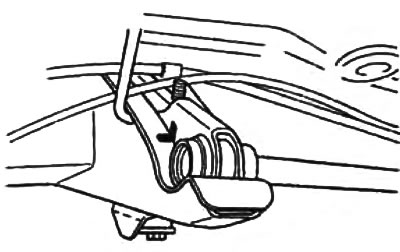
1. Anchor lever bolt.
Before loosening the anchor arm bolt, make marks on the anchor arm and the body.
(Article is available on the website: «MAZBOOK.RU»)
2. Torsion.
Before removing the torsion bar, mark the torsion bar and anchor arm, torsion bar and support bracket.
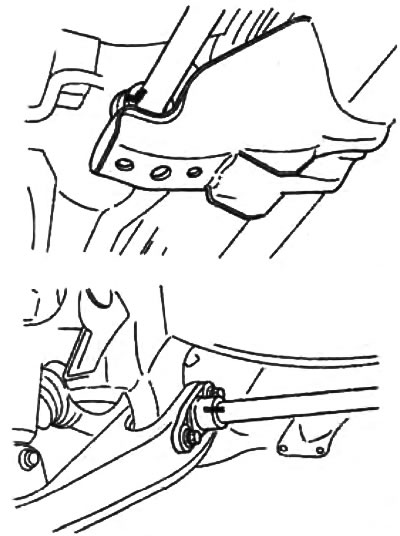
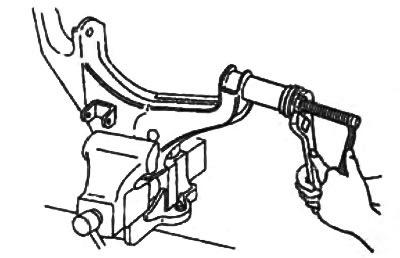
3. Front hub.
Using a puller, remove the front bushing from the lower arm.
Installation Notes
1. Front hub.
Note: Do not reuse the removed bushing.
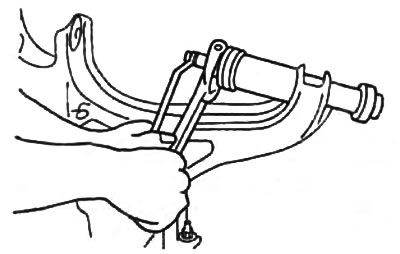
a) To facilitate installation, apply soapy water to the new front bushing.
b) Using the special tool, install the new front bushing into the lower arm.
2. Torsion.
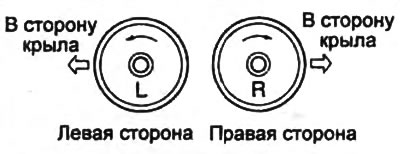
a) For correct installation, check the marks on the ends of the torsion bars and install the torsion bars according to the marks. The "L" mark indicates the left side, the "R" mark indicates the right side.
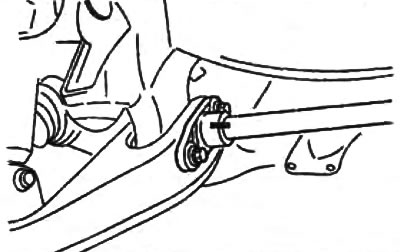
b) Align the marks on the torsion bar and the support bracket and install the torsion bar.
3. Anchor lever.
Align the marks on the anchor arm and torsion bar and install the anchor arm.
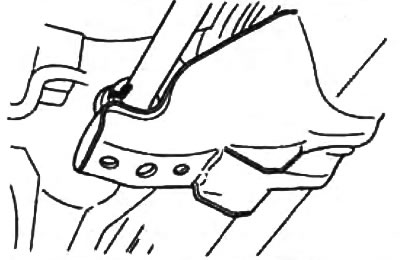
4. Anchor lever adjusting bolt.
Turn the adjusting bolt until the marks on the anchor arm and the body are aligned.
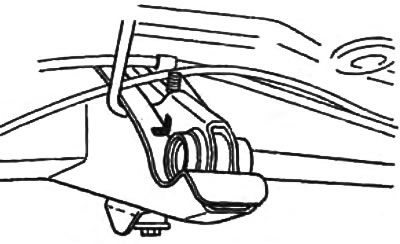
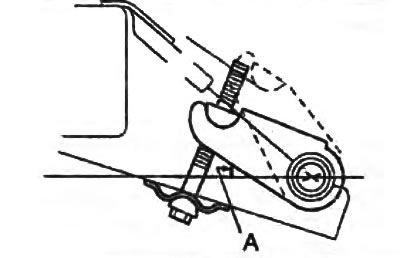
If marks were not made during removal or a new anchor lever is installed, then:
- Load the front suspension until the upper arm contacts the suspension travel limiter.
- Tighten the adjusting bolt to ensure that angle "A" is within the range of 55°30' - 64°30'.
Examination
1. Remove the front lower suspension arm from the vehicle.
2. Check the lever for damage, cracks or bends.
3. Make sure there is no excessive play in the ball joint of the lever.
4. Check the moment of resistance to rotation of the ball joint pin.
a) Turn the ball joint pin five times.
b) Install a special device on the ball joint pin and measure the rotational resistance using a dynamometer.
- Dynamometer readings: 20 - 34 N
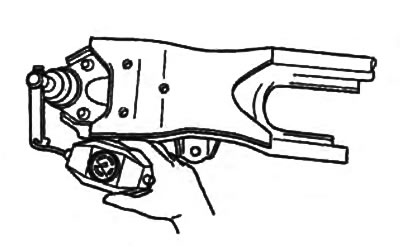
If the measured resistance is not within the normal range, replace the control arm assembly.