
MazBook.ru
English Русский
Български
Беларускі
Український
Српски
Hrvatski
Română
Polski
Slovenský
Magyar
• Bookmark • Sitemap • Contacts •   
Cars Opel Cars Ford Cars Volkswagen Cars Audi Cars Kia Cars Renault Cars Peugeot


Familia Capella Mazda3 Mazda6 CX-? Others Articles
Capella 3 (1982-1992, petrol) Capella 3 and 4 (1982-1992) Capella 4 (1987-1992) Capella 5 (1991-1997) Capella 6 (1997-2005, petrol)

Air injection system for 1986 and 1987 models (Mazda Capella GC)

  • Home
  • Mazda Capella
  • Capella GC (1982-1992)
  • Power unit
  • Emission reduction
  • Air injection system for 1986 and 1987 models
0
Contents: Checking the valves ⇓ Replacing valves ⇓
Turbocharged and fuel-injected engines are equipped with exhaust gas toxicity reduction systems, which, in principle of operation and purpose, are similar to those described in Section. 8 "Emission control system", however, due to certain design differences, the testing and maintenance procedures for this system are somewhat different and require separate consideration.

When troubleshooting the exhaust gas toxicity reduction system, you should also check the fuel supply and exhaust systems, as well as the electrical components, as they are interconnected.

The air injection system consists of a control valve and a reed valve, which are installed on the air filter housing. Turbocharged engines, in addition to the valve on the air filter housing, have additional remote reed valves mounted on the right shock absorber cup.
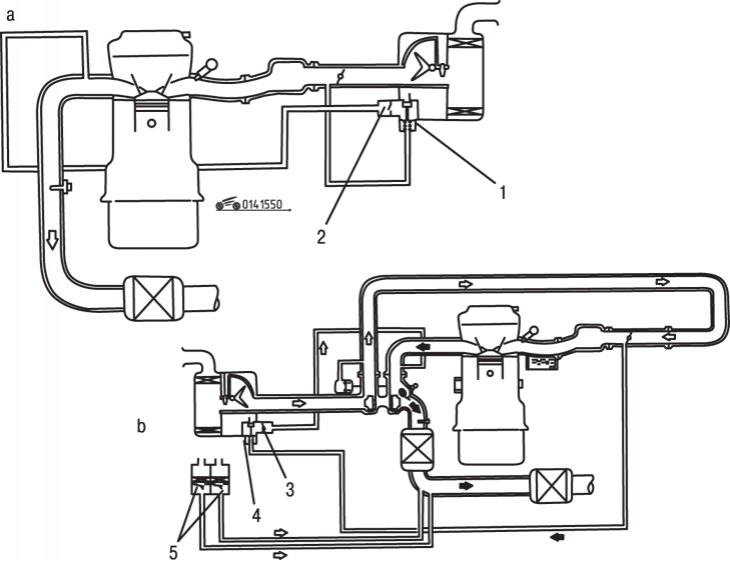
Figure 15.50. Air injection system diagram: a – non-turbocharged engines; b – turbocharged engines;…

Figure 15.50. Air injection system diagram: a – non-turbocharged engines; b – turbocharged engines; 1, 4 – control valves; 2, 3, 5 – reed valves


When the vacuum in the intake manifold reaches a certain level, the control valve opens and fresh air is sucked into the manifold due to a sharp increase in the exhaust gas flow rate (figure 15.50). This ensures the afterburning of unburned fuel residues and reduces the hydrocarbon content in the exhaust gases. The two remote valves in turbocharged vehicles only operate when there is a strong enough exhaust flow to draw air through these valves (typically at an engine speed of 2500 min⁻¹).


Checking the valves


To check the air injection system, remove the air cleaner cover and idle the engine. A noticeable flow of air should be sucked into the air duct, which is checked using a piece of paper held up to the hole.

Increase the engine speed to 2500 min⁻¹ and make sure there is no air intake. Visually check that exhaust gases do not escape through the opening.

If the system does not operate properly, check the air check valve and reed valve.

To check the air check valve, remove it from the housing and connect it to a vacuum pump. Gradually bleed the air and observe the stem, which should extend at a vacuum of 180–280 mmHg. If the valve fails the test or is leaking, replace it.

To check the reed valve, warm up the engine and set it to idle mode. Connect a vacuum pump and pump out air to a pressure of 500 mmHg. Lift the air filter cover and check if air is being sucked into the hole. Increase the engine speed to 2500 min⁻¹ and check for exhaust gases. If the valve fails the test, replace it.

To test remote reed valves (for turbocharged engines only) increase the engine speed to 2500 min⁻¹ and check the air intake into the channels. Make sure there is no exhaust leak. If both valves fail the test, replace them.

Replacing valves
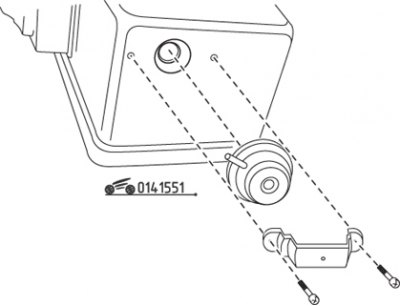


Figure 15.51. Control valve fastening elements

Figure 15.51. Control valve fastening elements


To replace the check valve, unscrew the two screws and remove the valve from the air filter housing (figure 15.51). Installation is carried out in the reverse order of removal.
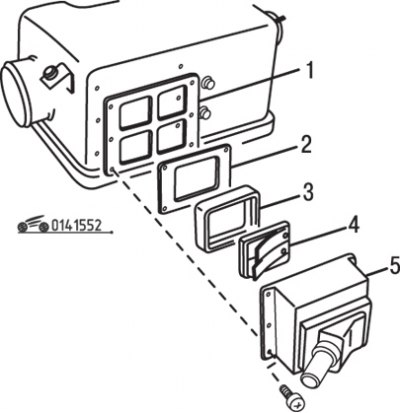
Figure 15.52. Reed valve fastening elements: 1 – gasket; 2 – mounting plate; 3 – rubber insert; 4 –…

Figure 15.52. Reed valve fastening elements: 1 – gasket; 2 – mounting plate; 3 – rubber insert; 4 – reed valve; 5 – body


To replace the reed valve, remove the air cleaner cover. Remove the mounting plate, rubber insert, gasket and reed valve from the filter housing (figure 15.52). Check the condition of the insert; if there are cracks or other signs of damage, replace the insert. Installation is carried out in the reverse order of removal. Be sure to replace the gasket.
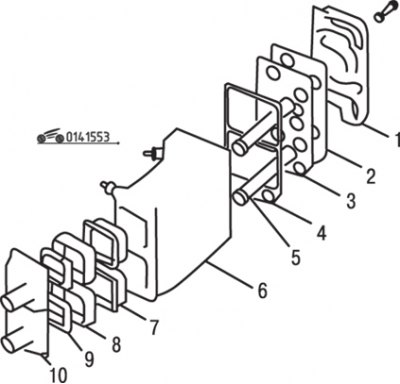
Figure 15.53. Fastening elements of remote reed valves: 1 – back cover; 2, 4 – gaskets; 3 –…

Figure 15.53. Fastening elements of remote reed valves: 1 – back cover; 2, 4 – gaskets; 3 – distribution plate; 5 – guide tube; 6 – body; 7 – air filter; 8 – rubber insert; 9 – reed valve; 10 – front cover


For replacing remote reed valves (for turbocharged engines only) remove the valve body from the right shock absorber cup and place it on a clean surface. Remove the four screws at the corners of the cover and remove the valve parts (figure 15.53). During assembly, replace the gaskets and, if necessary, the rubber inserts.
This article is available at: russian, bulgarian, belarusian, ukrainian, serbian, croatian, romanian, polish, slovak, hungarian
This text was checked by: Georgy Afanasyev
Share with friends on social networks:

Previous
Capella 3 and 4 » Emission reduction
Next

Three-way solenoid valve (since 1984)
Air injectors — removal and installation (since 1984)
Reed valves — removal and installation (since 1984)
Air valves — removal and installation (since 1984)
Air injection system (since 1984)
Evaporative Emission Control (EEC) system (since 1986)
Crankcase ventilation (PCV) system (since 1986)
Exhaust gas recirculation system (since 1986)
More articles on repairing other Mazda models
Fuel injection system of the B6 engine Mazda Familia 5 (1985-1989)
Electronic immobilizer (anti-theft system) Mazda3 BK (2003-2009)
Door lock control system Mazda6 GG (2002-2008)
Precautions when working with Supplemental Restraint System (SRS)… Mazda CX-5KE (2012-2017)
Technical data of the diesel fuel injection system Mazda 121 (3) (1996-2003)
Link in different formats to this article
Comments and feedback from visitors
No comments yet


How much will 18 + 46 ?


Capella 6 (1997-2005, petrol) 
  • General information
  • Introduction to guide
  • User manual
  • Troubleshooting
  • Maintenance
  • Power unit
  • 4-cylinder engines
  • 6-cylinder engines
  • Engine overhaul
  • Cooling and ventilation
  • Power and exhaust systems
  • Engine electrics
  • Control system
  • Transmission
  • Mechanical gearbox
  • Automatic gearbox
  • Clutch and drive shafts
  • Chassis
  • Brake system
  • Car suspension
  • Steering
  • Body
  • Exterior (external elements)
  • Interior (internal elements)
  • Doors, windows and locks
  • Electrical equipment
  • Equipment and devices
  • Electrical circuits
Capella 5 (1991-1997) 
  • General information
  • User manual
  • Maintenance
  • Helpful hints
  • Power unit
  • Petrol engines 1.6 and 1.8
  • Petrol engines 2.0
  • 2.5 petrol engines
  • Overhaul engines 1.6 and 1.8
  • Overhaul engines 2.0 and 2.5
  • Diesel engine 2.0
  • Engine electrics
  • Cooling system
  • Air conditioner
  • Carburetor Nikki 30/34
  • Power system (1.6 and 1.8)
  • Power system (2.0 and 2.5)
  • Control system
  • Transmission
  • Mechanical gearbox
  • Automatic gearbox
  • Clutch and axles
  • Chassis
  • Brake system
  • Suspension and wheels
  • Steering
  • Body
  • Exterior (external elements)
  • Interior (internal elements)
  • Doors and windows
  • Electrical equipment
  • Equipment and devices
  • Electrical circuits
Capella 4 (1987-1992) 
  • General information
  • Introduction to manual
  • Vehicle specifications
  • Power unit
  • Engine repair
  • Lubrication system
  • Cooling system
  • Fuel system (carburetor)
  • Fuel injection (FE)
  • Fuel injection (DOHC)
  • Fuel system (diesel)
  • Ignition system
  • Transmission
  • Clutch
  • Gearbox
  • Drive shafts
  • Chassis
  • Front suspension
  • Rear suspension
  • Steering system
  • Brake system
  • Electrical equipment
  • Equipment and devices
  • Electrical circuits
Capella 3 and 4 (1982-1992) 
  • General information
  • User manual
  • Maintenance
  • Power unit
  • Gasoline engine
  • Engine overhaul (gasoline)
  • Diesel engine
  • Cooling and heating
  • Supply system
  • Ignition system
  • Emission reduction
  • Transmission
  • Clutch
  • Mechanical gearbox
  • Automatic gearbox
  • Drive shafts
  • Chassis
  • Brake system
  • Suspension and wheels
  • Steering
  • Body
  • Exterior (external elements)
  • Interior (internal elements)
  • Electrical equipment
  • Equipment and devices
  • Power devices
  • Electrical circuits
Capella 3 (1982-1992, petrol) 
  • General information
  • User manual
  • Maintenance
  • Troubleshooting
  • Late models
  • Power unit
  • Engine in car
  • Engine overhaul
  • Cooling and heating system
  • Fuel and exhaust system
  • Engine electrical system
  • Emission control system
  • Transmission
  • Mechanical gearbox
  • Automatic gearbox
  • Clutch and drive shafts
  • Chassis
  • Brake system
  • Suspension and wheels
  • Steering
  • Body
  • Exterior (external elements)
  • Interior (internal elements)
  • Electrical equipment
  • Equipment and devices
  • Lighting and lamps
  • Electrical circuits
MazBook.ru © 2018–2026 · Mobile version · Articles and news · Sitemap: EN BG BY UA RS HR RO PL SK HU · Feedback · Site search · Add to bookmarks Familia 5 (BF) · Familia 6 (BG) · Capella 3 (GC) · Capella 3 and 4 (GC) · Capella 4 (GD) · Capella 5 (GE) · Capella 6 (GF) · Mazda3 BK · Mazda6 GG · CX-5KE · Mazda 121 (3) · Mazda BT-50 (1) ·
By continuing to use the site, you agree to the use of cookies 🔐