


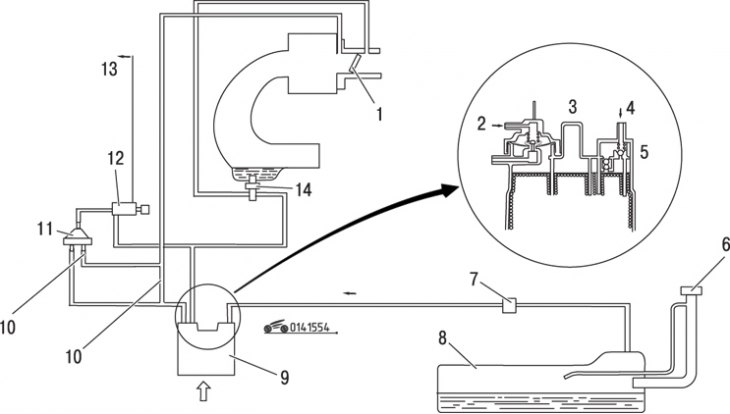
Figure 15.54. Schematic diagram of the fuel vapor recovery (EEC) system: 1 – throttle valve; 2 – from the water temperature valve; 3 – purge control valve No. 1; 4 – from the fuel tank; 5 – purge control valve No. 2; 6 – filler cap; 7 – three-way control valve; 8 – fuel tank; 9 – tank; 10 – throttle; 11 – purge control valve No. 3; 12 – three-way electromagnetic distributor; 13 – to the control unit; 14 – except EC-AT
The fuel vapor recovery system ensures the absorption of gasoline vapors by the adsorber (activated carbon tank) with the engine not running. When the engine starts, fuel vapors are sucked into the receiver and burned during engine operation (figure 15.54).
Checking the fuel vapor recovery system
To check the condition of the fuel vapor recovery system, warm up the engine and set it to idle mode. Disconnect the hose from purge control valve #1 and connect a vacuum gauge to the disconnected hose. Increase the engine speed to 2500 min⁻¹ and observe the vacuum gauge readings. The vacuum should be at least 150 mmHg. If the reading is different, check the water temperature valve. Connect the hose to purge valve #1.
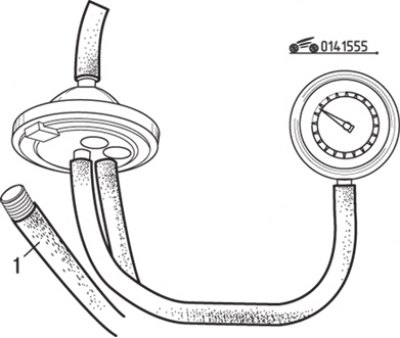
Figure 15.55. Disconnecting the vacuum hose (1) from the purge control valve No. 3
Disconnect the vacuum hose from the purge control valve #3, mounted above the ignition distributor, and close it with a suitable plug (figure 15.55). Connect a vacuum gauge to the valve, start the engine and bring the crankshaft speed to 1500 min⁻¹; the vacuum gauge should show a vacuum. If there is no vacuum, check the three-way solenoid valve and purge control valve No. 3.
Disconnect the vacuum hose from the reservoir. Connect a vacuum pump to the evaporator hose and try to create a vacuum. If the three-way valve or evaporator tube is not clogged, it is impossible to create a vacuum. The appearance of a vacuum indicates a blockage in the evaporator tube or in the three-way control valve.
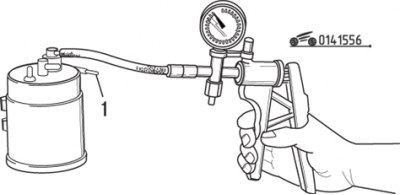
Figure 15.56. Using a vacuum gauge and purging channel (1) when checking purge control valve No. 1
To check check valve #1, blow out channel "A" (figure 15.56). Air should not pass through the valve. Attach a vacuum pump to purge valve #1 and create a vacuum of 130 mmHg. Air should now flow freely through the valve. If air does not pass, replace the canister tank.
To check the purge control valve #2, disconnect the hose from the evaporator tube and blow through the hose. Air should flow freely through the valve, otherwise replace the canister tank.
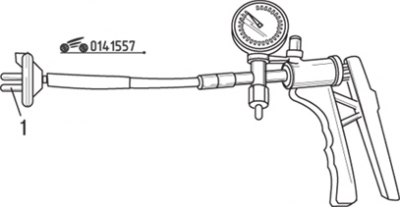
Figure 15.57. Using a vacuum gauge and purging channel (1) when checking purge control valve No. 3
To check the purge control valve #3, remove it from the vehicle and connect a vacuum pump as shown in the figure 15.57. Blow through channel 1 and make sure that when the vacuum is less than 60 mmHg, air does not pass through the valve. Create a vacuum of 75 mmHg in the valve chamber. In this case, air should pass freely through the valve. If the results of both tests are negative, replace the valve.
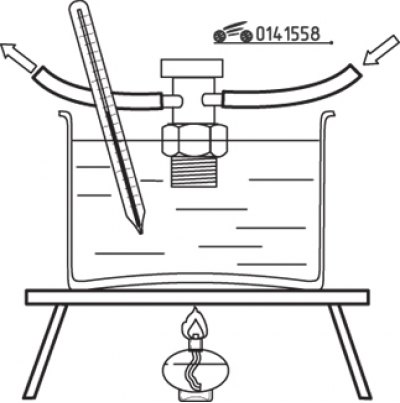
Figure 15.58. Checking the water temperature valve by blowing it with air at a temperature of 50°C
To check the water temperature valve, unscrew it from the intake manifold and attach hoses to each of the fittings. Immerse the valve in water at 50°C and blow through the hose (figure 15.58). Air should pass freely through the valve. Otherwise, replace the valve.
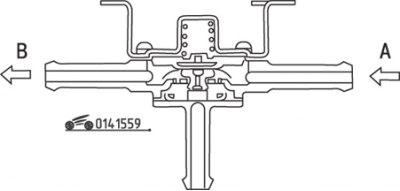
Figure 15.59. Checking the three-way check valve: A, B, C - fittings
To check the three-way check valve, remove it from the vehicle. According to the drawing 15.59 Apply air to port A and check that air comes out of port B. Then close port B and check that air comes out of port C. Plug port B and connect a vacuum pump to port A. Create a vacuum and check that air is sucked into port C. If any of these tests fail, replace the three-way check valve.
Data provided by the website (mazbook.ru)
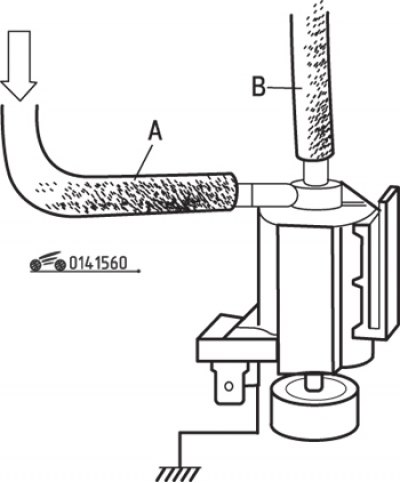
Figure 15.60. Checking the three-way electromagnetic valve: A, B – fittings
To check the three-way solenoid valve, remove it from the vehicle. Connect the hoses to each of the valve fittings as shown in the figure 15.60. Apply air to port A and make sure that air comes out of the air filter. Then apply voltage from the battery to the valve contacts – air should come out of the B connector. If the test results are negative, replace the valve.
Replacement of elements
Two purge valves are built into the adsorber tank, so replacing them separately is not possible. To replace purge valve #3, disconnect the hoses one at a time and connect them to the new valve.
To remove the water temperature valve, cool the engine, then drain the coolant to the level below the valve. Disconnect the two vacuum hoses and remove the valve from the intake manifold. Before installation, wrap the threaded part of the valve with Teflon tape. Check the integrity of the ends of the hoses. The presence of cracks or hardening may be the cause of a leak. Tighten the valve by hand, then tighten securely with a wrench. Place the hoses on the valve fittings and restore the coolant level.
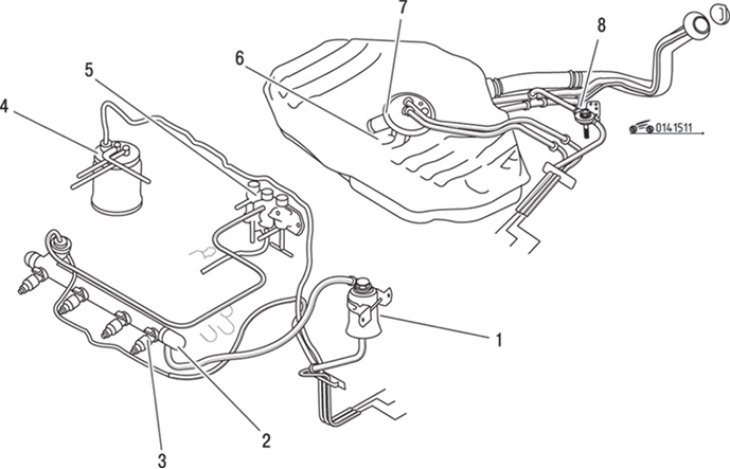
Figure 15.11. Elements of the fuel supply system: 1 – fuel filter (on the high-pressure line); 2 – fuel distribution line; 3 – nozzle; 4 – tank; 5 – pressure regulator control valve; 6 – fuel tank filter (on the suction side); 7 – fuel pump; 8 – three-way distribution valve
The three-way control valve is installed near the fuel tank (see Figure 15.11). For proper assembly, attach the marks with tape, then loosen the clamps and disconnect the hoses from the valve. Remove the screws and remove the valve. If there are cracks or hardening of the hoses, replace them. Installation is carried out in the reverse order of removal. Place the hoses on the corresponding fittings and secure with clamps.
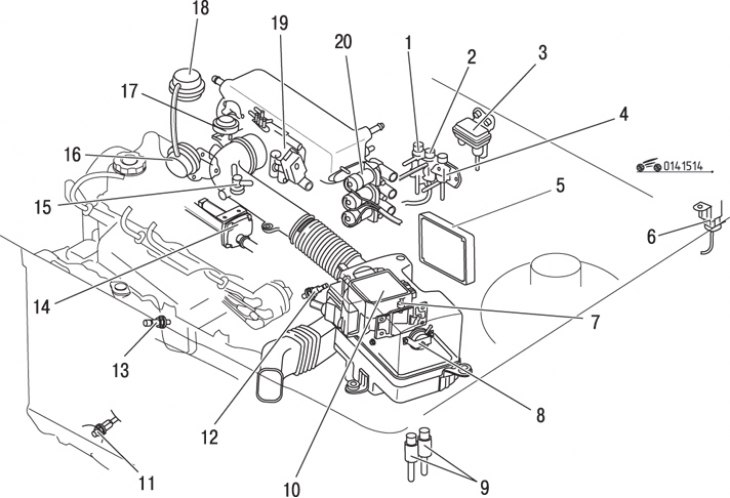
Figure 15.14. Location of components of the electronic control system of a non-turbocharged engine: 1 – three-way electromagnetic distributor; 2 – pressure regulator control valve; 3 – atmospheric pressure sensor; 4 – three-way electromagnetic distributor; 5 – control unit; 6 – fuel pump relay; 7 – intake air temperature sensor; 8 – air control valve; 9 – main relay; 10 – air flow meter; 11 – temperature switch; 12 – analog coolant temperature sensor; 13 – oxygen concentration sensor; 14 – air valve; 15 – thermostat; 16 – exhaust gas recirculation control valve; 17 – pneumatic shock absorber; 18 – recirculation valve with smooth characteristic; 19 – throttle opening angle sensor; 20 – bypass electromagnetic valve
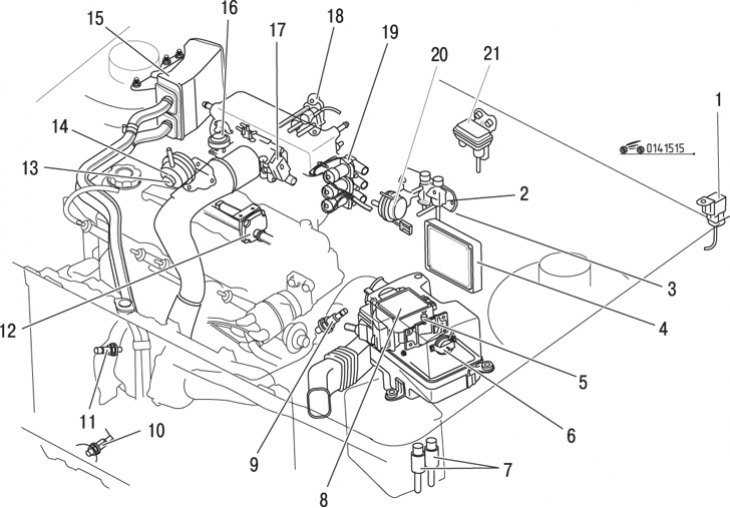
Figure 15.15. Location of components of the electronic control system of a turbocharged engine: 1 – self-releasing fuel pump relay; 2 – pressure regulator control valve; 3 – three-way electromagnetic distributor; 4 – control unit; 5 – intake air temperature sensor; 6 – air control valve; 7 – main relay; 8 – air flow meter; 9 – analog coolant temperature sensor; 10 – temperature switch; 11 – oxygen concentration sensor; 12 – air valve; 13 – exhaust gas recirculation control valve; 14 – position exhaust gas recirculation sensor; 15 – reed valve body; 16 – pneumatic shock absorber; 17 – throttle assembly; 18 – electromagnetic recirculation valve; 19 – bypass electromagnetic valve; 20 – pressure relay; 21 – atmospheric pressure sensor
The three-way electromagnetic distributor is mounted on the wall of the engine compartment; in most cars it is located on the leftmost edge of the dashboard (see figure 15.14, 15.15). To remove the valve, tape the marks on the hoses so that they can be reinstalled in their original locations when reassembling, then remove the hoses. Disconnect the connector, use a small screwdriver to remove the retaining ring and pull the valve out of the panel. Installation is carried out in the reverse order of removal.