


2. Locate the valve vacuum chambers (figure 15.2, a, b).
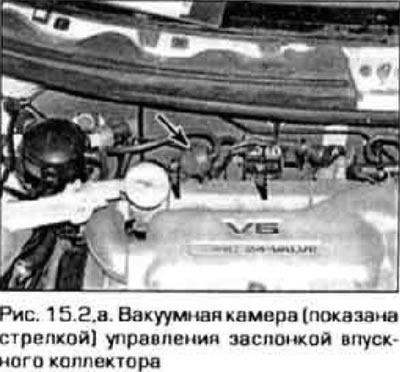
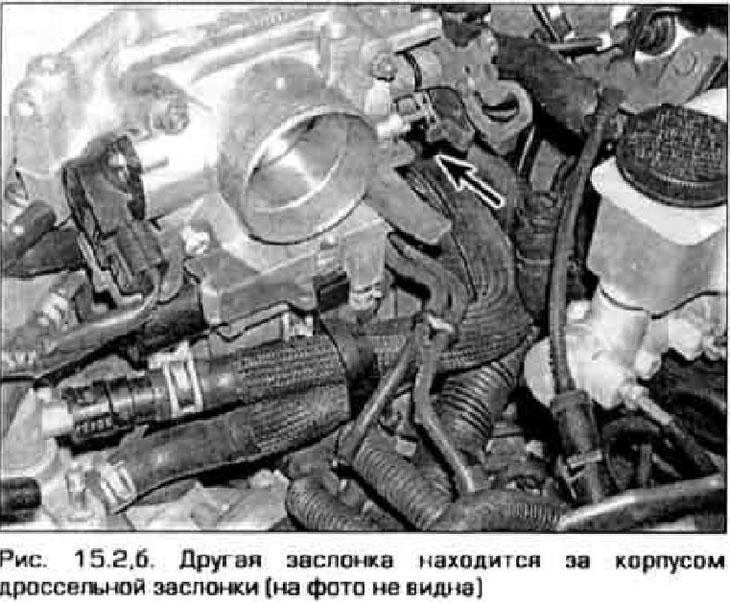
3. Warm up the engine. While idling, quickly turn and release the throttle to increase engine speed. The control rods of the duct configuration flaps should start moving. If this does not happen, check the vacuum hoses of the actuator chambers for cracks or poor fastening. If the hoses are OK, check other system components as follows.
Vacuum actuators
Examination
4. With the engine stopped, disconnect the vacuum hoses from the actuators. Connect a vacuum pump to the device and create a vacuum in the chamber. The damper control rod should move. If this does not happen, replace the actuator.
Replacement
5. Disconnect the vacuum hose from the actuator. Disconnect the rod from the air damper, unscrew the actuator mounting bolts and remove it from the engine.
6. Installation is carried out in reverse order.
Solenoid valves
Examination
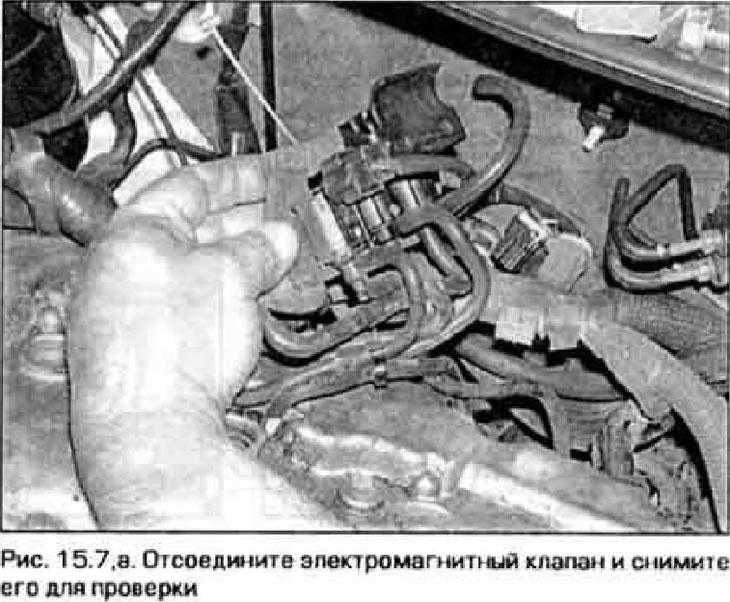
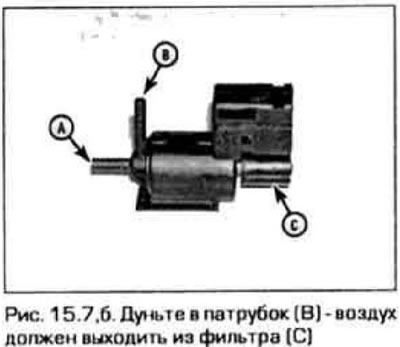
7. Disconnect the vacuum hoses from the solenoid valve, disconnect the electrical connectors and remove the valves (figure 15.7.a). Blow into nozzle B (figure 15.7,b). Air should come out of filter C at the end of the valve.
8. Disconnect the electrical connector from the valve and connect the battery voltage to the valve terminals (figure 15.8).
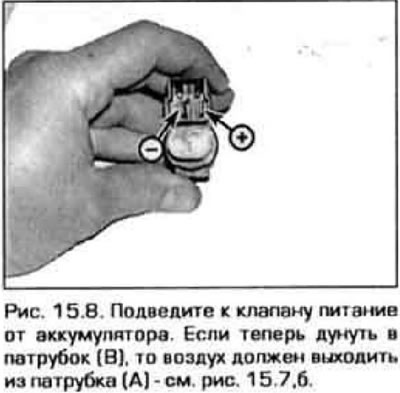
9. Blow into nozzle B (see Figure 15.7,b). Air should now be coming out of port A.
10. If the valve behaves differently, replace it.
Replacement
11. Disconnect the hoses and electrical connector from the valve.
12. Unfasten the valve from the bracket (see Figure 15.7,a).
13. Install to the dads in reverse order.
Vacuum chambers
Examination
14. Vacuum chambers are located on the lower side of the intake manifold. Remove the manifold (see chapter 2B) and inspect the chambers for cracks and dents.
Replacement
15. Remove the intake manifold (see chapter 2B).
16. Disconnect the vacuum hoses from the chambers. Loosen the chamber mounting bolts and remove them from the manifold.
17. Installation is carried out in reverse order.