


Sequential fuel injection
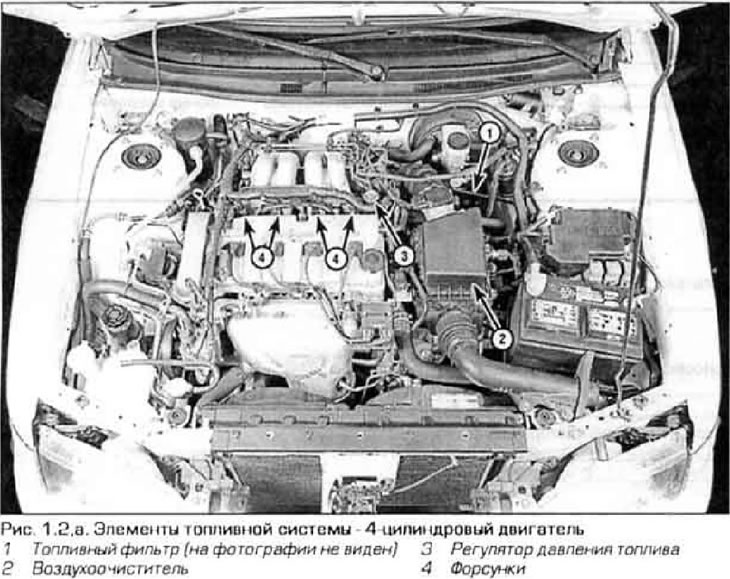
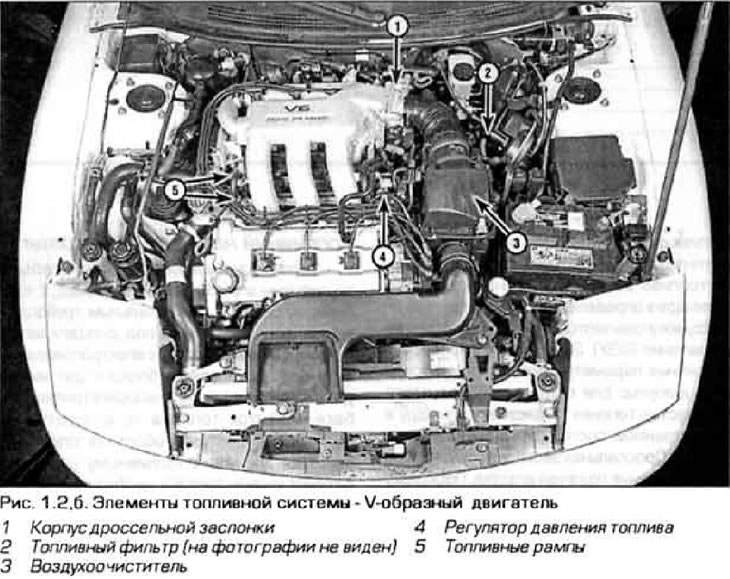
The sequential fuel injection system generates pulses of a certain duration to sequentially inject fuel into the intake ports of each cylinder at a certain point in time. The injectors are controlled by the electronic control unit (ECU). This unit monitors various engine parameters and generates a pulse to deliver the required amount of fuel to each cylinder in a specific sequence (figure 1.2, a, b). The throttle valve serves only to control the air supply. Since each cylinder is equipped with an injector mounted near the intake manifold, the air-fuel mixture is controlled very efficiently.
Fuel pump and lines
Fuel circulates from the fuel tank to the fuel injection system and back to the fuel tank through two steel pipes located under the vehicle. The fuel pump with an electric drive is mounted in one block with a fuel level sensor installed in the fuel tank. Excess fuel flows back to the fuel tank through the return line. To access the fuel pump and fuel level sensor, you need to remove the fuel tank.
All models have a main fuel system relay, which is located in the fuse box in the engine compartment. The main relay is controlled by several circuits. The relay is activated by the ECU, which closes the circuit of its coil to ground when the ignition key is in the START, RUN or ON positions.
Exhaust system
The exhaust system of a 4-cylinder engine consists of an exhaust manifold in which an oxygen sensor is installed, a catalytic converter, an exhaust pipe and two mufflers. The V-shaped engine has two exhaust manifolds, a Y-shaped downpipe, a catalytic converter and two mufflers.
[The text of the article is taken from the website mazbook.ru]
A catalytic converter installed in the exhaust system is a device for reducing the toxicity of exhaust gases. The neutralizer converts three main toxic components into harmless substances: carbon monoxide (carbon monoxide), unburned hydrocarbons and nitrogen oxides. For more information on the catalytic converter, see Chapter 6.