


- place the vehicle on a flat, horizontal, dry surface;
- apply the parking brake and turn off the ignition;
- engage first gear or reverse gear (position "P" for automatic transmission);
- place chocks under the wheels.
Never work under a vehicle supported by a jack (if necessary, install it on support posts).
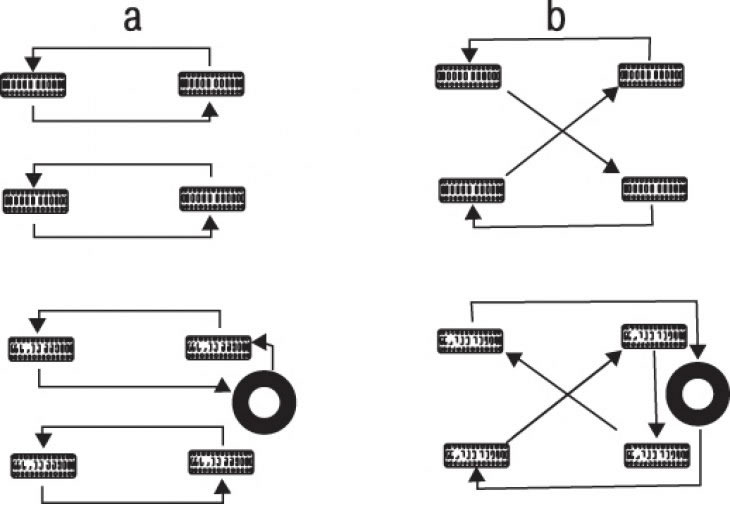
Figure 2.15. Wheel rotation patterns for radial (a) and bias (b) tires
Rearrange the wheels according to the diagrams shown in the figure 2.15, in accordance with the maintenance schedule or in case of uneven tire wear.
When rearranging, the wheels must rotate in the same direction as before the rearrangement.
If you also need to check the brakes, do not apply the parking brake. Make sure the wheels are blocked with wheel chocks to prevent the vehicle from moving.
To change wheels, it is better to lift the entire car with a lift or use a jack to lift each side in turn and then lower it onto stands located under the chassis beams. Always use four stands and make sure the vehicle is securely supported.
After rotating the wheels, check the tire pressure and adjust it to normal if necessary. Check that the wheel nuts are tightly tightened.