
MazBook.ru
English Русский
Български
Беларускі
Український
Српски
Hrvatski
Română
Polski
Slovenský
Magyar
• Bookmark • Sitemap • Contacts •   
Cars Opel Cars Ford Cars Volkswagen Cars Audi Cars Kia Cars Renault Cars Peugeot


Familia Capella Mazda3 Mazda6 CX-? Others Articles
Capella 3 (1982-1992, petrol) Capella 3 and 4 (1982-1992) Capella 4 (1987-1992) Capella 5 (1991-1997) Capella 6 (1997-2005, petrol)

Cleaning and checking the cylinder head (Mazda Capella GC)

  • Home
  • Mazda Capella
  • Capella GC (1982-1992)
  • Power unit
  • Engine overhaul (gasoline)
  • Cleaning and checking the cylinder head
0
Contents: Cleaning ⇓ Examination ⇓ Rocker arms ⇓ Valves ⇓
A thorough cleaning of the cylinder head and valve train components followed by inspection will allow you to assess the scope of service work required during a major engine overhaul.

Cleaning


Carefully remove all remaining gasket material and sealant from the mating surfaces of the cylinder head, cylinder block, intake and exhaust manifolds to avoid damaging the fragile aluminum alloy surfaces. For this purpose, use commercially available special products that dissolve the sealing material and make the work easier.

Remove scale from the cooling system channels.

Use a stiff wire brush to remove all deposits from the oil passages.

Use a tap to clean the threads of each threaded hole to remove any traces of corrosion and sealant. If possible, blow out all passages and openings with compressed air to remove any remaining particles after cleaning.

Use dies to clean the threads of the intake and exhaust manifold mounting studs.

Wash the cylinder head with solvent and dry thoroughly. Using compressed air will speed up drying and allow you to clean all channels and hidden cavities.

Caution! When cleaning the cylinder head and valve train components, using carbon solvents gives excellent results. These are very caustic liquids, so they must be used with caution. Please read the instructions for use on the packaging.


Clean the rocker arms and shafts thoroughly. Using compressed air will speed up drying and help clean out oil passages.


Wash the valve springs, crackers and retaining rings with solvent and dry thoroughly. Only wash the parts of one valve at a time to avoid mixing them up.

Wash away all deposits from the valves. Then use a wire brush to remove any carbon deposits from the valve heads and stems. Don't mix up the details.

Examination


Carefully inspect the cylinder head, check for cracks, damage, and signs of coolant penetration. If cracks are found, replace the head.
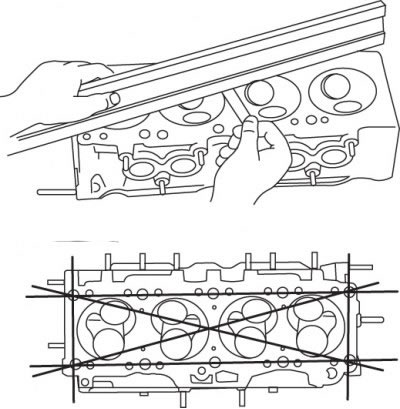
Figure 3.28. Using a gauge block and feeler gauge to check the flatness of the cylinder head mating…

Figure 3.28. Using a gauge block and feeler gauge to check the flatness of the cylinder head mating surface and the direction in which measurements need to be taken


Using a feeler gauge and a calibration block or a metal ruler, check the deviation of the mating surface of the cylinder head from flatness (figure 3.28). If the curvature exceeds 0.15 mm along the length of the head, the head must be ground in a car service workshop.

Check the condition of the valve seats in each combustion chamber. If there are any cavities, cracks, or burn marks, the cylinder head will need to be repaired at a car service center, as repairs cannot be carried out at home.
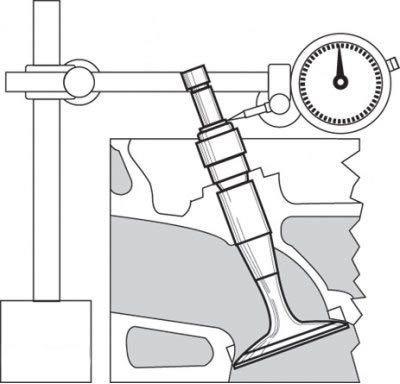


Figure 3.29. Measuring the clearance between the valve and the guide bushing using a dial indicator

Figure 3.29. Measuring the clearance between the valve and the guide bushing using a dial indicator


Check the clearance between the valve stems and the valve guides. Using a dial indicator, measure the lateral play of the valve stem inserted into the guide bushing so that the valve protrudes from the seat by approximately 1.5 mm (figure 3.29). If after this measurement you suspect increased wear on the guide bushing and the result seems questionable, then contact a service center, where they will perform a more accurate measurement for a reasonable fee.

Rocker arms


Inspect the rocker arm surfaces where they come into contact with the camshaft lobes and valve stems, checking for signs of wear, pitting, and deep gouges. Also inspect the working surfaces of the rocker arm shafts.

Inspect the inner surfaces of the shaft holes in the rocker arms, check for burrs and wear. Check the clearance between the shaft and the rocker arm by measuring the outer and inner diameters respectively, and compare the clearance with that specified in the technical data.

Article is based on website data: MazBook.ru


Replace parts that are badly worn or damaged.

Valves


Carefully inspect the valves, check for cracks, wear, and signs of burnout. Check for cracks in the journals and rods. Check the valve stem deflection and valve stem end wear. The presence of any defect indicates the need for valve repair in a car repair shop.

Measure the distance of each valve belt from the edge of the valve head and compare with the value given in the technical data. If this distance is less than the specified one, then the valve (both intake and exhaust) subject to replacement.
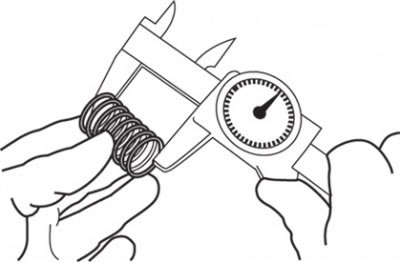
Figure 3.30. Measuring the length of the valve spring in a free state
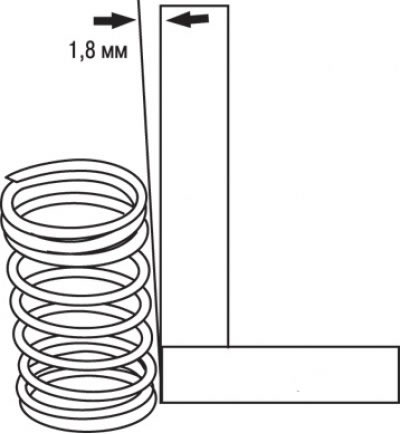
Figure 3.30. Measuring the length of the valve spring in a free state


Figure 3.31. Measuring the deflection of a spring from a vertical plane

Figure 3.31. Measuring the deflection of a spring from a vertical plane


Check each valve spring for signs of wear (at the ends). Measure the spring's free length (figure 3.30) and compare it with the value given in the technical data. Springs with shrinkage, the length of which in the free state is less than the specified one, are subject to replacement (for any valve). Place the spring on a flat, level surface and check its deviation from the vertical plane (figure 3.31).


Check for visible signs of wear and cracks on the retaining rings and crackers. Any parts that are in doubt should be replaced, as their failure during engine operation will cause serious damage.

If the inspection reveals that the valve components are in poor condition and excessively worn, which is typically the case in engines that have undergone major repairs, replace them.

If the inspection reveals that the wear of the parts does not exceed the permissible limit, and the condition of the valve chamfers and seats is satisfactory, then all valve parts can be reinstalled on the cylinder head without any additional repair work.
This article is available at: russian, bulgarian, belarusian, ukrainian, serbian, croatian, romanian, polish, slovak, hungarian
This text was checked by: Georgy Afanasyev
Share with friends on social networks:

Previous
Capella 3 and 4 » Engine overhaul (gasoline)
Next

Disassembling the cylinder head
Disassembly sequence during engine overhaul
Safety precautions when removing the engine
Alternatives to engine overhaul
General recommendations for engine overhaul
Valve repair
Cylinder head assembly
Removal pistons and connecting rods
Removal the crankshaft
Cleaning the cylinder block
More articles on repairing other Mazda models
Removal the cylinder head Mazda Familia 5 (1985-1989)
Checking the cylinder head Mazda3 BK (2003-2009)
Checking the cylinder head Mazda6 GG (2002-2008)
Checking the cylinder head bolts Mazda CX-5KE (2012-2017)
Disassembly, inspection, cleaning and repair of the cylinder head Mazda BT-50 (1) (2006-2011)
Link in different formats to this article
Comments and feedback from visitors
No comments yet


How much will 32 + 37 ?


Capella 6 (1997-2005, petrol) 
  • General information
  • Introduction to guide
  • User manual
  • Troubleshooting
  • Maintenance
  • Power unit
  • 4-cylinder engines
  • 6-cylinder engines
  • Engine overhaul
  • Cooling and ventilation
  • Power and exhaust systems
  • Engine electrics
  • Control system
  • Transmission
  • Mechanical gearbox
  • Automatic gearbox
  • Clutch and drive shafts
  • Chassis
  • Brake system
  • Car suspension
  • Steering
  • Body
  • Exterior (external elements)
  • Interior (internal elements)
  • Doors, windows and locks
  • Electrical equipment
  • Equipment and devices
  • Electrical circuits
Capella 5 (1991-1997) 
  • General information
  • User manual
  • Maintenance
  • Helpful hints
  • Power unit
  • Petrol engines 1.6 and 1.8
  • Petrol engines 2.0
  • 2.5 petrol engines
  • Overhaul engines 1.6 and 1.8
  • Overhaul engines 2.0 and 2.5
  • Diesel engine 2.0
  • Engine electrics
  • Cooling system
  • Air conditioner
  • Carburetor Nikki 30/34
  • Power system (1.6 and 1.8)
  • Power system (2.0 and 2.5)
  • Control system
  • Transmission
  • Mechanical gearbox
  • Automatic gearbox
  • Clutch and axles
  • Chassis
  • Brake system
  • Suspension and wheels
  • Steering
  • Body
  • Exterior (external elements)
  • Interior (internal elements)
  • Doors and windows
  • Electrical equipment
  • Equipment and devices
  • Electrical circuits
Capella 4 (1987-1992) 
  • General information
  • Introduction to manual
  • Vehicle specifications
  • Power unit
  • Engine repair
  • Lubrication system
  • Cooling system
  • Fuel system (carburetor)
  • Fuel injection (FE)
  • Fuel injection (DOHC)
  • Fuel system (diesel)
  • Ignition system
  • Transmission
  • Clutch
  • Gearbox
  • Drive shafts
  • Chassis
  • Front suspension
  • Rear suspension
  • Steering system
  • Brake system
  • Electrical equipment
  • Equipment and devices
  • Electrical circuits
Capella 3 and 4 (1982-1992) 
  • General information
  • User manual
  • Maintenance
  • Power unit
  • Gasoline engine
  • Engine overhaul (gasoline)
  • Diesel engine
  • Cooling and heating
  • Supply system
  • Ignition system
  • Emission reduction
  • Transmission
  • Clutch
  • Mechanical gearbox
  • Automatic gearbox
  • Drive shafts
  • Chassis
  • Brake system
  • Suspension and wheels
  • Steering
  • Body
  • Exterior (external elements)
  • Interior (internal elements)
  • Electrical equipment
  • Equipment and devices
  • Power devices
  • Electrical circuits
Capella 3 (1982-1992, petrol) 
  • General information
  • User manual
  • Maintenance
  • Troubleshooting
  • Late models
  • Power unit
  • Engine in car
  • Engine overhaul
  • Cooling and heating system
  • Fuel and exhaust system
  • Engine electrical system
  • Emission control system
  • Transmission
  • Mechanical gearbox
  • Automatic gearbox
  • Clutch and drive shafts
  • Chassis
  • Brake system
  • Suspension and wheels
  • Steering
  • Body
  • Exterior (external elements)
  • Interior (internal elements)
  • Electrical equipment
  • Equipment and devices
  • Lighting and lamps
  • Electrical circuits
MazBook.ru © 2018–2026 · Mobile version · Articles and news · Sitemap: EN BG BY UA RS HR RO PL SK HU · Feedback · Site search · Add to bookmarks Familia 5 (BF) · Familia 6 (BG) · Capella 3 (GC) · Capella 3 and 4 (GC) · Capella 4 (GD) · Capella 5 (GE) · Capella 6 (GF) · Mazda3 BK · Mazda6 GG · CX-5KE · Mazda 121 (3) · Mazda BT-50 (1) ·
By continuing to use the site, you agree to the use of cookies 🔐