


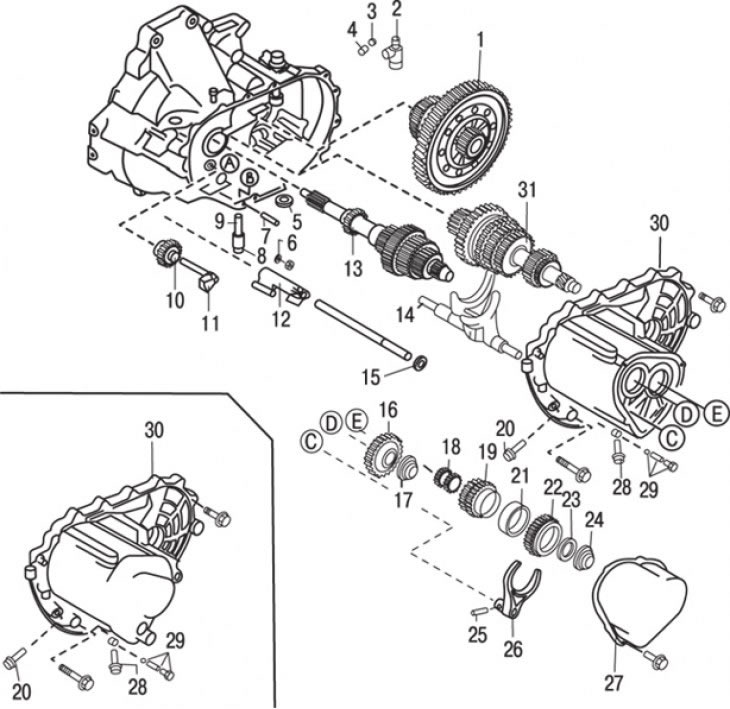
Figure 9.17. Main elements of the gearbox: 1 – main gear and differential; 2 – crank arm assembly; 3 – steel ball; 4 – spring; 5 – magnet; 6 – lock bolt; 7 – spring pin; 8 – O-ring seal; 9 – crankshaft; 10 – reverse intermediate gear; 11 – reverse intermediate gear shaft; 12 – damper; 13 – primary shaft assembly; 14 – shift fork and gear shift rod assembly; 15 – gear shift rods (5th gear and reverse gear) and a bracket; 16 – 5th gear pinion; 17 – lock nut (5th gear); 18 – gear sleeve (5th gear); 19 – 5th gear; 20 – lock bolt; 21 – 5th gear synchronizer ring; 22 – 5th gear synchronizer hub; 23 – limiter plate (5th gear); 24 – lock nut (5th gear); 25 – spring pin (5th gear); 26 – shift fork (5th gear); 27 – rear crankcase (5th gear); 28 – guide bolt; 29 – locking bolt with ball and spring; 30 – gearbox housing; 31 – secondary shaft unit
Loosen the bolts and remove the rear crankcase (5th gear) (figure 9.17).
Using a hammer and chisel, bend back the flanges on each of the lock nuts (5th gear).
Carefully block the gears from turning by inserting a screwdriver or similar tool between the gear teeth; loosen the lock nuts.
Remove the 5th gear shift fork dowel pin and shift fork.
Remove the 5th gear limiter plate, hub, synchronizer ring, pinion sleeve and pinion.
Remove the lock bolt from the gearbox housing.
Remove the guide bolt from the crankcase. Remove the lock bolt and ball and spring.
Unscrew the reverse light switch from the gearbox housing.
Mark the position of the wiring clamps to simplify subsequent assembly and unscrew the transmission housing connecting bolts.
Carefully separate the gearbox housing halves from the clutch housing.
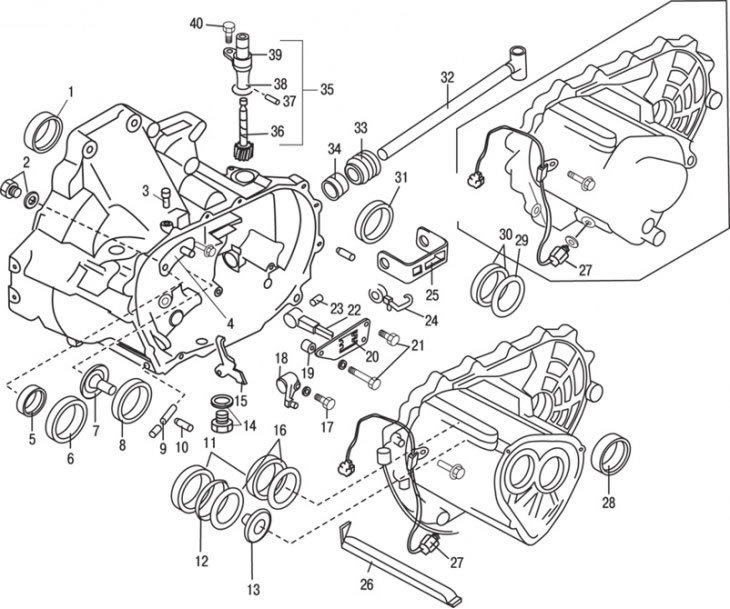
Figure 9.18. Gearbox housings and gear shift mechanism elements: 1 – drive shaft seal; 2 – bolt and washer; 3 – breather; 4 – breather housing; 5 – seal; 6, 8, 30, 31 – outer bearing rings; 7, 13 – funnels; 9 – reverse gear lever shaft; 10 – spring pin; 11 – outer bearing ring; 12 – diaphragm spring; 14 – drain plug and washer; 15 – reverse gear lever; 16 – adjusting gasket; 17 – bolt; 18 – gear shift lever; 19 – tube; 20 – guide plates; 21 – bolts; 22 – 5th gear selection lever; 23 – spring pin; 24 – spring; 25 – check valve (5th gear); 26 – oil supply channel; 27 – Reverse light switch; 28 – oil seal; 29 – adjusting shim; 32 – shift rod; 33 – case; 34 – oil seal; 35 – speedometer drive gear unit; 36 – driven gear; 37 – spring pin; 38 – O-ring seal; 39 – gear casing; 40 – bolt
Remove the oil supply channel to 5th gear (figure 9.18).
Remove the magnet from the gearbox housing.
Remove the intermediate shaft and reverse gear.
Remove the 5th gear lock bolt and lock plate.
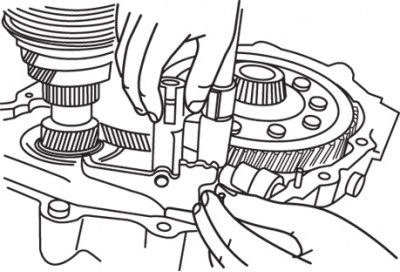
Figure 9.19. Removing the 4th gear shift linkage and reverse gear lever assembly
On 4-speed models, remove the shift linkage and reverse gear lever assembly with the shifter in neutral (figure 9.19).
Remove the 5th gear pinion and reverse gear shaft.
Remove the 5th gear and reverse gear shift linkage.
Knock out the crankshaft positioning pin and remove the 5th gear pin.
By moving the gear shift rod (5th gear), remove the crank arm assembly.
After ensuring that the end surface of the locking sleeve is flush with the end surface of the adjusting lever, turn the shift rod counterclockwise as far as possible.
Lift the shift rod out of the socket, this may require lifting the locking ball up.
Knock out the dowel pin from the shift rod.
Engage 4th gear by moving the upper shift fork up.
Carefully pull the shift rod out of the transmission housing. If the rod is released from the crankcase, the steel ball will fall off the reverse gear lever shaft.
By lifting, remove the secondary shaft with gears and the shift fork assembly from the gearbox housing.
Remove the input shaft assembly.
Remove the differential assembly.
Remove the neutral switch or 5th gear switch.
Remove the input shaft seals and bearing rings.
Remove the funnel from the gearbox housing.
Loosen the bolt and remove the switch guide plate and lever.
Knock out the shift lever dowel pin, making sure the shift lever is in the center position.
Remove the shift shaft boot from the gearbox housing and take out the shaft.
Remove the reverse gear selector spring pin and the selector.
Carefully knock out the bearing rings.
Remove the shift rod seal from the transmission housing.
Remove the drive axle seal from the gearbox housing by tapping it with a hammer and punch.
Remove the differential bearing ring.
Remove the breather deflector.
Remove the adjusting lever spring.
Secondary shaft
Remove the secondary shaft from the gearbox housing.
Clamp the shaft in a vice using two wooden blocks to protect it from damage. Use a feeler gauge to check the axial play of the gears.
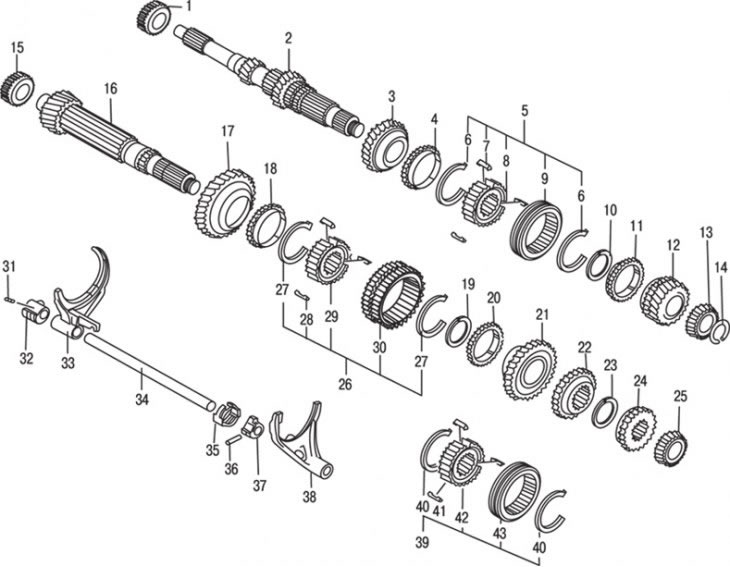
Figure 9.20. Details of the primary and secondary shafts: 1 – inner bearing ring; 2 – primary shaft; 3 – 3rd gear pinion; 4 – 4th gear synchronizer ring; 5 – synchronizer of 3rd and 4th gears; 6 – retaining ring; 7 – retainer cracker; 8 – synchronizer hub; 9 – sliding synchronizer clutch; 10 – retaining ring; 11 – synchronizer ring; 12 – 4th gear; 13 – inner bearing ring; 14 – thrust ring; 15 – inner bearing ring; 16 – secondary shaft; 17 – 1st gear; 18 – synchronizer ring; 19 – retaining ring; 20 – synchronizer ring; 21 – 2nd gear; 22 – 3rd gear pinion; 23 – retaining ring; 24 – 4th gear; 25 – outer bearing ring; 26 – synchronizer; 27 – retaining ring; 28 – retainer cracker; 29 – synchronizer hub; 30 – sliding synchronizer clutch; 31 – spring pin; 32 – control lever; 33 – 1st and 2nd gear shift fork; 34 – control rod; 35 – lock bushing; 36 – spring pin; 37 – control lever; 38 – 3rd and 4th gear shift fork; 39 – synchronizer; 40 – retaining ring; 41 – retainer cracker; 42 – synchronizer hub; 43 – sliding synchronizer clutch
Using a bearing puller, remove the 4th gear from the shaft (figure 9.20).
Remove the synchronizer ring.
Remove the 3rd and 4th gear synchronizer hub retaining rings.
Carefully remove the 3rd and 4th gear synchronizer hub from the shaft.
Remove the 3rd gear synchronizer ring.
Remove the 3rd gear assembly.
Remove the thrust washers retaining ring, then the thrust washers.
Remove the 2nd gear.
Remove the synchronizer ring.
Remove the 1st gear retaining ring.
To press out the 1st gear pinion and the 1st and 2nd gear synchronizer, special tools are required. This operation must be performed by a specialist.
Use a puller to remove the bearing.
Inspect the gears for wear and damage to the synchronizer cones, hub sleeve, teeth and working surfaces.
Check the secondary shaft for wear and damage to the sliding surfaces, splines and teeth, and for possible blockage of the lubrication channels.
Check the synchronizer rings by installing them in place and rotating them to ensure smooth sliding. Use a feeler gauge to measure the gap and compare it with the specifications.
Inspect the synchronizer hub and derailleur for grooves, wear marks and wear.
Disassemble the synchronizer hub and inspect the splines and surfaces for wear, inspect the springs to ensure they are not bent or weak.
Assemble the hub with the locking keys raised and facing the outside of the hub. When installing the spring, make sure it is centered in the recess of the crackers.
Use a feeler gauge to check the clearance between the synchronizer hub and the gear shifter.
Replace any worn or damaged parts with new ones.
Install the bearing on the shaft.
Turn the shaft over and install the 1st and 2nd gear synchronizer hubs with the groove on the shift fork facing downwards.
Install the thrust rings of the 1st and 2nd gear unit.
Install the synchronizer ring into the hub, aligning the grooves with the tabs in the hub.
Install the 2nd gear.
Install the synchronizer ring into the hub, aligning the grooves with the tabs in the hub.
Install the thrust washer retaining ring.
Install the 3rd gear synchronizer gear and ring.
Install the 3rd and 4th gear synchronizer with the groove down and aligning the slots with the locks in the hub. A press may be required for installation.
(The original article is available on mazbook.ru)
Install the 3rd and 4th gear retaining ring.
Install the 4th gear synchronizer ring together with the 4th gear.
To press the bearings onto the shaft, take it to a workshop.
Primary shaft
Remove the input shaft and secure it in a vice using two wooden blocks to protect it from damage.
Use a puller to remove the bearings from the input shaft.
Inspect the shaft and gears for wear and damage to splines, sliding surfaces and teeth.
Inspect the bearings for wear, play, and pitting on the support rollers.
Replace all worn parts with new ones.
Press the bearings onto the shaft and install the input shaft in place.
Differential
Remove the differential from the gearbox housing and secure it in a vice using two wooden blocks to protect it from damage.
Unscrew the bolts and remove the driven gear of the main transmission. The driven gear of the main transmission may be secured with rivets, in which case it cannot be removed.
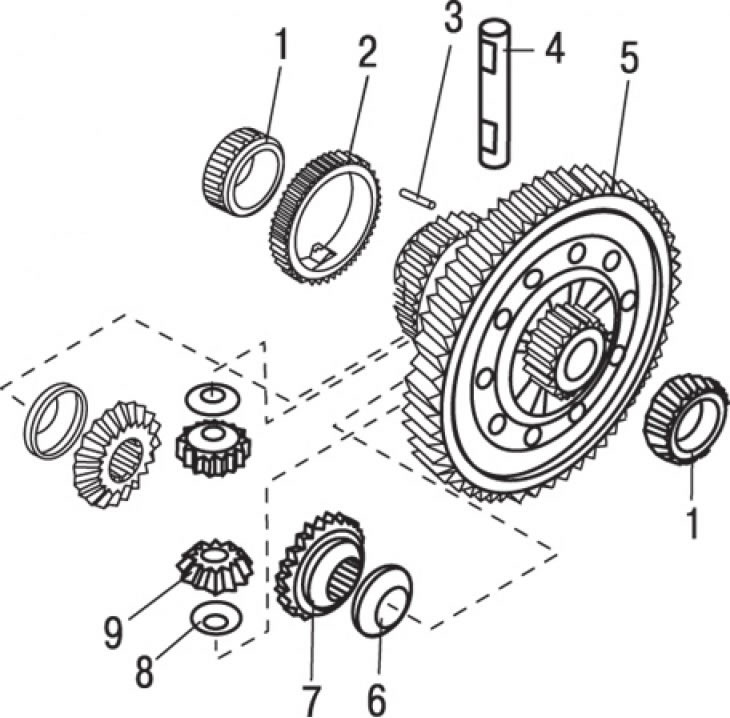
Figure 9.21. Differential: 1 – inner bearing rings; 2 – speedometer drive gear; 3 – spring pin; 4 – satellite axis; 5 – driven gear of the main transmission with differential box; 6, 8 – thrust washers; 7 – axle gear; 9 – satellites
Knock out the pinion shaft spring pin by sliding it out from the opposite side of the differential case (figure 9.21).
Remove the satellite shaft, satellites and thrust washers.
Using a bearing press tool, remove the inner bearing race from the differential case.
Remove the remaining bearings.
Remove the speedometer drive gear.
Inspect gears, sliding surfaces and contact surfaces for wear, cracks and corrosion.
Check the satellite block and pinion gear. Perform this work with the drive shafts inserted into the differential case. With the axles supported on V-blocks, measure the clearance of both gears by manually moving them to their full free play. If the gap exceeds the permissible limit, purchase a thrust washer of the appropriate thickness and install it between the differential box and the satellites.
Before assembly, thoroughly wash each part in solvent.
During assembly, apply clean transmission oil to all sliding surfaces and replace any spring pins that were removed with new ones.
Install the speedometer drive gear.
Install the bearings using special tools and a hydraulic press, or take the differential to a workshop with the necessary equipment to have this work done for you.
Install the pinion gear and side drives using the appropriate thrust washers.
Install the satellite shaft, ensuring that the spring pin hole is aligned with the hole in the gearbox.
Using a hammer and punch, install the spring pin, working from the speedometer drive gear side.
Install the final drive driven gear and secure with bolts.
Install the differential box into the gearbox housing.