
MazBook.ru
English Русский
Български
Беларускі
Український
Српски
Hrvatski
Română
Polski
Slovenský
Magyar
• Bookmark • Sitemap • Contacts •   
Cars Opel Cars Ford Cars Volkswagen Cars Audi Cars Kia Cars Renault Cars Peugeot


Familia Capella Mazda3 Mazda6 CX-? Others Articles
Capella 3 (1982-1992, petrol) Capella 3 and 4 (1982-1992) Capella 4 (1987-1992) Capella 5 (1991-1997) Capella 6 (1997-2005, petrol)

Blower motor electrical circuit (Mazda Capella GE)

  • Home
  • Mazda Capella
  • Capella GE (1991-1997)
  • Power unit
  • Cooling system
  • Blower motor electrical circuit
0

Blower Fan Housing Components (Ford)
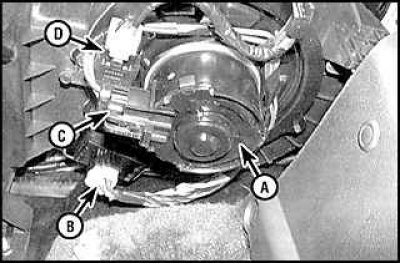


A – Blower fan

A – Blower fan
B – Fan resistor
C – Fan motor connector
D – High speed fan relay


Checking the blower motor resistor
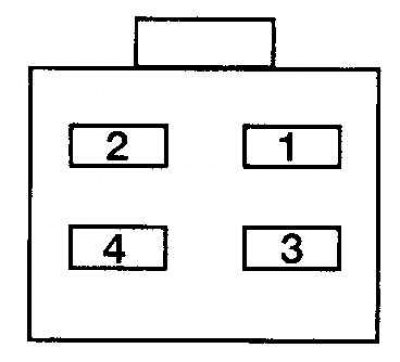


Checking the blower motor resistor


ResistanceResistor contacts
0.38 Ohm3 and 4
0.69 Ohm3 and 2
1.69 Ohm1 and 2
2.76 Ohm1 and 4

Checking the Blower Fan Speed Switch (Ford)
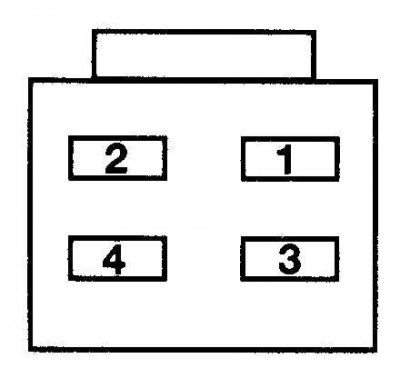


Checking the Blower Fan Speed Switch (Ford)


Switch position (speed)The circuit between the contacts is closed
Low–
Second2 and 3
Third2 and 3, 2 and 4, 3 and 4
High2 and 4, 2 and 1, 4 and 1


Checking the Blower Fan Speed Switch (Mazda)
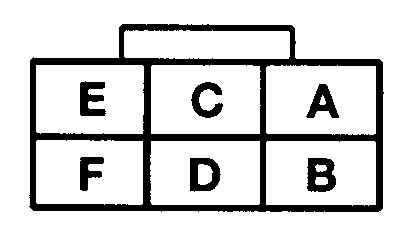


Checking the Blower Fan Speed Switch (Mazda)


Switch positionContact
AnyF
First positionE
Second positionC
Third positionA or D
The fourth positionB or D

On Mazda models, the fan relay is located in the right front corner of the engine compartment. Ford Probe models use two relays - 1993 models have the low speed relay mounted in front of the radiator and later models have the low speed relay mounted in the left rear corner of the engine compartment. The high speed fan relay is located in the fan housing itself.

The blower fan is located under the glove compartment.

Examination


1. If the blower fan does not work, first check the connections of the connectors in the blower circuit. Check the engine fuse (15A) in the interior fuse panel and the heater fuse (40A) in the underhood fuse/relay panel.

2. Locate the fan relay. Remove the relays and check if they are functioning properly (see subsection 12.5). Replace the relay if necessary.

3. Check how the fan operates in all modes.

4. If the fuses and relays are OK and the fan does not work, test the fan itself.

5. Connect the tester to the blue/red (Mazda) or white (Ford) terminal. The tester should read at least 10 V (ignition on, fan mode switch in any position except OFF). If not, there is a problem with the fan circuit.


6. If power is supplied to the fan and it does not work, connect the blue/white (Mazda) or black/orange (Ford) wire to ground on the vehicle body using a jumper wire. If the fan still does not work, it needs to be replaced. If the fan is working, this means that there is a fault in the fan grounding circuit.

7. If the fan works, but not in all modes, check the fan resistor, which is located on the fan shroud.

8. Remove the resistor and inspect it for damage. Check the resistor with an ohmmeter (see figureChecking the blower motor resistor). Replace the resistor if necessary.

9. If the resistor is functioning properly, remove the heater control panel. On Probe models, disconnect the wires from the back of the blower fan switch and check the resistance of the switch (see the figure Testing the Blower Fan Speed Switch (Ford). On Mazda models, connect a voltmeter to the switch terminals and check if voltage is reaching the terminals (see the figure Testing the Blower Fan Speed Switch (Mazda). If the switch is faulty, replace it.
This article is available at: russian, bulgarian, belarusian, ukrainian, serbian, croatian, romanian, polish, slovak, hungarian
This text was checked by: Evgeny Mereshnikov
Share with friends on social networks:

Previous
Capella 5 » Cooling system
Next

Engine oil cooler (6-cylinder models)
Coolant temperature sensor
Water pump — inspection and replacement
Radiator and expansion tank — removal and installation
Cooling Fans — checking and replacing
Blower Motor — removal and installation
Heater and air conditioner control unit
Heater Radiator — removal and installation
More articles on repairing other Mazda models
Ba. Circuit diagram of the electric motor of the cooling system fan,… Mazda Familia 5 (1985-1989)
Recommendations for choosing the viscosity of motor oil Mazda3 BK (2003-2009)
Recommendations for choosing the viscosity of motor oil Mazda6 GG (2002-2008)
Replacing electrical fuses Mazda CX-5KE (2012-2017)
Replacing spark plugs/checking electrical connections Mazda 121 (3) (1996-2003)
Link in different formats to this article
Comments and feedback from visitors
No comments yet


How much will 15 + 45 ?


Capella 6 (1997-2005, petrol) 
  • General information
  • Introduction to guide
  • User manual
  • Troubleshooting
  • Maintenance
  • Power unit
  • 4-cylinder engines
  • 6-cylinder engines
  • Engine overhaul
  • Cooling and ventilation
  • Power and exhaust systems
  • Engine electrics
  • Control system
  • Transmission
  • Mechanical gearbox
  • Automatic gearbox
  • Clutch and drive shafts
  • Chassis
  • Brake system
  • Car suspension
  • Steering
  • Body
  • Exterior (external elements)
  • Interior (internal elements)
  • Doors, windows and locks
  • Electrical equipment
  • Equipment and devices
  • Electrical circuits
Capella 5 (1991-1997) 
  • General information
  • User manual
  • Maintenance
  • Helpful hints
  • Power unit
  • Petrol engines 1.6 and 1.8
  • Petrol engines 2.0
  • 2.5 petrol engines
  • Overhaul engines 1.6 and 1.8
  • Overhaul engines 2.0 and 2.5
  • Diesel engine 2.0
  • Engine electrics
  • Cooling system
  • Air conditioner
  • Carburetor Nikki 30/34
  • Power system (1.6 and 1.8)
  • Power system (2.0 and 2.5)
  • Control system
  • Transmission
  • Mechanical gearbox
  • Automatic gearbox
  • Clutch and axles
  • Chassis
  • Brake system
  • Suspension and wheels
  • Steering
  • Body
  • Exterior (external elements)
  • Interior (internal elements)
  • Doors and windows
  • Electrical equipment
  • Equipment and devices
  • Electrical circuits
Capella 4 (1987-1992) 
  • General information
  • Introduction to manual
  • Vehicle specifications
  • Power unit
  • Engine repair
  • Lubrication system
  • Cooling system
  • Fuel system (carburetor)
  • Fuel injection (FE)
  • Fuel injection (DOHC)
  • Fuel system (diesel)
  • Ignition system
  • Transmission
  • Clutch
  • Gearbox
  • Drive shafts
  • Chassis
  • Front suspension
  • Rear suspension
  • Steering system
  • Brake system
  • Electrical equipment
  • Equipment and devices
  • Electrical circuits
Capella 3 and 4 (1982-1992) 
  • General information
  • User manual
  • Maintenance
  • Power unit
  • Gasoline engine
  • Engine overhaul (gasoline)
  • Diesel engine
  • Cooling and heating
  • Supply system
  • Ignition system
  • Emission reduction
  • Transmission
  • Clutch
  • Mechanical gearbox
  • Automatic gearbox
  • Drive shafts
  • Chassis
  • Brake system
  • Suspension and wheels
  • Steering
  • Body
  • Exterior (external elements)
  • Interior (internal elements)
  • Electrical equipment
  • Equipment and devices
  • Power devices
  • Electrical circuits
Capella 3 (1982-1992, petrol) 
  • General information
  • User manual
  • Maintenance
  • Troubleshooting
  • Late models
  • Power unit
  • Engine in car
  • Engine overhaul
  • Cooling and heating system
  • Fuel and exhaust system
  • Engine electrical system
  • Emission control system
  • Transmission
  • Mechanical gearbox
  • Automatic gearbox
  • Clutch and drive shafts
  • Chassis
  • Brake system
  • Suspension and wheels
  • Steering
  • Body
  • Exterior (external elements)
  • Interior (internal elements)
  • Electrical equipment
  • Equipment and devices
  • Lighting and lamps
  • Electrical circuits
MazBook.ru © 2018–2026 · Mobile version · Articles and news · Sitemap: EN BG BY UA RS HR RO PL SK HU · Feedback · Site search · Add to bookmarks Familia 5 (BF) · Familia 6 (BG) · Capella 3 (GC) · Capella 3 and 4 (GC) · Capella 4 (GD) · Capella 5 (GE) · Capella 6 (GF) · Mazda3 BK · Mazda6 GG · CX-5KE · Mazda 121 (3) · Mazda BT-50 (1) ·
By continuing to use the site, you agree to the use of cookies 🔐