


Timing belt wear and damage
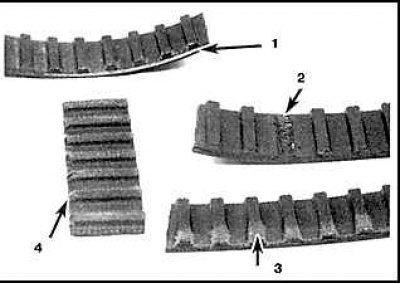
1. Stratification
2. Missing tooth
3. The surface is worn out
4. Rounded side
Removal
1. Disconnect the negative battery cable.
2. Remove the cylinder head cover.
3. Remove the spark plugs from all cylinders.
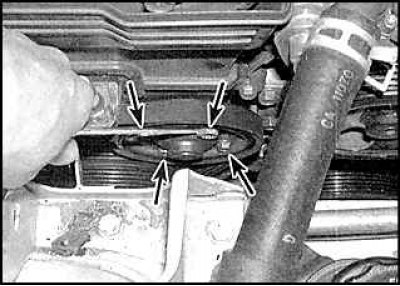
4. Loosen the water pump pulley bolt. Remove the power steering pump and air conditioning compressor drive belt and the alternator drive belt. Remove the water pump pulley.
5. Apply the handbrake and block the rear wheels. Raise and support the front of the vehicle.
6. Remove the right front wheel.
7. Remove the right front fender splash guard.
8. Remove the crankshaft pulley.
9. Place a jack under the engine. Raise the engine slightly and remove its right support.
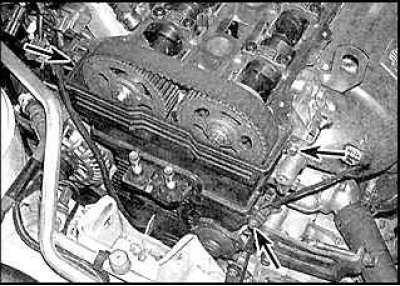
10. Remove the bolts and the upper timing belt cover and the oil dipstick tube.
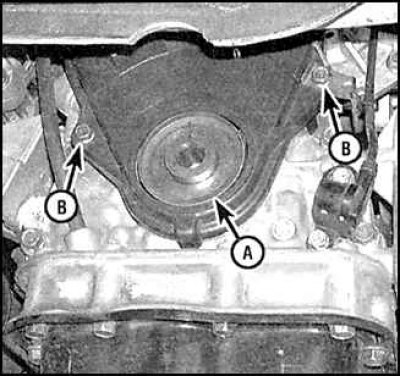
11. Remove the timing belt guide (A) and lower cover bolts (B).
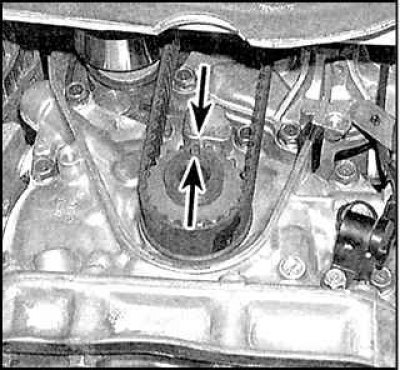
12. Turn the crankshaft and align the timing marks of the crankshaft sprockets.
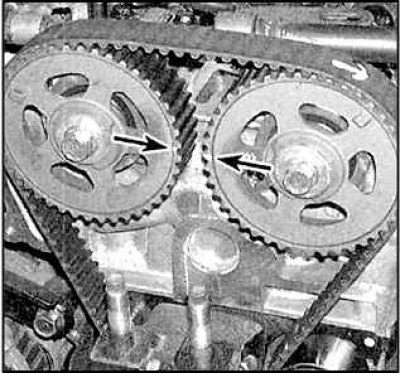
(Based on website data: «MAZbook.ru»)
13. Align the timing marks on the camshaft sprockets.
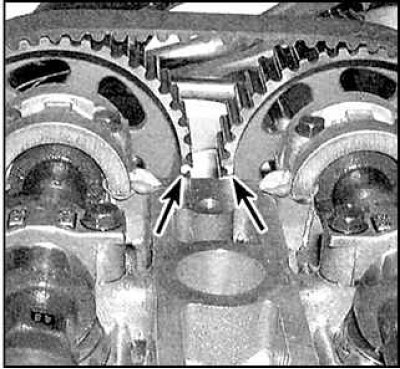
14. The camshaft sprockets also have timing marks on their rear surfaces.
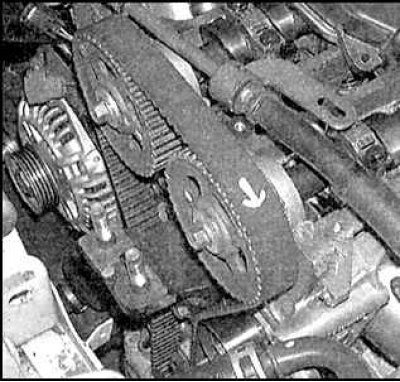
15. If you are going to reuse the timing belt, mark it to indicate the direction it rotates.
16. Using a special tool, you can lock the camshaft sprockets and simplify further work with the timing belt.
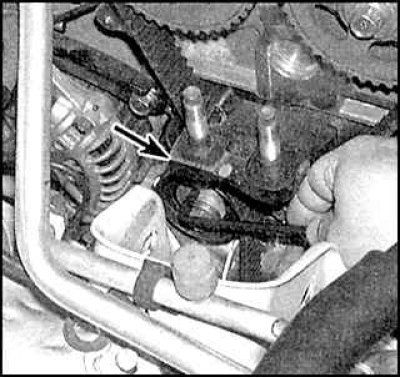
17. Loosen the timing belt tension. Turn the tensioner pulley and remove the spring.
18. Remove the timing belt.
19. If necessary, remove the crankshaft sprocket and crankshaft sensor.
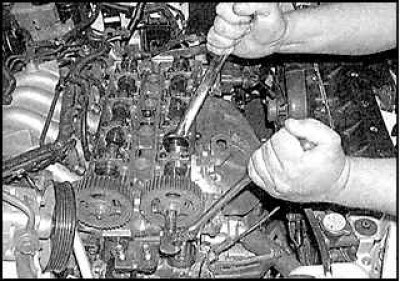
20. If necessary, lock the camshaft with a wrench, unscrew the bolts and remove the camshaft sprockets. The intake camshaft sprocket has an "I" mark on the front surface, and the exhaust camshaft sprocket has an "E" mark.
Examination
Caution: While the timing belt is removed, try not to rotate the crankshaft or camshafts.
1. Inspect the idler pulley and tensioner pulley bearings to ensure they rotate freely. Inspect the tensioner spring. Replace worn or damaged parts if necessary.
2. If the timing belt has been severely damaged, thoroughly clean all the sprockets on which it was installed.
3. If the belt has cracked or torn teeth, it means that the camshafts or the water and oil pump shafts are seizing.
4. If the belt is badly worn, inspect the sprockets for scratches and burrs.
5. If the belt is worn on only one side, check the belt guide and check the sprocket alignment.
6. If wear is detected, be sure to replace the timing belt.
Installation
1. Thoroughly clean the timing belt installation area at the front of the engine.
2. Install the tensioner pulley and idler pulley.
3. Install the camshaft sprockets and crankshaft sprocket.
4. Align the timing marks of the sprockets.
5. Place the timing belt on the sprockets and pulleys. and remove the camshaft sprocket locking tool.
6. Turn the tensioner pulley and install the spring.
7. Turn the crankshaft two full revolutions and check the timing marks. When you rotate the crankshaft, stop if you feel resistance. Most likely, due to incorrect alignment of the marks, the valves touch the pistons. Double-check the installation of the marks and only then proceed.
8. Install the remaining parts, start the engine and check its operation.