


Valve elements
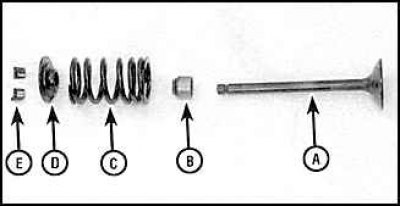
A - Valve
B - Valve stem seal
C - Valve spring
D - Spring plate
E - Clips
Replacement
1. Remove the camshaft. Get pushers of faulty valves.
2. Unscrew the spark plugs of the cylinders, which include the faulty valves.
3. Set the piston of the cylinder you need to TDC.
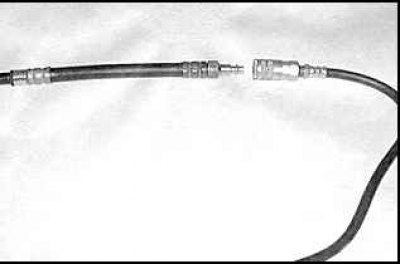
4. Screw the adapter into the spark plug hole and connect the air compressor hose to the adapter.
5. Turn on the compressor.
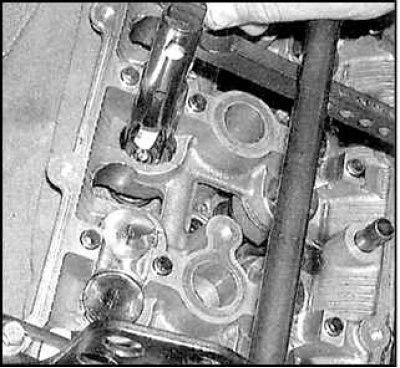
6. Using the special tool, compress the valve spring and remove the retainers.
7. Remove the spring plate, spring and spring seat. If the compressed air in the cylinder does not hold the valve closed during this procedure, the valve face and/or valve seat is damaged.
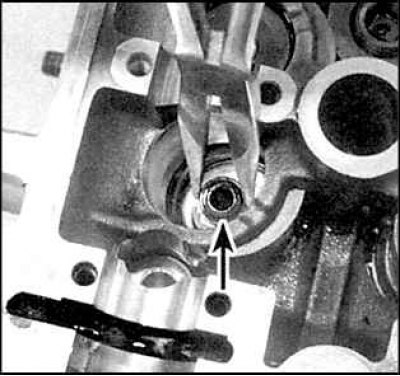
8. Measure the seating depth of the valve stem gland and remove the gland.
9. Inspect the valve spring for cracks or other damage. Measure the length of the spring and compare it to specifications (see subsection 3.2.2).
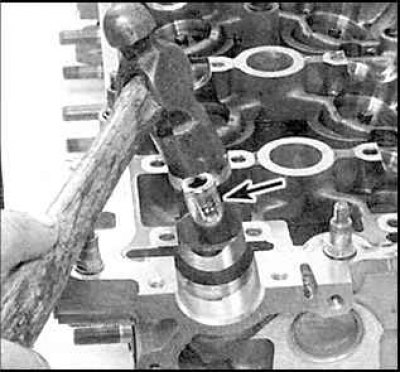
10. Lubricate the valve stem with engine oil and install a new oil seal using the special tool or a suitable bushing.
Attention! Do not mix up the intake and exhaust valve seals. The exhaust valve seals have ridges at the top.
11. Install the spring seat and valve spring.
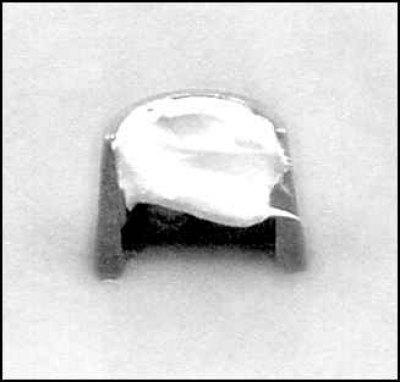
12. Install the spring plate. Compress the spring and install the clips, if necessary, apply a small amount of sealant to the clips.
13. Disconnect the compressor hose and unscrew the adapter.
14. Install all remaining parts, start the engine and check the cylinder head for leaks and unusual sounds.