


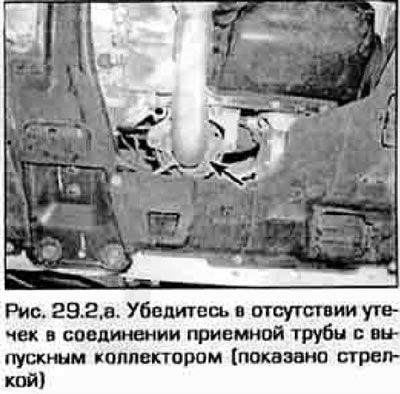
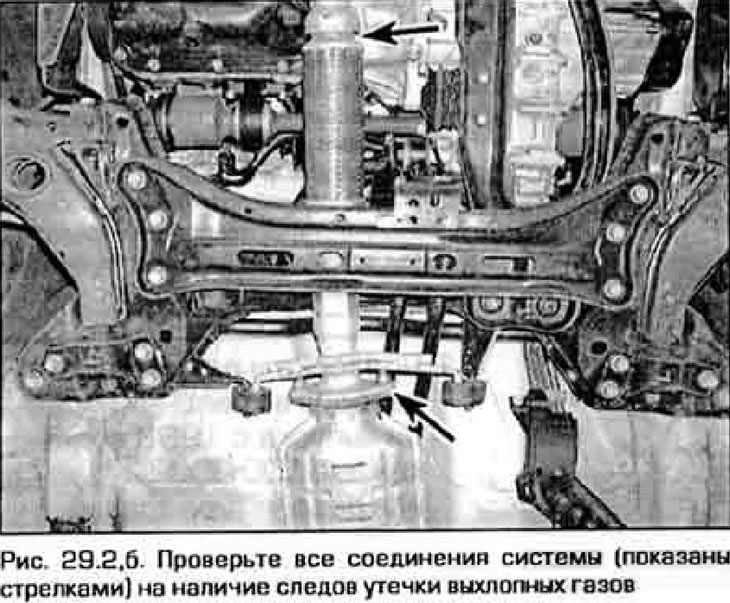
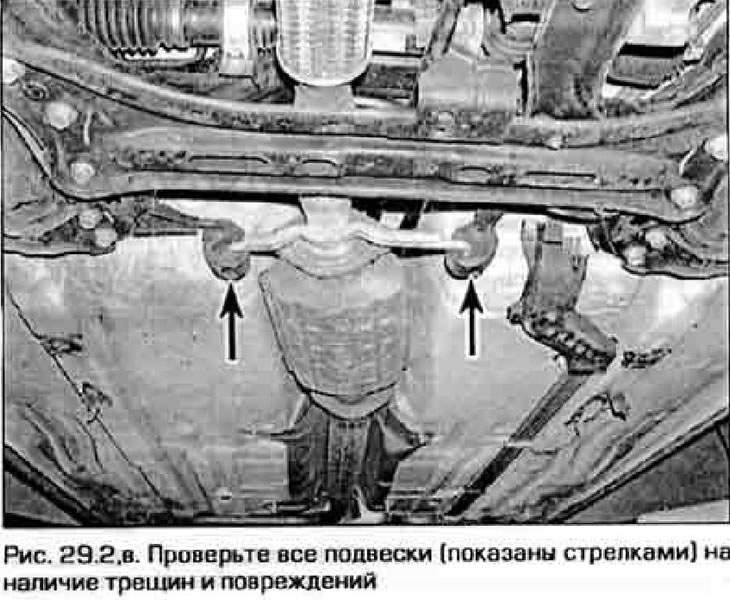
2. When inspecting, pay attention to the presence of traces of exhaust gas leaks, especially in the connections, damage and corrosion of pipes and connections, □also inspect all hangers of the exhaust system and make sure that they are in good working order and securely hold the system in weight (fig. 29.2, a-c).
3. At the same time, inspect the underbody for cracks, crevices, loose seams, and other areas through which exhaust gases may enter the passenger compartment. Seal all such areas with silicone putty or filler.
4. If you sometimes hear crackling and other noises while the car is moving, this may be caused by the exhaust system hitting the underbody of the car. Try moving the exhaust system on the suspension and see if it can touch the underbody or suspension components. If the system has too much range of motion, then the system's suspension is most likely faulty. Replace them or adjust them as needed.
5. Check the working condition of the engine by the content of the end of the exhaust pipe. The deposits remaining here serve as an indicator of engine adjustments. If there is soot or white deposits in the pipe, then most likely the engine fuel system needs a thorough inspection and adjustment.
The original article is on (MazBook)