


2. Before starting work, ensure that you have sufficient quantity of the recommended type of fluid (see Recommended oils and fluids at the beginning of this chapter).
3. To complete the job, you will also need: vehicle stands, a 3/8-inch ratchet, a container for draining the liquid with a capacity of at least 6 liters, a clean rag and old newspapers.
4. The fluid must be drained immediately after driving the car. Hot liquid drains faster and carries away all deposits.
Caution! Fluid and transmission temperatures can reach 180°C. Wear protective gloves.
5. After the transmission has warmed up, place the vehicle on a level surface, lift it and place it on stands to access the drain plug.
6. Move the necessary tool under the vehicle, being careful not to touch the hot parts of the exhaust system.
7. Place an empty container under the transmission drain hole and remove the plug. Allow the liquid to drain into the container, then wipe the plug, screw it back in place and tighten it securely.
Ford CD4E and Mazda LA4A-EL transmissions
8. Lower the vehicle and proceed to step. 17.
Ford 4EAT and Mazda GF4A-EL transmissions
9. Remove the transmission pan bolts.
10. Carefully pry the oil pan away from the transmission, being careful not to damage the mating surfaces of the oil pan and transmission housing (otherwise, leaks will be unavoidable later).
11. Remove the break and its gasket. Thoroughly clean the mating surface of the transmission housing from any remaining gasket and sealant.
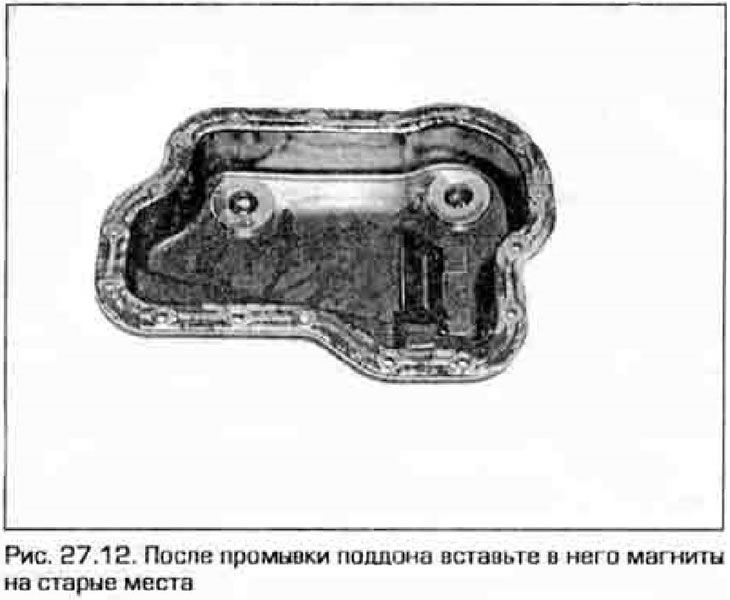
12. Drain the remaining liquid from the pan, rinse it with solvent and dry it well. Insert magnets into the tray (if they fell out during washing) (figure 27.12).
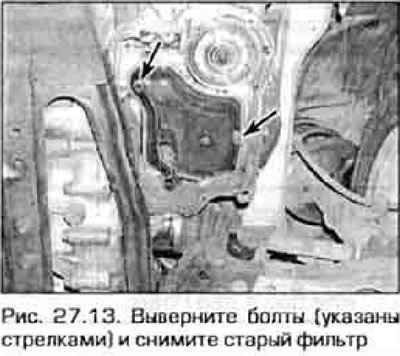
13. Remove the old filter from the transmission (figure 27.13).
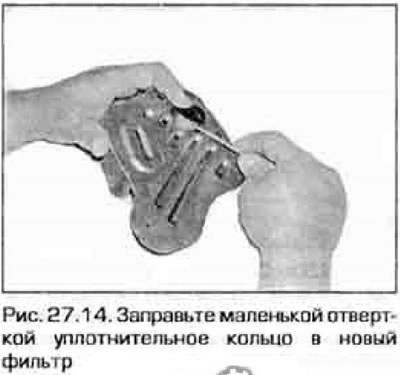
14. Install the sealing ring on the new filter (figure 27.14). Insert the filter into place and tighten it with bolts.
15. Install the pan with a new gasket and screw in the bolts. Going around the pan in a circle, gradually tighten the bolts until the torque specified in Technical data. Do not overtighten the bolts!
16. Lower the vehicle.
All models
17. Remove the dipstick from the transmission and pour transmission fluid through the dipstick tube. Drink the liquid in small portions, periodically checking its level using the dipstick. Allow the liquid to settle in the pan before measuring the level
18. Insert the dipstick.
19. Start the engine and move the selector from position P to position 2 and back to P. Apply the parking brake.
20. Turn off the engine and check the fluid level. If necessary, bring the level to the desired level.