


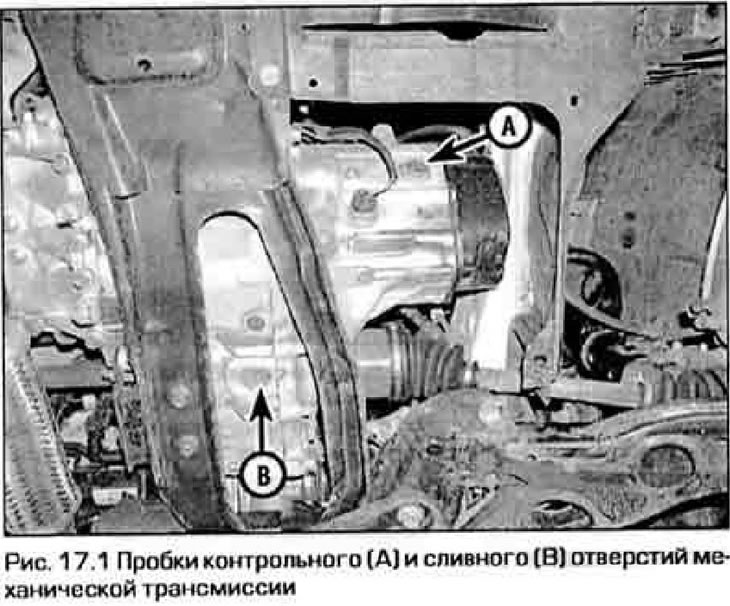
1. To check the oil levels, raise the vehicle and place it on secure props. The vehicle must be level. On the side of the transmission housing there is an inspection hole with a plug screwed into it. Drainer (also with cork) located on the bottom of the transmission housing (pic. 17.1). Turn out a stopper of control apertures. With a normal amount of oil in the transmission, its level should be against the lower edge of the control hole. Usually, after unscrewing the plug, a small amount of oil flows out of the hole. This means that the oil level is normal. If after unscrewing the plug, the oil does not flow out, feel with your finger where its level is.
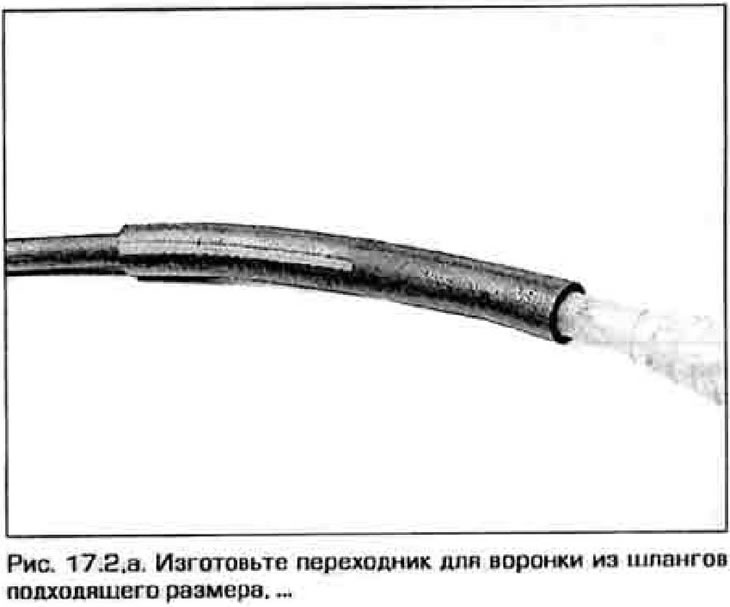
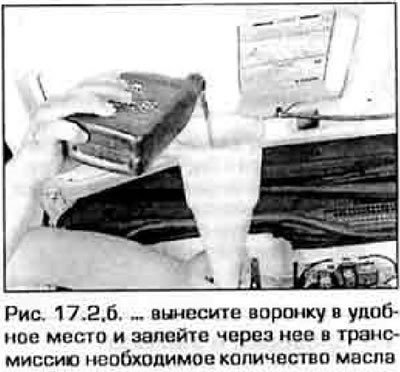
2. If there is not enough oil in the transmission (those. if its level is below the edge of the hole), add the required amount to the same hole. Filling oil into the side hole, and even in a limited space, is quite difficult. Therefore, make an adapter for a funnel from hoses of a suitable size, which can be taken out to the limits of the body (fig 17.2, a, b). Pour oil into the transmission until it starts to flow out of the check hole.
3. Screw in the plug and tighten it securely. Take the car for a short drive and check for leaks.