


Caution! Avoid contact with interior trim or painted surfaces of the vehicle. If contact occurs, rinse off coolant immediately with plenty of water. Antifreeze is very toxic if ingested. Do not leave antifreeze in an open container or as a puddle on the floor. Children and pets may be attracted to its sweet smell and may want to taste it.
1. The cooling system is filled with a mixture of water and ethylene glycol, called antifreeze. This mixture does not freeze down to -40°C, if necessary. In addition, the mixture prevents corrosion and increases the boiling point of the liquid.
2. Every 50,000 km (or every 2 years) it is necessary to replace the coolant and flush the cooling system (see chapter 1). Using the fluid for a longer period of time without replacing it increases the likelihood of corrosion and scale formation in the cooling system. If you live in a region where the water is hard, meaning it contains dissolved minerals, use only distilled water to prepare your coolant.
3. Before adding antifreeze to the cooling system, check all hose connections in the system, since antifreeze increases its fluidity as the engine warms up. Under normal conditions, the coolant practically does not need to be replenished. Therefore, if the coolant level is constantly dropping, find and fix the leak.
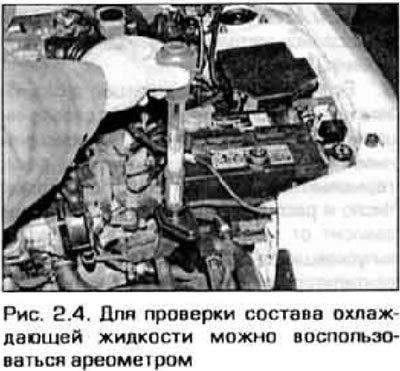
4. The exact ratio of water and antifreeze in the mixture depends on climatic conditions. The mixture must contain at least 50%, but no more than 70% concentrated antifreeze. Before adding antifreeze to the cooling system, refer to the table located on the antifreeze container. To check the antifreeze content in the coolant, you can use a hydrometer (figure 2.4) or a special indicator strip (type of litmus paper). Use antifreeze recommended by your vehicle manufacturer.
Data provided by the website: www.MAZbook.ru