


Contents: Fuel pump ⇓ Pressure regulator control valve ⇓ Fuel pressure regulator ⇓ Damper ⇓ Fuel distribution line ⇓ Injectors ⇓ Fuel pump relay ⇓
Caution! The fuel system is under pressure. Before disconnecting the fuel system components, it is necessary to relieve the pressure in the system. To do this, cover the disconnected area with a clean cloth and, being careful, smoothly unscrew the union nut.
Warning! Gasoline is extremely flammable. When working with fuel system components, do not use open flames, sparking devices, open fire-hazardous lighting devices, or smoke. Avoid sparks when working with wires and electrical devices.
Fuel pump
For fuel pump diagnostics and pressure testing, see. above in the subsection "Checking the pressure in the fuel system".
To check the fuel pump resistance, remove the rear seat and disconnect the pump connector.
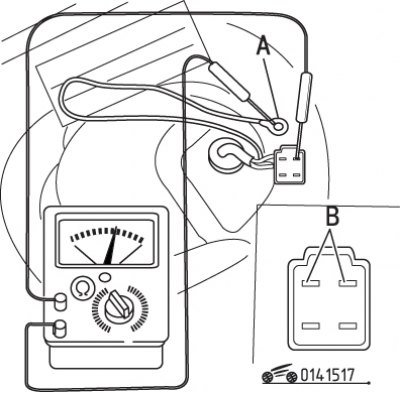
Figure 15.17. Using an ohmmeter to measure fuel pump resistance: A, B – contacts
Measure the resistance between contacts "A" and "B" of the connector (figure 15.17). The resistance should be about 0.3 ohms.
To replace the fuel pump, relieve the pressure in the fuel system, then disconnect the cable from the negative terminal of the battery.
Remove the service plug and push the rubber seal and wires out of the hole.
Caution! Do not perform the following operations when the fuel tank is full. Drain the fuel into a designated container using a pump (it is prohibited to drain gasoline by sucking it into a hose).
Mark the fuel supply and return lines with masking tape. Loosen the hose clamps and disconnect the hoses.
Loosen the pump bracket mounting bolts and remove the pump and bracket from the fuel tank.
Disconnect the wires from the pump terminals.
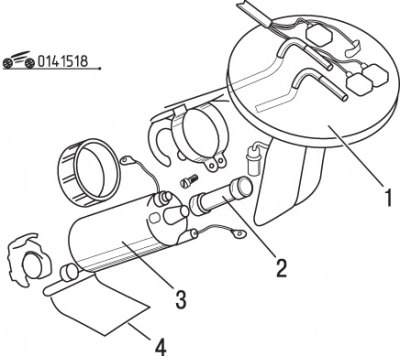
Figure 15.18. Fuel pump mounting elements: 1 – filter (located inside the tank); 2 – pump; 3 – pump hose; 4 – bracket
Loosen the pump hose clamp screw, move the clamp to the middle of the hose, then remove the pump from the bracket. Remove the pump from the bracket bracket (figure 15.18).
Remove the rubber pad and filter from the bottom of the pump by prying and removing the retaining ring.
Installation is carried out in the reverse order of removal. Replace the gasket between the tank and the pump bracket.
Pressure regulator control valve
The pressure regulator control valve is installed on the wall of the engine compartment, between two three-way electromagnetic distributors. This is a solenoid valve activated by the control unit. The valve, in turn, controls the fuel pressure regulator in accordance with the changing vacuum.
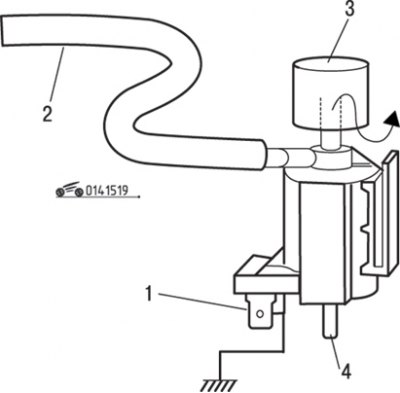
Figure 15.19. Checking the pressure regulator control valve: 1 – contact for supplying voltage from the battery; 2 – hose; 3 – air filter; 4 – lower valve fitting
To check the valve, place a hose on the top fitting (figure 15.19). Blow into the hose and make sure air comes out of the bottom fitting. Connect one of the filter terminals to ground and apply voltage from the battery to the other. Blow into the hose and make sure air still comes out of the bottom filter fitting. If the result of both tests is negative, replace the filter.
To remove the filter, disconnect the wires and hoses, after marking their location. Remove the valve from the bracket by pulling the plastic latch. Installation is carried out in the reverse order of removal.
Fuel pressure regulator
Check the fuel pressure.
Reduce the pressure in the fuel system, then disconnect the cable from the negative terminal of the battery.
Loosen the fuel return line hose clamp and disconnect the hose from the pressure regulator, first placing a rag underneath to collect any spilled fuel.
Remove the vacuum control hose from the regulator.
Loosen the two regulator mounting bolts and remove the regulator from the fuel distribution line.
Install the pressure regulator with a new gasket onto the fuel rail and secure with bolts.
Connect the fuel return hose and the vacuum test hose.
Connect the cable to the negative battery terminal and turn the ignition switch to the "ON" position. Fill the system to operating pressure by connecting a jumper wire between the diagnostic contacts of the fuel pump connector. Check for fuel leaks.
Damper
The damper is installed at the end of the fuel distribution line and is designed to smooth out sharp pulsations in fuel pressure that occur when the injectors close and open.
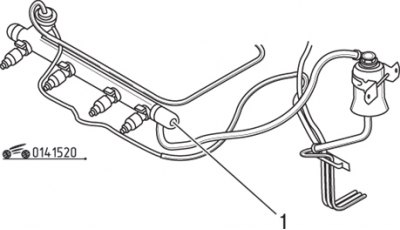
Figure 15.20. Location of the damper (1) at the end of the fuel distribution line
To check the damper, place your finger on the hole on the end – when the engine is running, you should feel pulsations (figure 15.20). If there is no pulsation, replace the damper.
To replace the damper, relieve the pressure in the fuel system, then disconnect the cable from the negative terminal of the battery.
Disconnect the line and unscrew the damper from the fuel distribution line.
Installation is carried out in the reverse order of removal.
Fuel distribution line
Relieve the pressure in the fuel system, then disconnect the cable from the negative terminal of the battery.
Disconnect the fuel return line from the pressure regulator and the line from the damper.
Disconnect the connectors from the injectors.
Remove two bolts and carefully disconnect the fuel rail with injectors from the intake manifold. Remove the entire assembly by sliding it under the throttle body and smoothing receiver.
Installation is carried out in the reverse order of removal. Be sure to inspect the rubber gaskets between the injector and the intake manifold and replace them if cracks, hardening or deformation are found.
Injectors
To quickly check, place the blade of a long screwdriver against the body of each injector in turn and listen for a click from the needle valves. If you cannot hear clicks, check the resistance of the injectors.
Remove the fuel rail.
To check the injectors for leaks, connect the hose from the fuel filter to the inlet fitting on the fuel distribution line. Using an additional piece of fuel hose and an adapter, connect the fuel return line hose to the fuel pressure regulator.
Tie the injectors to the fuel rail to prevent them from falling out when fuel pressure increases.
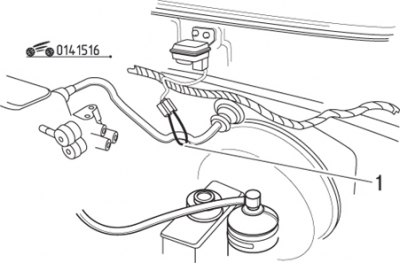
Figure 15.16. Jumper connection (1) of the diagnostic connector contacts to start the fuel pump
Place a rag under the nozzles. Turn the key in the ignition switch to the "ON" position and, having connected the contacts of the fuel pump control connector with a jumper, start the pump (see figure 15.16). Watch for drips or traces of fuel seeping from the injectors. Replace the leaking fuel injector.
Caution! A small amount of gasoline may appear after 5 minutes.
Using an ohmmeter, check that the resistance between the two terminals of each injector is 12–16 ohms. If not, the injector is faulty and must be replaced.
To replace the injector, disconnect the auxiliary hose that was used during the leak test. To prevent fuel from spurting out of the hose, wrap it with a rag, as it is impossible to relieve the fuel pressure in the system with the fuel rail removed.
Remove rubber sealing rings and bushings, injectors and insulators.
It is recommended to replace these elements periodically to prevent possible fuel leakage.
Install new rubber seals, bushings and insulators.
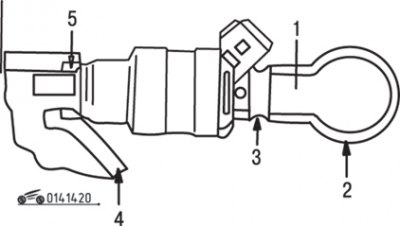
Figure 14.20. Location of injector seals: 1 – sealing ring; 2 – fuel distribution line; 3 – sealing sleeve; 4 – intake manifold; 5 – insulator
To facilitate installation and reduce the risk of damage, lubricate the ring and insulator with a thin layer of motor oil (see Figure 14.20).
Insert the injector into the fuel rail with the connector facing up. The nozzle must be inserted strictly along its axis, otherwise the sealing ring may be damaged.
Install the fuel rail with injectors and secure with bolts. Connect the fuel supply and return hoses and the vacuum control hose. Restore pressure in the fuel system by connecting a jumper across the fuel pump test connector contacts and check the system for leaks.
Fuel pump relay
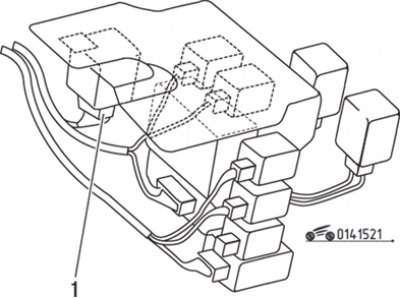
Figure 15.21. Location of the fuel pump relay (1)
The fuel pump relay is mounted on the panel under the air shock absorber. It is designed to supply power to the fuel pump when the engine is started by the starter (figure 15.21). Power is supplied to the pump up to
the starter is turned off, it is at this moment that the relay is automatically unlocked (when the key in the ignition switch passes the "ON" position, power is not supplied to the pump, since the engine must start first).
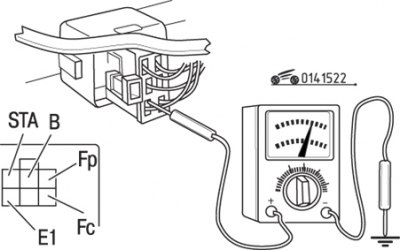
Figure 15.22. Location of contacts of the self-locking relay connector: Fp – to the fuel pump; Fc – to the fuel pump switch; B – to the ignition switch ("ON")
To check the relay and wires, open the measuring plate inside the air flow meter, lock it and measure the voltage at each contact of the relay connector without disconnecting the relay from the connector (figure 15.22). If the voltage at contact "B" differs from that given in the table. 15.1, check the fuses and wires from the ignition switch.
Table 15.1. Voltage at the contacts of the self-locking relay connector
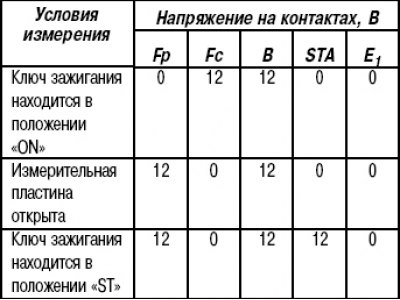
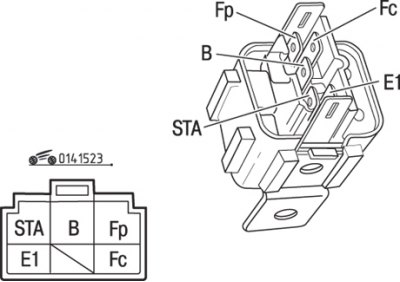
Figure 15.23. Location of contacts of the self-locking relay
If a voltage deviation is detected at the "STA" terminal, check the wires from the ignition switch. If the reading on contact "E1" is incorrect, check the ground connection. If a voltage deviation is detected on contact "FC", check the resistance of the flow meter or the relay coil itself (figure 15.23). The resistance values at the relay contacts are given in the table. 15.2.
Table 15.2. Resistance between contacts of a self-locking relay
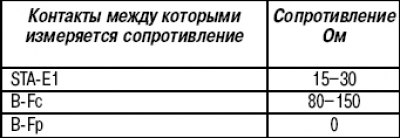
If the reading on the "FP" contact differs, check the resistance of the self-locking relay.
To replace the relay, disconnect the connector and remove the mounting screw. Installation is carried out in the reverse order of removal.