


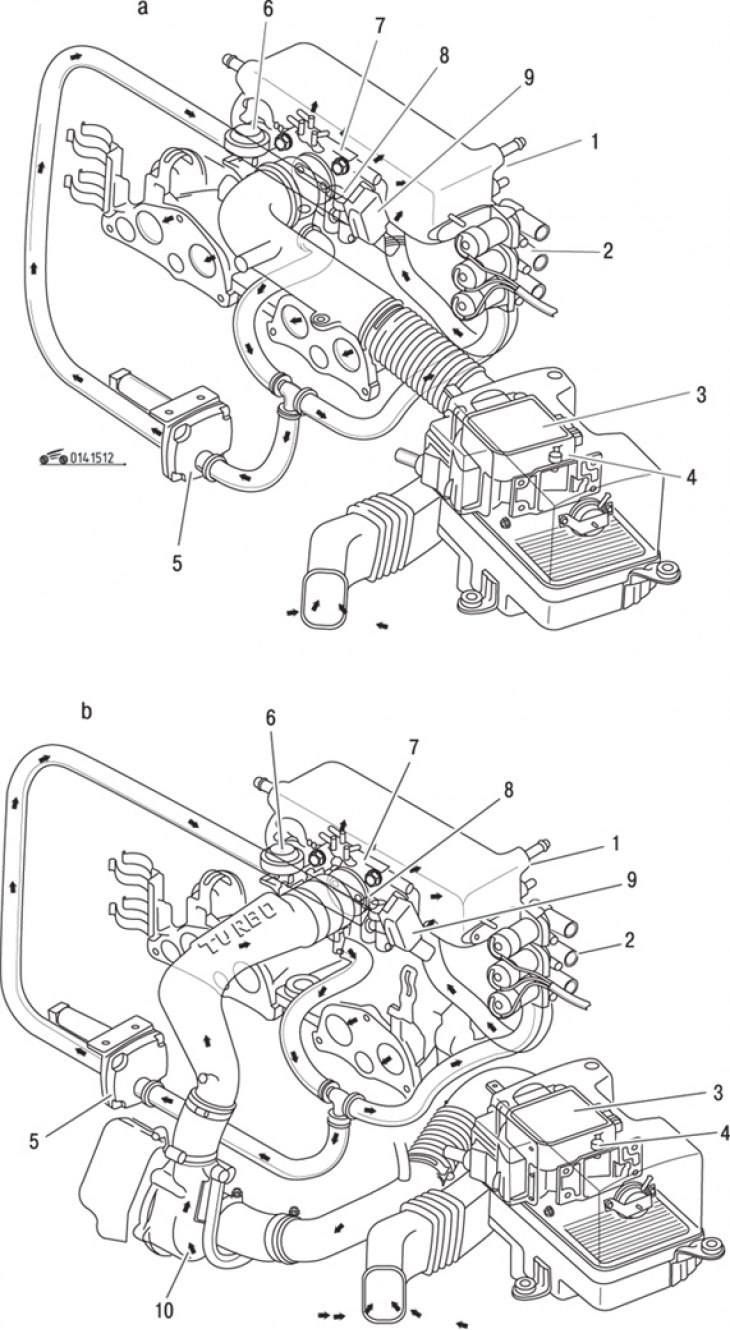
Figure 15.12. Air supply system: a – non-turbocharged engines; b – turbocharged engines; 1 – smoothing receiver; 2 – bypass electromagnetic valve; 3 – air flow meter; 4 – intake air temperature sensor; 5 – air valve; 6 – pneumatic shock absorber; 7 – throttle assembly; 8 – screw for adjusting the engine idle speed; 9 – throttle opening angle sensor; 10 – turbocharger
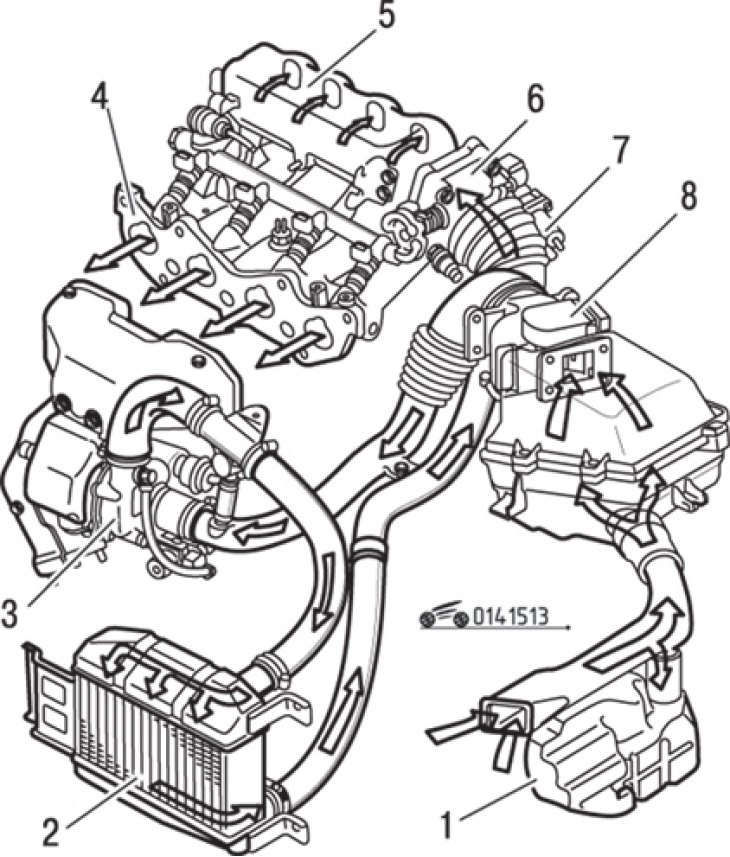
Figure 15.13. Air supply system for turbocharged and intercooled engines: 1 – resonator; 2 – intercooler; 3 – turbocharger; 4 – intake manifold; 5 – flow formation chamber; 6 – throttle assembly; 7 – bypass air duct valve; 8 – air flow meter
The air supply system consists of an air filter, an air flow meter and a throttle assembly. Automatic adjustment of the crankshaft speed at idle depending on various engine operating conditions is provided by means of an auxiliary air valve combined with a bypass electromagnetic valve (figure 15.12, 15.13). The air flow meter transmits information about the amount of air sucked in by the engine to the control unit. The air flow and temperature at the inlet to the injector are measured using a compensator and a temperature sensor. Based on these measurements, the control unit determines the amount of fuel to be injected or the injection duration. The throttle position is set by the driver. As the throttle valve opens, the amount of air passing through the system increases, the compensator opens even more and the control unit generates a signal that controls the fuel supply system, the portion of injected fuel increases.