
MazBook.ru
English Русский
Български
Беларускі
Український
Српски
Hrvatski
Română
Polski
Slovenský
Magyar
• Bookmark • Sitemap • Contacts •   
Cars Opel Cars Ford Cars Volkswagen Cars Audi Cars Kia Cars Renault Cars Peugeot


Familia Capella Mazda3 Mazda6 CX-? Others Articles
Capella 3 (1982-1992, petrol) Capella 3 and 4 (1982-1992) Capella 4 (1987-1992) Capella 5 (1991-1997) Capella 6 (1997-2005, petrol)

Fuel Injectors — checking, removing, and installing (since 1984) (Mazda Capella GC)

  • Home
  • Mazda Capella
  • Capella GC (1982-1992)
  • Power unit
  • Supply system
  • Fuel Injectors — checking, removing, and installing (since 1984)
0
Fuel injectors inject fuel into the inlet ports. The amount of fuel injected is determined by the time the injector needle valve is open, which in turn is determined by the signal received from the EGR system control unit.

All four injectors open simultaneously, once per crankshaft revolution, providing two injections of fuel per cycle.

Checking, removing and installing


Start the engine and warm it up to normal operating temperature, then let it idle.

For a quick check, place the blade of a long screwdriver against the body of each injector in turn and listen for clicking sounds coming from the needle valves. A faulty injector will not click, in which case further testing is necessary.

Leave the engine idling and disconnect the connectors from each injector one by one. Engine speed should decrease by 100–2200 min⁻¹ when disconnecting the connector from each injector.

Stop the engine and disconnect the connectors from the injectors. Using an ohmmeter, check that the resistance between the two terminals of each injector is 12–16 ohms. If not, the injector is faulty and must be replaced.

To remove the injector, disconnect the wire from the negative terminal of the battery.

If the engine is hot, wait until it cools down.

Disconnect the fuel hoses from the fuel filter and pressure regulator. To prevent fuel splashing, wrap the hoses with a cloth before disconnecting them.

Disconnect the connectors from all injectors.

Remove the bolts securing the pressure regulator to the end of the fuel distribution line.


Remove the bolts and the fuel rail from the injectors.

Remove rubber sealing rings and bushings, injectors and insulators.
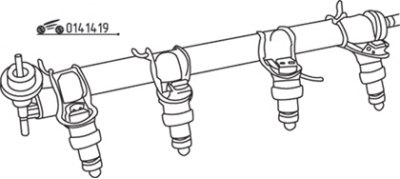
Figure 14.19. Injectors attached to the fuel rail for testing

Figure 14.19. Injectors attached to the fuel rail for testing


To further test the injectors, install them on the fuel rail and secure them with wires (figure 14.19).

Temporarily connect the fuel distribution line between the fuel filter and the fuel return line.

Connect the cable to the negative terminal of the battery and turn on the ignition.

Connect the terminals of the fuel pump test connector together with a piece of wire and make sure that gasoline does not leak from the ends of the injectors (see figure 14.16). The appearance of a small amount of gasoline after 5 minutes is acceptable.

To check the volume of fuel injected by an injector, you need a measuring vessel, wires and a 12V power source.

Working with each nozzle in turn, place the end of the plastic tubing over the end of the nozzle and place the other end in the measuring vessel.

Connect the terminals of the fuel pump test connector and turn on the ignition.

Apply 12 V to the injector for 15 seconds and make sure that the injected fuel volume is 44–62 cm³.
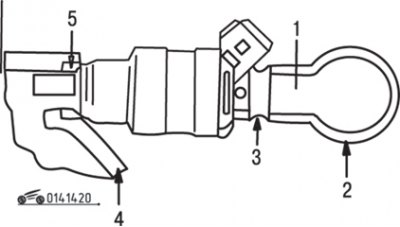


Figure 14.20. Location of injector seals: 1 – sealing ring; 2 – fuel distribution line; 3 – sealing…

Figure 14.20. Location of injector seals: 1 – sealing ring; 2 – fuel distribution line; 3 – sealing sleeve; 4 – intake manifold; 5 – insulator


Remove the control and measuring equipment and install the injectors in place. Installation is carried out in the reverse order of removal, while installing new rubber sealing rings (figure 14.20). Dip them in gasoline just before installing them and the fuel rail.
This article is available at: russian, bulgarian, belarusian, ukrainian, serbian, croatian, romanian, polish, slovak, hungarian
This text was checked by: Georgy Afanasyev
Share with friends on social networks:

Previous
Capella 3 and 4 » Supply system
Next

Fuel pump — inspection, removal and installation (since 1984)
Air valve (since 1984)
Throttle body — removal, inspection and installation (since 1984)
Distributed fuel injection system (since 1984)
Carburetor — removal, inspection and installation (since 1984)
Fuel pressure regulator (since 1984)
Control unit of the RVT system (since 1984)
Adjusting the accelerator cable of the RVT system (since 1984)
Checking the components of the electronic injection control system…
Adjusting the engine warm-up valve (since 1984)
More articles on repairing other Mazda models
Checking/removing and installing the fuel shut-off valve Mazda Familia 6 (1989-1994)
Checking for fuel leaks after installing the pump unit (diesel) Mazda3 BK (2003-2009)
Checking for fuel leaks Mazda6 GG (2002-2008)
Checking fuel injectors of the high-pressure fuel pump Mazda CX-5KE (2012-2017)
Checking, removing and installing the fuel pump relay Mazda 121 (3) (1996-2003)
Link in different formats to this article
Comments and feedback from visitors
No comments yet


How much will 22 + 49 ?


Capella 6 (1997-2005, petrol) 
  • General information
  • Introduction to guide
  • User manual
  • Troubleshooting
  • Maintenance
  • Power unit
  • 4-cylinder engines
  • 6-cylinder engines
  • Engine overhaul
  • Cooling and ventilation
  • Power and exhaust systems
  • Engine electrics
  • Control system
  • Transmission
  • Mechanical gearbox
  • Automatic gearbox
  • Clutch and drive shafts
  • Chassis
  • Brake system
  • Car suspension
  • Steering
  • Body
  • Exterior (external elements)
  • Interior (internal elements)
  • Doors, windows and locks
  • Electrical equipment
  • Equipment and devices
  • Electrical circuits
Capella 5 (1991-1997) 
  • General information
  • User manual
  • Maintenance
  • Helpful hints
  • Power unit
  • Petrol engines 1.6 and 1.8
  • Petrol engines 2.0
  • 2.5 petrol engines
  • Overhaul engines 1.6 and 1.8
  • Overhaul engines 2.0 and 2.5
  • Diesel engine 2.0
  • Engine electrics
  • Cooling system
  • Air conditioner
  • Carburetor Nikki 30/34
  • Power system (1.6 and 1.8)
  • Power system (2.0 and 2.5)
  • Control system
  • Transmission
  • Mechanical gearbox
  • Automatic gearbox
  • Clutch and axles
  • Chassis
  • Brake system
  • Suspension and wheels
  • Steering
  • Body
  • Exterior (external elements)
  • Interior (internal elements)
  • Doors and windows
  • Electrical equipment
  • Equipment and devices
  • Electrical circuits
Capella 4 (1987-1992) 
  • General information
  • Introduction to manual
  • Vehicle specifications
  • Power unit
  • Engine repair
  • Lubrication system
  • Cooling system
  • Fuel system (carburetor)
  • Fuel injection (FE)
  • Fuel injection (DOHC)
  • Fuel system (diesel)
  • Ignition system
  • Transmission
  • Clutch
  • Gearbox
  • Drive shafts
  • Chassis
  • Front suspension
  • Rear suspension
  • Steering system
  • Brake system
  • Electrical equipment
  • Equipment and devices
  • Electrical circuits
Capella 3 and 4 (1982-1992) 
  • General information
  • User manual
  • Maintenance
  • Power unit
  • Gasoline engine
  • Engine overhaul (gasoline)
  • Diesel engine
  • Cooling and heating
  • Supply system
  • Ignition system
  • Emission reduction
  • Transmission
  • Clutch
  • Mechanical gearbox
  • Automatic gearbox
  • Drive shafts
  • Chassis
  • Brake system
  • Suspension and wheels
  • Steering
  • Body
  • Exterior (external elements)
  • Interior (internal elements)
  • Electrical equipment
  • Equipment and devices
  • Power devices
  • Electrical circuits
Capella 3 (1982-1992, petrol) 
  • General information
  • User manual
  • Maintenance
  • Troubleshooting
  • Late models
  • Power unit
  • Engine in car
  • Engine overhaul
  • Cooling and heating system
  • Fuel and exhaust system
  • Engine electrical system
  • Emission control system
  • Transmission
  • Mechanical gearbox
  • Automatic gearbox
  • Clutch and drive shafts
  • Chassis
  • Brake system
  • Suspension and wheels
  • Steering
  • Body
  • Exterior (external elements)
  • Interior (internal elements)
  • Electrical equipment
  • Equipment and devices
  • Lighting and lamps
  • Electrical circuits
MazBook.ru © 2018–2026 · Mobile version · Articles and news · Sitemap: EN BG BY UA RS HR RO PL SK HU · Feedback · Site search · Add to bookmarks Familia 5 (BF) · Familia 6 (BG) · Capella 3 (GC) · Capella 3 and 4 (GC) · Capella 4 (GD) · Capella 5 (GE) · Capella 6 (GF) · Mazda3 BK · Mazda6 GG · CX-5KE · Mazda 121 (3) · Mazda BT-50 (1) ·
By continuing to use the site, you agree to the use of cookies 🔐