
MazBook.ru
English Русский
Български
Беларускі
Український
Српски
Hrvatski
Română
Polski
Slovenský
Magyar
• Bookmark • Sitemap • Contacts •   
Cars Opel Cars Ford Cars Volkswagen Cars Audi Cars Kia Cars Renault Cars Peugeot


Familia Capella Mazda3 Mazda6 CX-? Others Articles
Capella 3 (1982-1992, petrol) Capella 3 and 4 (1982-1992) Capella 4 (1987-1992) Capella 5 (1991-1997) Capella 6 (1997-2005, petrol)

Carburetor — removal, inspection and installation (since 1984) (Mazda Capella GC)

  • Home
  • Mazda Capella
  • Capella GC (1982-1992)
  • Power unit
  • Supply system
  • Carburetor — removal, inspection and installation (since 1984)
0
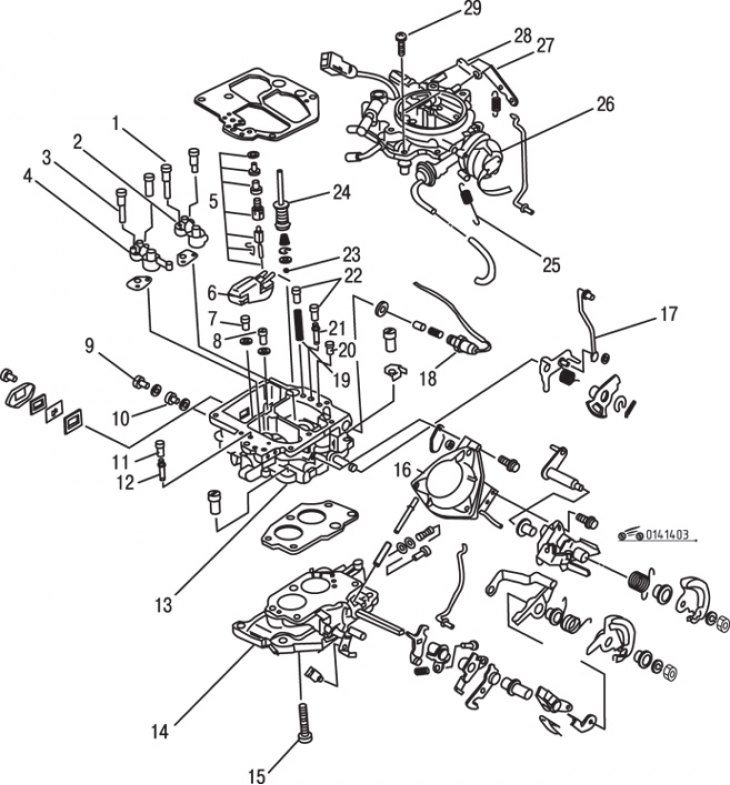
Figure 14.3. Carburetor equipped with an automatically controlled air damper: 1 – primary chamber…

Figure 14.3. Carburetor equipped with an automatically controlled air damper: 1 – primary chamber air jet; 2 – primary chamber economizer and economizer atomizer; 3 – secondary chamber air jet; 4 – secondary chamber economizer and economizer atomizer; 5 – needle valve; 6 – float; 7 – main jet of the primary chamber; 8 – screw for adjusting the quality of the fuel-air mixture; 9 – plug; 10 – secondary chamber main jet; 11 – plug; 12 – secondary chamber idle jet; 13 – carburetor body; 14 – carburetor base; 15 – bolt (with a vacuum channel); 16 – secondary chamber diaphragm; 17 – damper rod; 18 – electromagnetic valve for idle fuel cut-off; 19 – balancing channel; 20 – air jet of the primary chamber of the idle system (No. 2); 21 – primary chamber idle jet; 22 – plug; 23 – accelerator pump check valve; 24 – accelerator pump; 25 – spring; 26 – air damper with automatic control; 27 – lever; 28 – air neck; 29 – screw


The carburetor on later models with the 2.0L engine features an automatic choke instead of the manual choke found on earlier models. The damper drive consists of a bimetallic spring, which is heated by an electric current and opens the air damper for a time, the duration of which depends on the air temperature (figure 14.3).


Apart from the presence of an automatically controlled air damper, the design of the carburetor is practically no different from the design of the carburetor of earlier years of production.

Automatically controlled air damper


Removal and installation


Remove the air filter and disconnect the power wire from the automatic choke.

Remove the screws, remove the cover and at the same time disconnect the bimetallic spring from the damper drive lever.
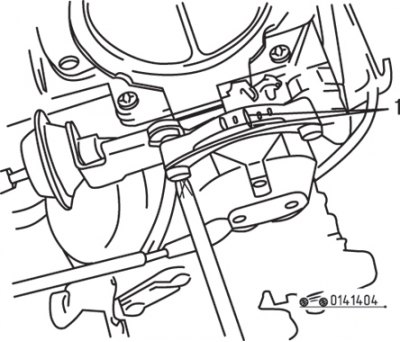
Figure 14.4. Alignment of marks (1)

Figure 14.4. Alignment of marks (1)


Installation is carried out in the reverse order of removal; before tightening the screws, align the mark on the cover with the center mark on the body (figure 14.4).

Checking and adjusting


Check the conductivity of the heating coil of the automatic air damper by disconnecting the power wire from it and connecting the ohmmeter probes to the coil wire and the vehicle ground. If the ohmmeter shows "infinity", then there is a break in the winding and the air damper cover must be replaced.

The operation of adjusting the diaphragm of the damper is similar to the operation given in the subsection "Carburetor repair and adjustment".
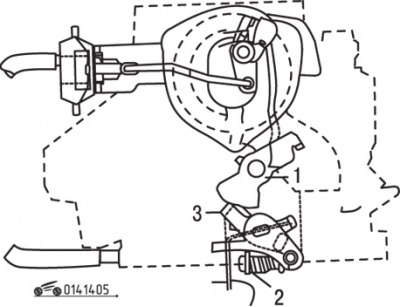


Figure 14.5. Idle speed system clearance adjustment elements (G): 1 – idle system cam; 2 –…

Figure 14.5. Idle speed system clearance adjustment elements (G): 1 – idle system cam; 2 – adjusting screw; 3 – idle speed control lever


To adjust the throttle opening at idle, open the throttle, lower the lever to the second upper stage of the cam. Check the clearance between the primary chamber throttle valve and the wall; it should be 0.94–1.38 mm. If necessary, adjust it by turning the adjusting screw (figure 14.5).

Data provided by the website: Mazbook

The operation for checking the throttle valve opening is similar to the operation given in the subsection "Carburetor repair and adjustment" (see "Gasoline engine fuel system"), but the primary chamber valve must be open by 50° before the secondary chamber valve begins to open. Nominal size 7.32–8.28 mm.
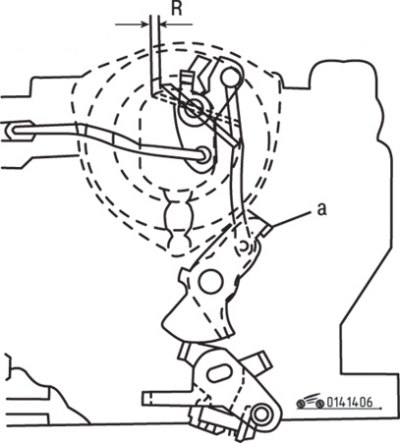
Figure 14.6. Location for measuring the throttle valve clearance (R) when the engine is idling: a –…

Figure 14.6. Location for measuring the throttle valve clearance (R) when the engine is idling: a – adjusting tongue


To adjust the throttle opening with the engine idling, open the throttle valve and lower the lever to the second upper cam position (figure 14.6). Check that the gap between the top edge of the throttle valve and the wall is between 0.60 and 1.00 mm. If minor adjustments are needed, bend the tab on the drive lever. If significant adjustment is required, bend the drive rod.
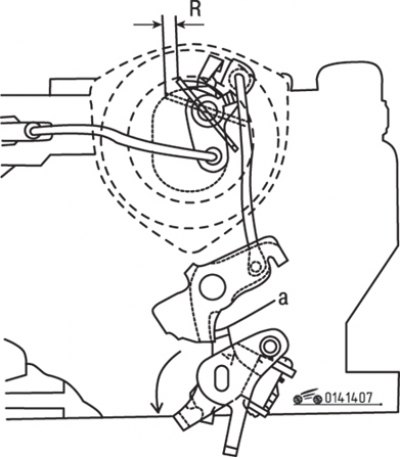
Figure 14.7. Carburetor relief valve clearance (R) adjustment elements: a – adjusting tongue

Figure 14.7. Carburetor relief valve clearance (R) adjustment elements: a – adjusting tongue


To adjust the relief valve, fully open the primary chamber throttle valve, then check that the gap between the upper edge of the primary chamber throttle valve and the wall is 0.07–0.51 mm; bend the tongue if necessary (figure 14.7).

To check the throttle operation at idle, warm up the engine to normal operating temperature, then stop it and remove the air filter. Open the throttle valve slightly, then close the throttle valve completely and release the throttle valve. The idle cam will hold the primary throttle valve open in the idle position. Connect a tachometer, then, without pressing the accelerator pedal, start the engine and ensure that the engine speed is between 3000 and 4000 rpm. If necessary, adjust the engine speed by turning the idle speed adjusting screw. Stop the engine, disconnect the tachometer and reinstall the air filter.
This article is available at: russian, bulgarian, belarusian, ukrainian, serbian, croatian, romanian, polish, slovak, hungarian
This text was checked by: Georgy Afanasyev
Share with friends on social networks:

Previous
Capella 3 and 4 » Supply system
Next

Power supply system malfunctions, their causes and troubleshooting…
Elements of the exhaust system
Air damper control cable
Engine idling crankshaft speed compensator
Carburetor — removal, inspection and installation
Distributed fuel injection system (since 1984)
Throttle body — removal, inspection and installation (since 1984)
Air valve (since 1984)
Fuel pump — inspection, removal and installation (since 1984)
Fuel Injectors — checking, removing, and installing (since 1984)
More articles on repairing other Mazda models
Aisan carburetor — device Mazda Familia 5 (1985-1989)
Link in different formats to this article
Comments and feedback from visitors
No comments yet


How much will 34 + 41 ?


Capella 6 (1997-2005, petrol) 
  • General information
  • Introduction to guide
  • User manual
  • Troubleshooting
  • Maintenance
  • Power unit
  • 4-cylinder engines
  • 6-cylinder engines
  • Engine overhaul
  • Cooling and ventilation
  • Power and exhaust systems
  • Engine electrics
  • Control system
  • Transmission
  • Mechanical gearbox
  • Automatic gearbox
  • Clutch and drive shafts
  • Chassis
  • Brake system
  • Car suspension
  • Steering
  • Body
  • Exterior (external elements)
  • Interior (internal elements)
  • Doors, windows and locks
  • Electrical equipment
  • Equipment and devices
  • Electrical circuits
Capella 5 (1991-1997) 
  • General information
  • User manual
  • Maintenance
  • Helpful hints
  • Power unit
  • Petrol engines 1.6 and 1.8
  • Petrol engines 2.0
  • 2.5 petrol engines
  • Overhaul engines 1.6 and 1.8
  • Overhaul engines 2.0 and 2.5
  • Diesel engine 2.0
  • Engine electrics
  • Cooling system
  • Air conditioner
  • Carburetor Nikki 30/34
  • Power system (1.6 and 1.8)
  • Power system (2.0 and 2.5)
  • Control system
  • Transmission
  • Mechanical gearbox
  • Automatic gearbox
  • Clutch and axles
  • Chassis
  • Brake system
  • Suspension and wheels
  • Steering
  • Body
  • Exterior (external elements)
  • Interior (internal elements)
  • Doors and windows
  • Electrical equipment
  • Equipment and devices
  • Electrical circuits
Capella 4 (1987-1992) 
  • General information
  • Introduction to manual
  • Vehicle specifications
  • Power unit
  • Engine repair
  • Lubrication system
  • Cooling system
  • Fuel system (carburetor)
  • Fuel injection (FE)
  • Fuel injection (DOHC)
  • Fuel system (diesel)
  • Ignition system
  • Transmission
  • Clutch
  • Gearbox
  • Drive shafts
  • Chassis
  • Front suspension
  • Rear suspension
  • Steering system
  • Brake system
  • Electrical equipment
  • Equipment and devices
  • Electrical circuits
Capella 3 and 4 (1982-1992) 
  • General information
  • User manual
  • Maintenance
  • Power unit
  • Gasoline engine
  • Engine overhaul (gasoline)
  • Diesel engine
  • Cooling and heating
  • Supply system
  • Ignition system
  • Emission reduction
  • Transmission
  • Clutch
  • Mechanical gearbox
  • Automatic gearbox
  • Drive shafts
  • Chassis
  • Brake system
  • Suspension and wheels
  • Steering
  • Body
  • Exterior (external elements)
  • Interior (internal elements)
  • Electrical equipment
  • Equipment and devices
  • Power devices
  • Electrical circuits
Capella 3 (1982-1992, petrol) 
  • General information
  • User manual
  • Maintenance
  • Troubleshooting
  • Late models
  • Power unit
  • Engine in car
  • Engine overhaul
  • Cooling and heating system
  • Fuel and exhaust system
  • Engine electrical system
  • Emission control system
  • Transmission
  • Mechanical gearbox
  • Automatic gearbox
  • Clutch and drive shafts
  • Chassis
  • Brake system
  • Suspension and wheels
  • Steering
  • Body
  • Exterior (external elements)
  • Interior (internal elements)
  • Electrical equipment
  • Equipment and devices
  • Lighting and lamps
  • Electrical circuits
MazBook.ru © 2018–2026 · Mobile version · Articles and news · Sitemap: EN BG BY UA RS HR RO PL SK HU · Feedback · Site search · Add to bookmarks Familia 5 (BF) · Familia 6 (BG) · Capella 3 (GC) · Capella 3 and 4 (GC) · Capella 4 (GD) · Capella 5 (GE) · Capella 6 (GF) · Mazda3 BK · Mazda6 GG · CX-5KE · Mazda 121 (3) · Mazda BT-50 (1) ·
By continuing to use the site, you agree to the use of cookies 🔐