


Contents: Examination ⇓ Valve grinding ⇓
Due to the complexity of the work and the need for specialized tools and equipment, repair of valves, seats, and guide bushings is best left to an experienced professional.
The following work can be performed at home: disassembling the cylinder head, cleaning and checking it, reassembling it and delivering it to the dealer's service center or to specialized workshops for valve repair.
The following types of work are performed in a car service center or in specialized workshops: removal of springs and valves, grinding or replacement of valves and guide bushings, checking and replacing springs, retaining rings and crackers (as needed), replacing valve stem seals, overhauling valve parts, checking the spring height in a free state. If the deviation from the plane exceeds the norm, the cylinder head is ground.
After the valves and their parts have been checked and repaired by experienced personnel, the cylinder head is completely restored. Before installing the cylinder head, rinse it again to remove any remaining abrasive material from grinding the head or lapping the valves. If possible, blow out all passages and openings with compressed air.
Examination
Valves
1. Carefully inspect the valve heads and replace worn valves if necessary.
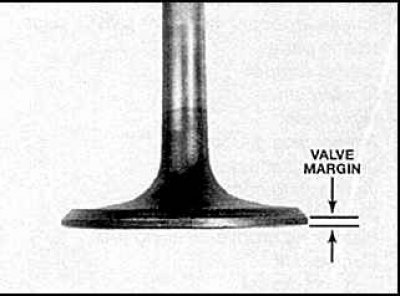
2. Measure the height of the valve head above the chamfer, replace the valve if necessary.
Valve elements
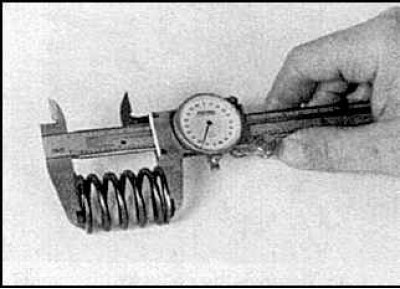
3. Inspect the valve springs and measure the length of each one, replace the spring if necessary.
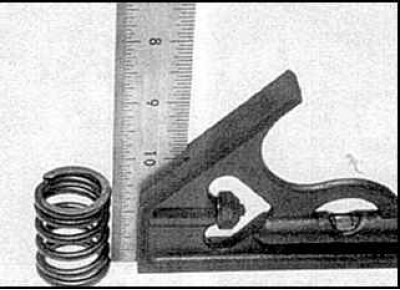
4. Check that the springs are straight, if necessary, replace all springs at the same time.
5. Inspect the spring seats and plates for cracks and wear, replace them if necessary.
Valve grinding
If the valve chamfers and seats have minor wear, or new valves are installed on unworn seats, the valves must be ground to the seats. The lapping operation is performed as follows.
1. Apply a small amount of coarse abrasive paste to the seat chamfer.
2. Insert the valve into the guide bushing and, by turning and pressing the valve, grind it against the seat. To perform this work, you will need a device in the form of a tube with a piece of rubber hose inserted inside. Lapping can also be done with an electric drill by inserting this device into the chuck. During the grinding process, periodically lift the valve to check the result and redistribute the grinding material.
[Article is based on website data: MAZBOOK]
3. When a smooth, continuous band has formed on the valve head or seat chamfer, remove any remaining coarse abrasive paste and continue lapping with a fine paste.
4. After grinding all the valves to the seats, thoroughly wash the grinding areas with kerosene to remove any remaining abrasive, wipe with a rag and blow out (if possible) compressed air. Abrasive residue in the cylinder head can cause increased wear of components.
It should be noted that if old valves are ground in too much, the valve belt position may become distorted and unacceptable, or if new valves are ground in to old valve seats, excessive grinding may result in the formation of "pockets".