


Note: The manufacturer recommends replacing this seal after removing the oil pump. In this case, the old cuff can be knocked out from the back of the pump body, and the new cuff can be pressed in using a hydraulic press. The procedure described below is simpler and does not require major disassembly, but removing the old seal can be quite difficult. If you cannot remove the cuff, you can always use the method recommended by the manufacturer (removing the oil pump is described in paragraph 13).
1. Disconnect the negative cable from the battery.
Warning. If your vehicle has a theft-protected audio system, make sure you have the unlock code for it before disconnecting the battery.
2. Remove the central bolt of the crankshaft pulley. Use a belt wrench to prevent the pulley from turning.
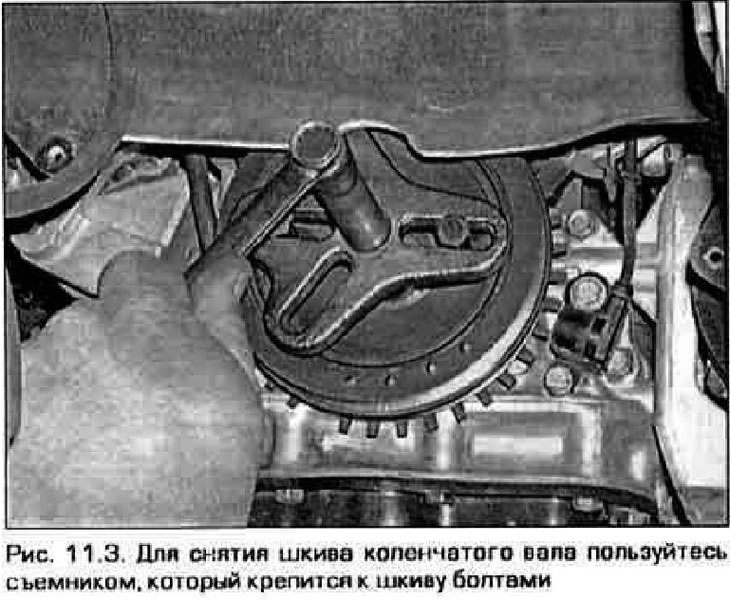
3. Using a puller, pull the pulley off the shaft (figure 11.3).
4. Remove the timing belt and crankshaft sprocket (see paragraph 6).
5. Note how deep the cuff is pressed in, then use a sharp knife to cut off the sealing edge of the cuff.
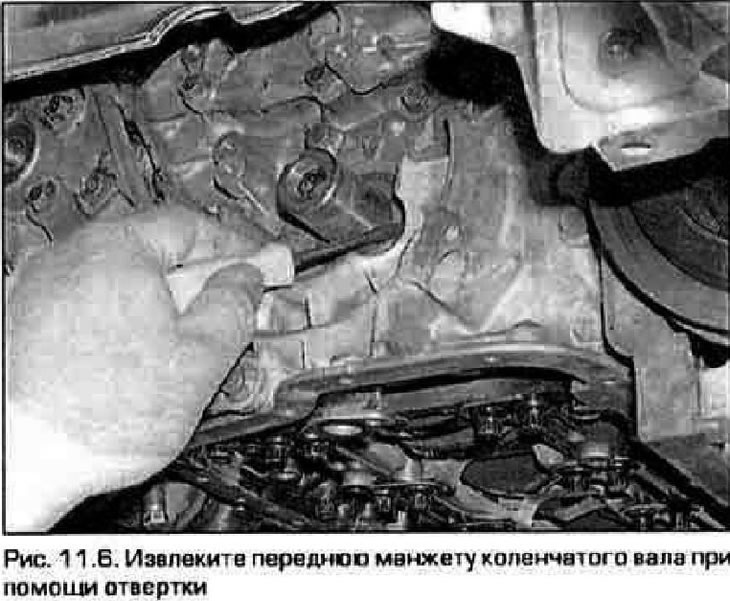
6. Carefully pull out the remaining part of the cuff using a screwdriver or other tool (figure 11.6). To protect the pump housing and the crankshaft nose, wrap the screwdriver shaft with tape (if the crankshaft nose is scratched, the new seal will leak).
7. Wipe the cuff socket. Lubricate the new seal and its working lip with clean engine oil.
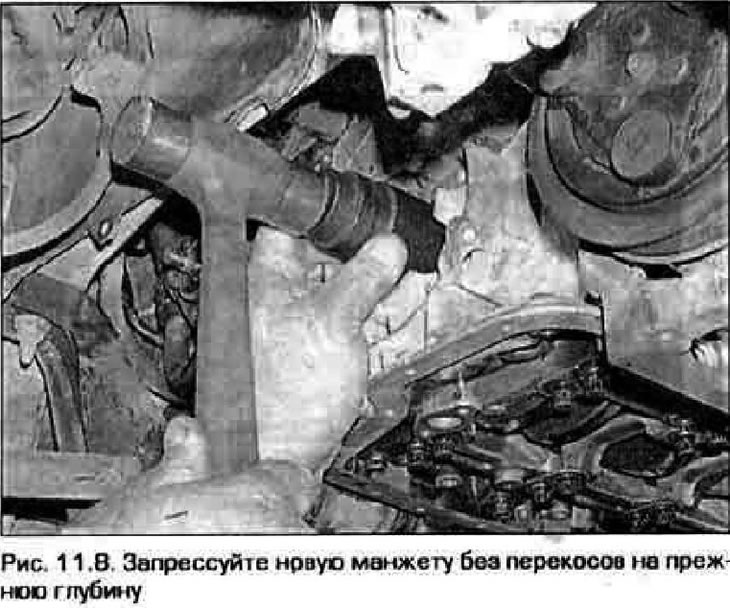
8. Carefully, without distortions, press the cuff into the socket to the same depth using the mandrel (a suitable piece of pipe or socket head), the outer diameter of which is slightly smaller than the outer diameter of the cuff (figure 11.8).
9. Install the crankshaft sprocket and timing belt (see paragraph 6). Be careful not to damage the crankshaft sensor ring on the pulley. Perform the rest of the assembly in the reverse order of disassembly.
10. Start the engine and make sure that the cuff does not leak.
(The article is based on website data: Mazbook.ru)