


Removal
1. Disconnect the negative cable from the battery.
Warning. If your vehicle has an anti-theft audio system, make sure you have the unlock code before disconnecting the battery.
2. Loosen the water pump pulley mounting bolts, then remove the alternator and power steering pump drive belt (see chapter 1).
3. Set piston No. 1 to the TDC position at the end of the compression stroke (see paragraph 3).
4. Loosen the front right wheel nuts, but do not remove them yet.
5. Place chocks under the rear wheels and apply the parking brake. Raise the front of the car and support it on stands. Remove the front right wheel.
6. Remove the right front mudguard.
7. Support the engine from underneath with a jack stand. Place a wooden block on the jack stand to prevent denting the engine sump. Raise the trolley to support the weight of the power unit and remove the left engine mount (see paragraph 16).
Caution: The engine must be supported throughout the operation. Make sure the lifting equipment is secure.
8. Remove the spark plugs from the cylinders (see chapter 1).
9. Remove the two bolts securing the tensioner bracket* (figure 6.9) and remove the tensioner.

10. Disconnect the following electrical connectors on the timing belt side: crankshaft position sensor, engine temperature indicator sensor, and the two coolant temperature sensor connectors. Label the connectors for ease of assembly and set them aside.
11. Remove the crankshaft pulley (see paragraph 11).
12. Remove the power steering pump pulley (see chapter 10).
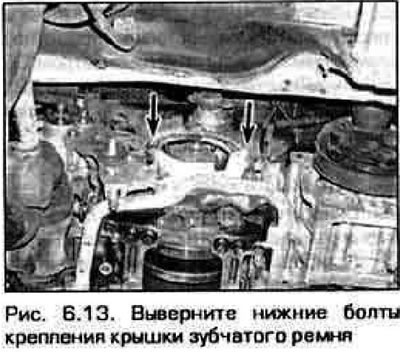
13. From under the car, unscrew the timing belt cover mounting bolts (figure 6.13).
14. Remove the remaining belt cover mounting bolts and remove the covers and gaskets from the engine (figure 6.14, a, b). Remove the oil dipstick tube from the engine.
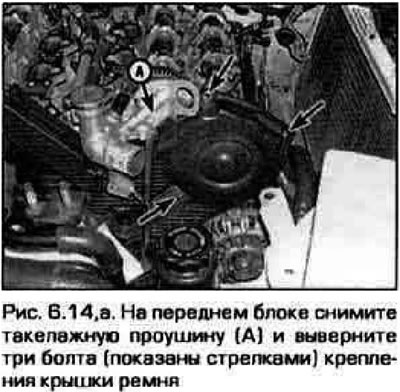 |
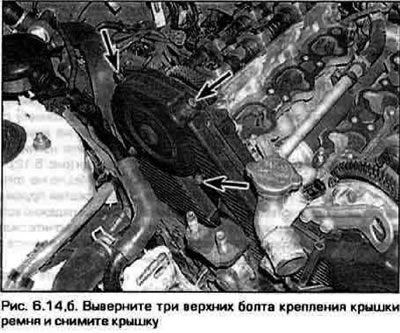 |
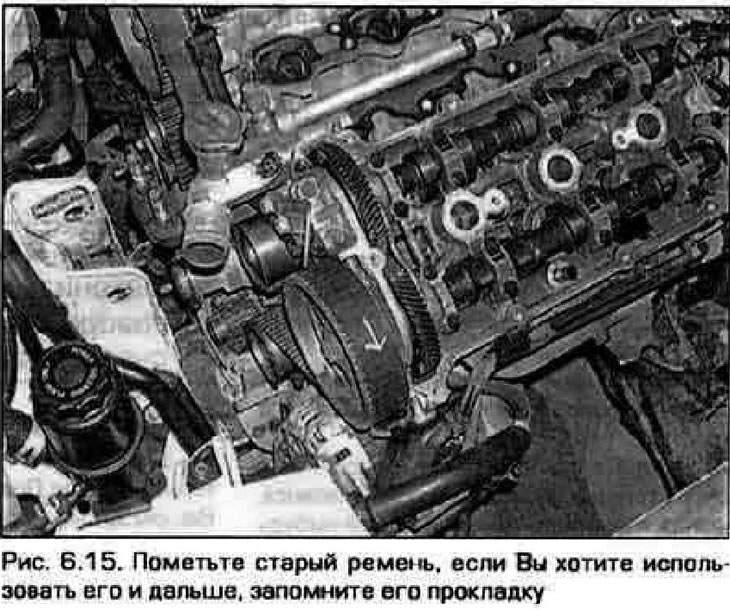
15. Check if there are any timing marks on the belt - if you are going to reinstall the old belt and the marks have worn off, apply them yourself (figure 6.15).
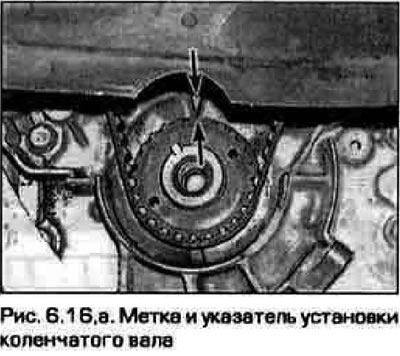
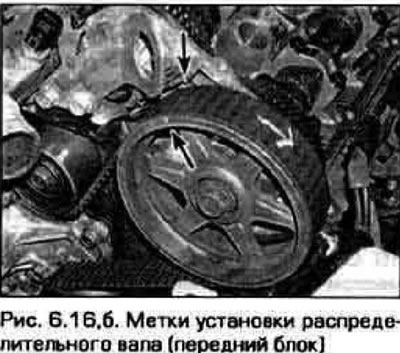
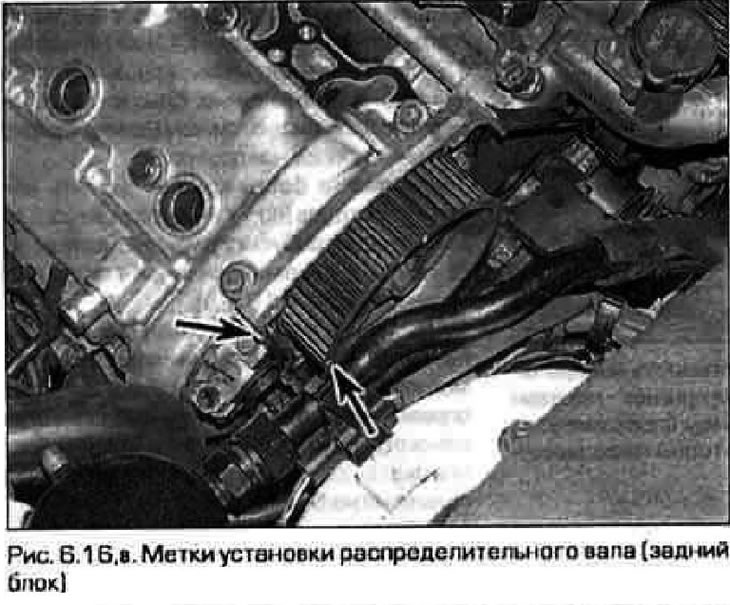
16. Make sure that the marks on the camshaft and crankshaft are aligned with the pointers (figure 6.16, a-c).
 |
 |
17. Remove the two bolts of the timing belt tensioner lever and remove the lever. Loosen the tensioner bolt (figure 6.17).

Note: Loosen the bolts gradually and one at a time, starting with the bottom bolt.
18. Remove the belt from the crankshaft and camshaft sprockets.
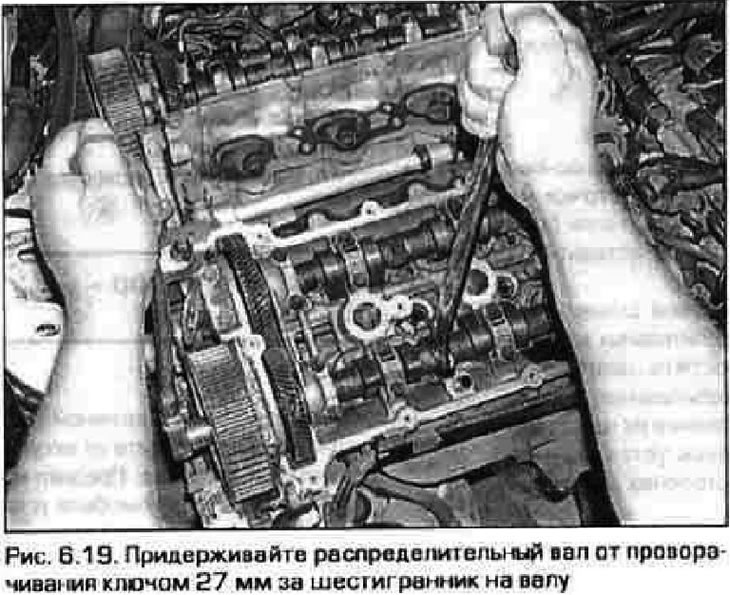
19. If the camshaft sprockets are damaged, now is the time to replace them. Remove the cylinder head covers (see paragraph 4) and loosen the sprocket mounting bolts. When unscrewing the sprocket bolt, hold the wheel from turning with a hex key on the shaft (figure 6.19). Unscrew the bolt and remove the sprocket.
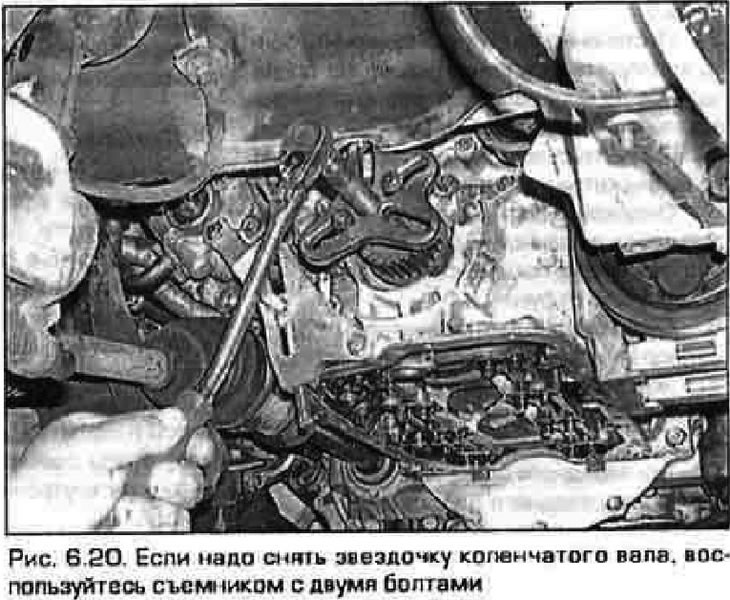
20. To remove the crankshaft sprocket, use a puller with two bolts (figure 6.20). Do not use a puller with a clamp. Do not damage the crankshaft position sensor disc.
Inspection
21. Inspect the belt as described in chapter 2A.
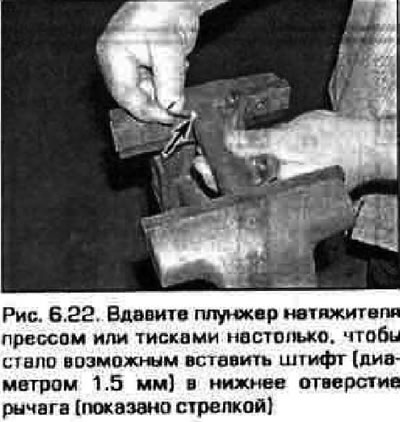
22. Press the tensioner plunger into the lever with a press or vice until it becomes possible to insert the pin (diameter 1.5 mm) into the lower opening of the housing (figure 6.22).
23. Check if the belt idler rollers rotate freely.
Installation
24. Clean the front side of the engine in the belt area from dirt and traces of oil.
25. If the crankshaft sprocket was removed, install it with the flange facing the engine side (see Figure 6.16,a).
26. Temporarily tighten the crankshaft pulley mounting bolt and turn the crankshaft counterclockwise until the mark on the sprocket aligns with the pointer on the engine wall.
27. Place the timing belt on the sprockets. If you are installing an old belt, align the marks on the belt and sprockets made when removing the belt.
28. Turn the crankshaft clockwise until the timing marks on the crankshaft sprocket are aligned. Do not allow the camshafts to rotate beyond their mounting points. In this case, all the slack in the belt will fall on the tensioner branch, and the rest of the belt should be taut.
29. Install the tensioner lever with the plunger recessed and locked in this position. Tighten the lever bolts to the specified torque.
30. Remove the retainer from the tensioner lever. Rotate the crankshaft two full revolutions (720°). Check that the timing marks are aligned (see Figure 6.16, a-c). If the marks do not match, repeat the belt installation procedure. DO NOT start the engine unless you are absolutely sure that the belt is installed correctly. Incorrect belt installation will cause serious engine damage, which will require costly repairs.
31. Tighten the tensioner bolt to the specified torque.
16. Install the remaining parts in the reverse order of removal.