


Caution! Air conditioning system hoses must be replaced at a service station equipped to depressurize the system.
High temperatures in the engine compartment cause deterioration of rubber and plastic hoses. Periodic inspection should help identify cracks, loose fasteners, local hardening and leaks.
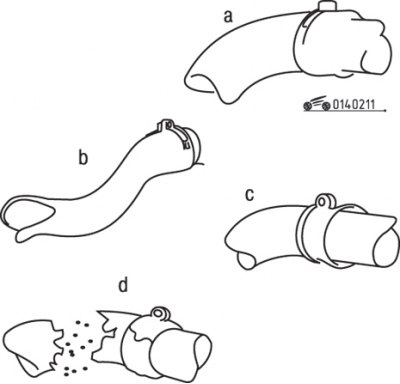
Figure 2.11. Radiator hose damage: a - burnt areas; b – softened areas; c – hardening; d – swollen or oil-soaked areas of the hose
Check the hoses for any burnt areas that could lead to costly engine repairs (figure 2.11).
a "soft" hose indicates internal wear that can contaminate the cooling system and clog the radiator.
A rigid hose can fail at any time. Tightening the clamps that attach the rigid hose to the pipe will not ensure a tight connection and will not stop the leak.
A swollen hose or oil-soaked hose ends indicate a possible leak in the lubrication system.
Vacuum hoses
A leak in a vacuum hose means that air is being sucked into the hose (but it doesn't come out of the hose), and this makes the leak very difficult to detect.
The detection method is to use an old vacuum hose as a kind of stethoscope. Hold one end of the hose close to your ear (but not in the ear), and use the other end to inspect the area around the suspected leak. When the end of the hose is directly over the leak, a hissing sound will be clearly heard through the hose. Avoid contact with hot and moving parts as the inspection must be carried out with the engine running.
Caution! When examining the vacuum hose with a stethoscope, be careful not to allow your body or the hoses to come into contact with moving engine components, such as drive belts, fans, etc.
Fuel hoses
The fuel supply system is under pressure, so the pressure in the system must be relieved before disconnecting the lines.
Warning! Gasoline is extremely flammable. Therefore, when working with fuel system components, do not use open flames, sparking devices, open fire-hazardous lighting devices, or smoke. Avoid sparking when working with wires and electrical devices.
Warning! Since gasoline is a carcinogen, avoid contact with your body or your vehicle's paintwork. Otherwise, you should immediately wash the area with soap and water.
Check all rubber fuel hoses for wear or fraying. Pay particular attention to the areas where the hoses are kinked before the clamps where the hoses connect to the fuel pump, fuel filter and carburetor.
For replacement it is necessary to use high quality fuel lines, which are identified by the inscription "Ruroelastomer" on the hose. Never use a vacuum hose, clean plastic tubing, or water hose to replace a fuel line.
Typically, spring clamps are used to secure fuel lines to the pipes, which lose their elasticity over time and can also "spring back" when removed. Therefore, every time you replace a hose, it is recommended to replace all spring clamps with screw clamps.
Metal pipelines
Pieces of metal tubing are often used as a fuel line between the fuel pump and the carburetor. Make sure the tube is not bent or corrugated and that there are no splits in the bend area.
To replace a section of metal fuel line, only seamless steel tubing must be used, as copper and aluminum tubing cannot withstand vibration during engine operation.
Check the metal brake lines where they connect to the master cylinder and pressure regulator (if it is used) for cracks in the tubes or loose connections. Any signs of brake fluid leakage indicate the need for an immediate and complete inspection of the brake system.