


Note: When checking fluid levels, the vehicle must be parked on a level surface.
Motor oil
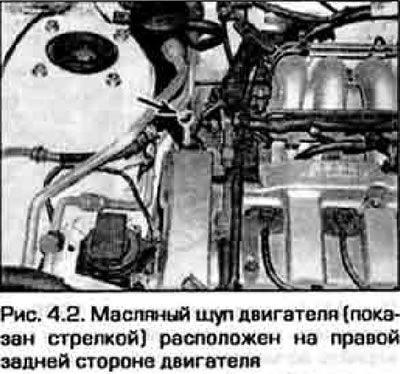
2. The engine oil level is checked using the dipstick located on the right rear side of the engine (figure 4.2). The dipstick is inserted into the guide tube and lowered through it into the oil pan.
3. The oil level should be checked before starting the engine or no earlier than 15 minutes after stopping it. If you check the oil level immediately after a trip, some oil will remain on the upper engine parts and the test will give an incorrect result.
4. Remove the dipstick from the tube and wipe it with a clean cloth or paper towel. Insert a clean dipstick into the tube and pull it out again. Inspect the end of the dipstick - the oil trace should be between the marks on the dipstick (figure 4.4).
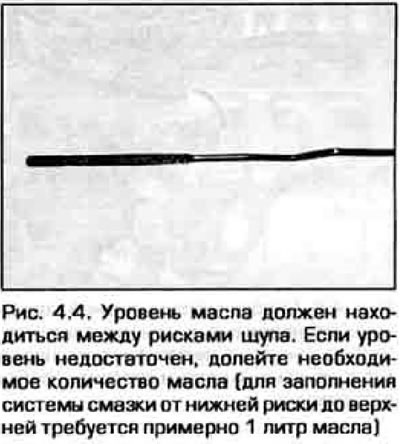
5. To raise the level from the lower mark to the upper one, approximately 1 liter of oil is required. Do not allow the level to drop below the lower mark - this may cause oil starvation of the engine, which will lead to serious malfunctions. On the contrary, the engine is overfilled with oil (above the upper level on the dipstick) may cause oil to get on the spark plugs, oil leaks and damage to the seals,
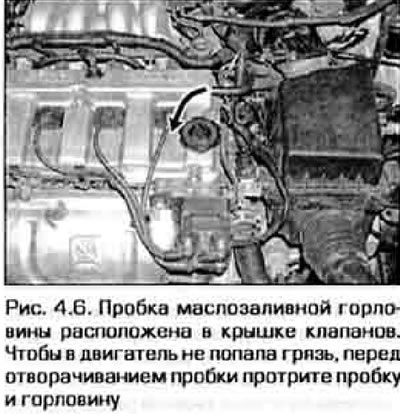
6. Unscrew the oil filler cap on the valve cover and add oil (figure 4.6) To avoid wasting the oil, use a funnel. After filling with oil, tighten the plug by hand. Start the engine and check for oil leaks around the oil filter and drain plug. Stop the engine, allow the oil to drain into the oil pan and check the oil level again.
7. Checking the oil level is an important preventative measure. A constant drop in oil level can be explained by leaks through damaged seals, loose connections, or it can mean that oil is getting into the combustion chambers through worn piston rings or through valve stem seals. If the oil is white or drops of water are seen in the oil, then coolant is getting into the oil. This can happen if the cylinder head gasket is broken or if the oil cooler seal is leaking. In this case, check the engine immediately.
Each time you check the oil level, also check the condition of the dipstick before wiping it. remove a small amount of oil from the end of the dipstick with your thumb and forefinger. If dirt or metal particles are visible in the oil, replace the oil completely (see paragraph 6).
Coolant
Caution! Do not allow antifreeze to come into contact with skin or painted surfaces of the vehicle. Immediately wash away the soaked liquid with plenty of water. Be careful not to ingest antifreeze - it is highly toxic. Do not leave antifreeze in an open container or spilled antifreeze on the floor - children and pets may be attracted to its sweet smell and stumps may taste it.
Note: Non-toxic antifreeze has been developed and is available for purchase at aftermarket stores. But even with it you need to handle it carefully.
8. All vehicles covered by this Manual are equipped with a closed cooling system operating under high pressure. The expansion tank of the cooling system is located in the front corner of the engine compartment and is connected by a hose to the radiator neck. When heated, the coolant expands, overcomes the resistance of the outlet valve, and its excess flows through the hose into the expansion tank. When the engine cools, fluid is sucked back from the expansion tank into the radiator.
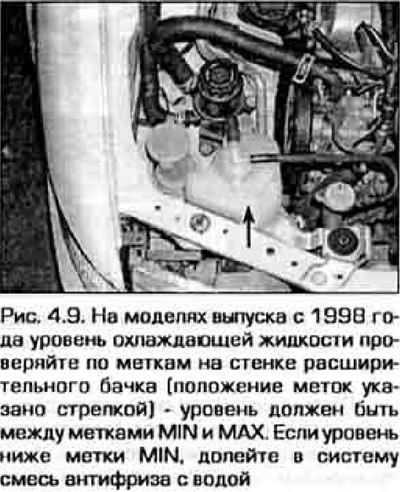
9. Check the coolant level in the expansion tank regularly. On 1997 and earlier models, remove the dipstick from the reservoir and make sure the fluid level is between the F and L marks. On 1998 and later models, the MAX and MIN marks are located on the reservoir wall. The fluid level may fluctuate depending on engine temperature. When the engine is cold, the level should be at or slightly above the lower mark, and when the engine is hot, it should be near the upper mark. If this is not the case, let the engine cool down, then unscrew the expansion tank cap (Fig. 4.9) and add fluid.
Use only ethylene glycol-based antifreeze in the proportions specified in your vehicle owner's manual. Do not use any additives. In case of emergency, a small amount of clean water can be added to the system, but it should be kept in mind that water will reduce the concentration of antifreeze compared to the recommended one. To maintain the required coolant concentration, top up the system only with coolant of the correct composition.
10. If the coolant needs to be topped up frequently, there may be leaks in the system. Carefully inspect the radiator, hoses, radiator cap, drain plugs and water pump. If there are no signs of leaks, check the radiator cap valves.
Caution! Never remove the radiator cap or expansion tank cap while the engine is running or immediately after stopping it - the coolant may be very hot. Steam escaping from the cap can cause severe burns.
11. If you need to unscrew the radiator cap, let the engine cool down, cover the cap with a piece of thick cloth and turn it to the first stop. If steam is escaping from the system (a hissing sound can be heard), let the engine cool down further, then remove the plug.
12. When checking the coolant level, always pay attention to its condition. The liquid must be clear and clean. If the liquid is rusty in color, it must be drained immediately, the system flushed, and fresh liquid added. Even if the fluid looks normal, the anti-corrosion additives lose their properties over time and the fluid must be replaced periodically.
13. Avoid contact of coolant with skin or painted surfaces of the vehicle body. Wash away spilled liquid with plenty of clean water.
Windshield washer fluid
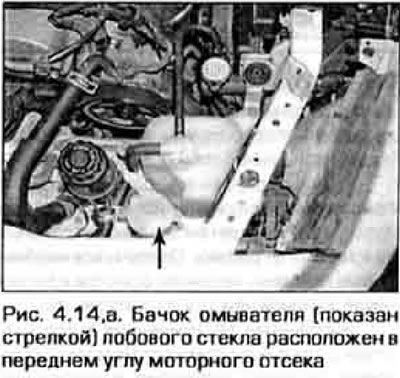
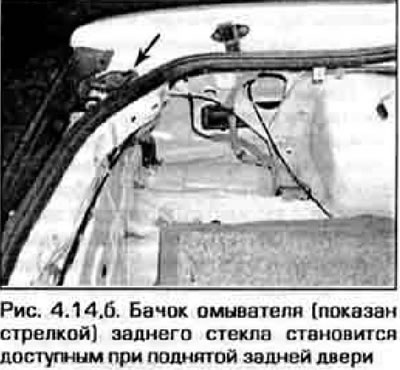
14 The windshield washer fluid is contained in a plastic reservoir located in the front corner of the engine compartment (figure 4.14,a). On models with a rear wiper, the rear door must be raised to access the rear window washer reservoir (figure 4.14,b). Check the float in the front glass reservoir cap - if the float does not sink, then the reservoir is full. The level in the rear window reservoir should reach the filler neck. In mild climates, the reservoir can be filled with clean water, but no more than 2/3 of the way, because if the water freezes, it expands. In areas with cold climates, a special antifreeze fluid should be used for the washer. Mix the liquid with water according to the manufacturer's recommendations. Do not use antifreeze in your windshield washer fluid - it will damage your car's paint.
 |
 |
Brake and clutch fluid
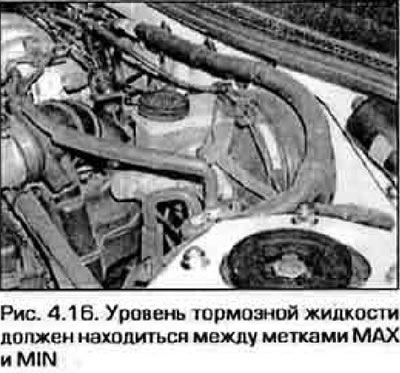
15. The brake master cylinder is mounted on the vacuum booster, e is the clutch master cylinder (on models with manual transmission) located nearby. They share a common reserve fluid reservoir.
16. The tank has a transparent body and the liquid level is visible through it. The fluid level should be between the MIN and MAX marks (figure 4.16).
17. Before opening the tank, remove any dirt from the cap and around it - do not allow dirt to enter the system.
18. Add only the recommended type of fluid (see Recommended oils and fluids at the beginning of this chapter or your vehicle's Owner's Manual). Mixing different types of fluids can cause the brake system to fail. Fill the reservoir to approximately 20 mm below the MAX mark. Tightening the cap will set the correct level.
Note: Use caution when handling brake fluid as it can cause eye damage and can damage painted surfaces of the vehicle. Do not use liquid that has been stored in an open container or in a container that has been opened for more than a year. Brake fluid is hygroscopic - it absorbs moisture from the air, and brake fluid containing moisture is unsuitable for its intended use.
19. While the lid is removed from the tank, inspect the tank for contamination. If dirt, deposits or drops of water are found in the tank, the fluid in the system must be replaced (see chapter 8 or 9).
20. After adding fluid, carefully tighten the tank cap to prevent leaks and dirt from getting into the system
21. As the brake pads wear out, the fluid level in the reservoir will gradually decrease. This is fine. If the fluid level in the master cylinder reservoir drops too quickly, this indicates leaks in the system that must be immediately found and fixed. Carefully inspect all brake lines and their connections, as well as the master and wheel cylinders,
If the fluid level in the clutch reservoir drops quickly, it means there are leaks in this system.
22. If you find that the brake system reservoir is empty or the fluid level in it is significantly below the permissible level, then the brake system must be bled (see chapter 9).