


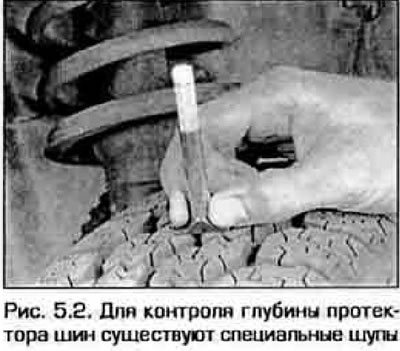
2. Normal, natural tire wear can be monitored using a simple tool known as a tread depth indicator (figure 5.2). When the tread depth reaches the minimum allowable value, replace the tire.
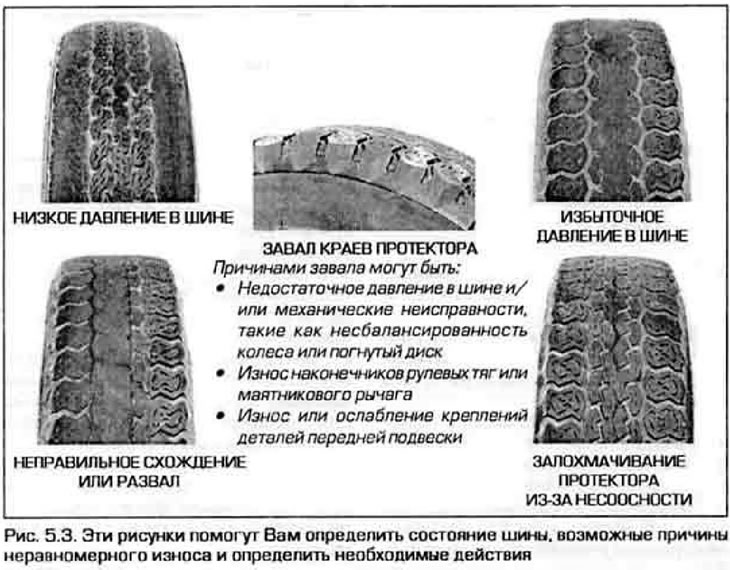
3. The tire should wear evenly across the entire tread. Uneven tread wear, such as increased sidewall wear, spot wear, wear on one side of the tread, etc., indicates improper tread angles, steering, suspension, or wheel imbalance (figure 5.3). If one of these problems occurs, take your car to a service station to have the problem identified and fixed.
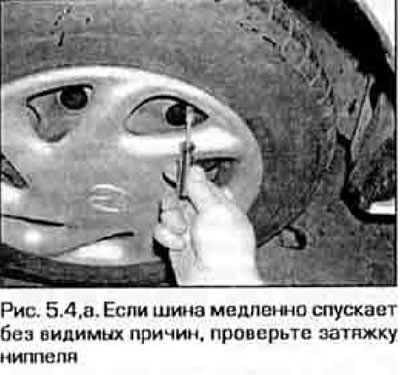
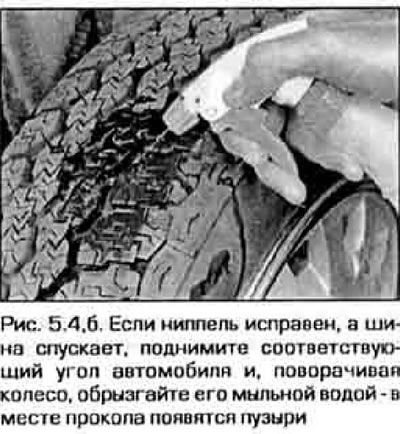
4. Inspect the tires carefully for cuts, punctures, stones or nails embedded in the tread. Sometimes a tire can hold pressure for quite a long time despite a puncture if the nail that punctured it is not removed. If there is no damage and the tire is slowly deflating, check that the valve stem is tight (Fig. 5.4.a). A small air leak can be easily detected by spraying the suspect area with soapy water (figure 5.4.6). The soapy water will begin to bubble at the leak site. If the tube is not too damaged, it can be glued or vulcanized. Many workshops do this kind of work.
 |
 |
5. Carefully inspect the inner sidewalls of the tires for traces of brake fluid. If such marks are present, inspect the brake in question immediately.
6. Correct tire pressure saves their life, increases mileage, and improves the functionality of the car itself. Tire pressure is difficult to determine by eye or by tapping it with a shoe. especially if it has a radial cord. This can be done much more accurately using a special pressure gauge. Keep a working pressure gauge in the glove compartment in the cabin. Please note that the pressure gauges used at gas charging stations to monitor the pressure in the cylinders are not accurate enough.
7. The pressure should be checked when the tires are cold. "Cold" in this case means that the car has not been driven for at least three hours. In heated tires, the pressure can increase by 0.3-0.6 kg/cm.
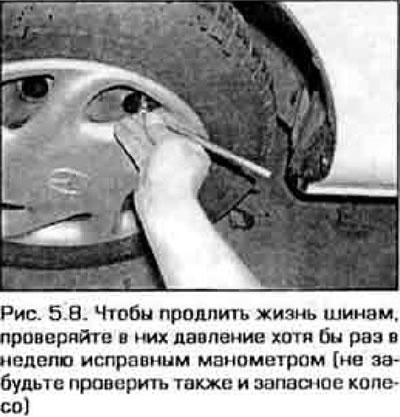
8. Unscrew the tire valve cap and press the tip of the pressure gauge firmly onto the valve (figure 5.8). Read the pressure gauge reading. Recommended tire pressure. installed on the vehicle during production. it is indicated on the plate attached to the side of the left door. After measuring, do not forget to screw the cap onto the nipple to protect the nipple from dirt. Check the pressure in all tires and, if necessary. pump them up to the recommended value.
9. Don't forget to inflate the spare tire as well. Keep in mind that different types of tires require different pressures. Follow the tire manufacturer's instructions.