
MazBook.ru
English Русский
Български
Беларускі
Український
Српски
Hrvatski
Română
Polski
Slovenský
Magyar
• Bookmark • Sitemap • Contacts •   
Cars Opel Cars Ford Cars Volkswagen Cars Audi Cars Kia Cars Renault Cars Peugeot


Familia Capella Mazda3 Mazda6 CX-? Others Articles
Capella 3 (1982-1992, petrol) Capella 3 and 4 (1982-1992) Capella 4 (1987-1992) Capella 5 (1991-1997) Capella 6 (1997-2005, petrol)

Inspection and replacement of spark plugs (Mazda Capella GC)

  • Home
  • Mazda Capella
  • Capella GC (1982-1992)
  • General information
  • Maintenance
  • Inspection and replacement of spark plugs
0
Note: Manufacturers do not specify an exact interval for replacing spark plugs, but only recommend inspecting them regularly. Experience shows that it is better to replace the spark plugs during inspection, even if they still appear to be in good condition.


1. To replace spark plugs, you need a special socket that fits the size of a ratchet wrench. This socket will protect the porcelain spark plug insulator and hold the spark plug in place while it is installed into the cylinder bore. You will also need a special feeler gauge to check and adjust the spark plug gap (photo).
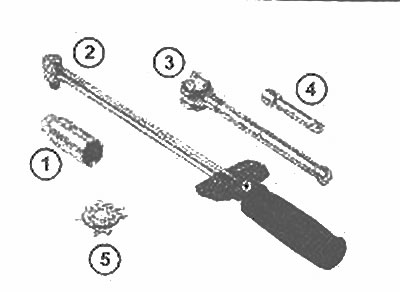
Tools needed to replace the spark plug:
  • 1. Nest
  • 2. Torque wrench
  • 3. Ratchet wrench
  • 4. Extension
  • 5. Spark plug gap feeler gauge


2. The spark plugs are located on the front side of the engine.

3. It is best to buy new spark plugs in advance, adjust their gap, and then replace the spark plugs one by one.

4. The operation and efficiency of the engine depend on the functioning of the spark plugs. It is essential that the spark plugs installed are suitable for the engine (the correct spark plug brand is indicated at the beginning of this Section). Cleaning spark plugs is rarely necessary and should not be attempted unless you have the proper equipment, as the electrodes can easily be damaged.


5. Allow the engine to cool completely before removing the spark plug. At this time, inspect each of the new spark plugs for defects and check their gaps.

The original article is posted on (mazbook.ru)

6. To check the gap, insert the feeler gauge lead between the electrodes at the tip of the spark plug. The interelectrode gap is specified in the Specifications. The wire should only touch each of the electrodes. If the gap is incorrect, use the adjuster on the probe body to slightly bend the curved side electrode to achieve the correct gap. If the side electrode is offset from the center electrode, use the adjuster to align them. Check the porcelain insulator for cracks, which would indicate the spark plug should not be used.

7. Remove the wire from one of the spark plugs (the engine has cooled down), by grabbing the tip of the wire, not the wire itself. Sometimes it is necessary to turn the tip a few times to release it.

8. Use compressed air to remove all dirt from the spark plug and its mounting area (you can use a regular bicycle pump). This is necessary to remove any dirt that may get into the cylinder after removing the spark plug.

9. Place the socket on the spark plug and remove the spark plug from the engine by turning it counterclockwise.

10. Inspect the spark plug and assess its condition.

11. Screw the spark plug into the cylinder by hand, then tighten it with a torque wrench. Where it is difficult to insert the spark plug into the cylinder bore, place a short piece of rubber tubing over the end of the spark plug. The flexible tube will act as a universal joint, which will help align the spark plug with the hole, and if the spark plug threads are crooked, the tube will be easy to slide over the spark plug to prevent damage to the threads. The correct tightening torque is given in the Specifications. If a torque wrench is not available, tighten the plug no more than a quarter turn from the point where the washer contacts the sealing surface.


12. Before installing the spark plug wire onto its end, inspect it as described in Chapter 36.

13. Install the wire onto the new spark plug. Make sure the wire is routed away from the exhaust manifold.

14. Perform the same procedure on the remaining spark plugs, replacing them one at a time to avoid mixing up the wires.
This article is available at: russian, bulgarian, belarusian, ukrainian, serbian, croatian, romanian, polish, slovak, hungarian
This text was checked by: Evdokia Filimonova
Share with friends on social networks:

Previous
Capella 3 » Maintenance
Next

Checking and adjusting the ignition timing
Checking the fuel vapor extraction system
Checking the exhaust gas recirculation (EGR) valve
Checking and replacing the crankcase ventilation valve
Replacing the oxygen sensor
Checking and replacing spark plug wires, distributor cap and rotor
Adjusting the valves and checking the tightness of the cylinder head…
Compression check
Checking the additional air supply system
More articles on repairing other Mazda models
Replacing spark plugs / checking electrical contacts Mazda Familia 6 (1989-1994)
Spark plug — description Mazda3 BK (2003-2009)
Spark plug — general information Mazda6 GG (2002-2008)
Determining engine faults by the condition of spark plugs Mazda CX-5KE (2012-2017)
Replacing spark plugs/checking electrical connections Mazda 121 (3) (1996-2003)
Link in different formats to this article
Comments and feedback from visitors
No comments yet


How much will 22 + 18 ?


Capella 6 (1997-2005, petrol) 
  • General information
  • Introduction to guide
  • User manual
  • Troubleshooting
  • Maintenance
  • Power unit
  • 4-cylinder engines
  • 6-cylinder engines
  • Engine overhaul
  • Cooling and ventilation
  • Power and exhaust systems
  • Engine electrics
  • Control system
  • Transmission
  • Mechanical gearbox
  • Automatic gearbox
  • Clutch and drive shafts
  • Chassis
  • Brake system
  • Car suspension
  • Steering
  • Body
  • Exterior (external elements)
  • Interior (internal elements)
  • Doors, windows and locks
  • Electrical equipment
  • Equipment and devices
  • Electrical circuits
Capella 5 (1991-1997) 
  • General information
  • User manual
  • Maintenance
  • Helpful hints
  • Power unit
  • Petrol engines 1.6 and 1.8
  • Petrol engines 2.0
  • 2.5 petrol engines
  • Overhaul engines 1.6 and 1.8
  • Overhaul engines 2.0 and 2.5
  • Diesel engine 2.0
  • Engine electrics
  • Cooling system
  • Air conditioner
  • Carburetor Nikki 30/34
  • Power system (1.6 and 1.8)
  • Power system (2.0 and 2.5)
  • Control system
  • Transmission
  • Mechanical gearbox
  • Automatic gearbox
  • Clutch and axles
  • Chassis
  • Brake system
  • Suspension and wheels
  • Steering
  • Body
  • Exterior (external elements)
  • Interior (internal elements)
  • Doors and windows
  • Electrical equipment
  • Equipment and devices
  • Electrical circuits
Capella 4 (1987-1992) 
  • General information
  • Introduction to manual
  • Vehicle specifications
  • Power unit
  • Engine repair
  • Lubrication system
  • Cooling system
  • Fuel system (carburetor)
  • Fuel injection (FE)
  • Fuel injection (DOHC)
  • Fuel system (diesel)
  • Ignition system
  • Transmission
  • Clutch
  • Gearbox
  • Drive shafts
  • Chassis
  • Front suspension
  • Rear suspension
  • Steering system
  • Brake system
  • Electrical equipment
  • Equipment and devices
  • Electrical circuits
Capella 3 and 4 (1982-1992) 
  • General information
  • User manual
  • Maintenance
  • Power unit
  • Gasoline engine
  • Engine overhaul (gasoline)
  • Diesel engine
  • Cooling and heating
  • Supply system
  • Ignition system
  • Emission reduction
  • Transmission
  • Clutch
  • Mechanical gearbox
  • Automatic gearbox
  • Drive shafts
  • Chassis
  • Brake system
  • Suspension and wheels
  • Steering
  • Body
  • Exterior (external elements)
  • Interior (internal elements)
  • Electrical equipment
  • Equipment and devices
  • Power devices
  • Electrical circuits
Capella 3 (1982-1992, petrol) 
  • General information
  • User manual
  • Maintenance
  • Troubleshooting
  • Late models
  • Power unit
  • Engine in car
  • Engine overhaul
  • Cooling and heating system
  • Fuel and exhaust system
  • Engine electrical system
  • Emission control system
  • Transmission
  • Mechanical gearbox
  • Automatic gearbox
  • Clutch and drive shafts
  • Chassis
  • Brake system
  • Suspension and wheels
  • Steering
  • Body
  • Exterior (external elements)
  • Interior (internal elements)
  • Electrical equipment
  • Equipment and devices
  • Lighting and lamps
  • Electrical circuits
MazBook.ru © 2018–2026 · Mobile version · Articles and news · Sitemap: EN BG BY UA RS HR RO PL SK HU · Feedback · Site search · Add to bookmarks Familia 5 (BF) · Familia 6 (BG) · Capella 3 (GC) · Capella 3 and 4 (GC) · Capella 4 (GD) · Capella 5 (GE) · Capella 6 (GF) · Mazda3 BK · Mazda6 GG · CX-5KE · Mazda 121 (3) · Mazda BT-50 (1) ·
By continuing to use the site, you agree to the use of cookies 🔐